Why Two Copies of the Same Yu-Gi-Oh! Card Can Differ 1000x in Price
The same Yu-Gi-Oh! card can trade for $0.50 or $50,000 — and the difference is usually six characters of set code. A complete guide to the variables that determine Yu-Gi-Oh! card value.
YuScan app · June 25, 2026
Generic “what is this card worth” searches for Yu-Gi-Oh! cards routinely return nonsense. The same card name can trade anywhere from $0.25 to $80,000, and the difference isn’t in the name at all — it’s in six variables that most price-check tools collapse into a single averaged number. This is why YuScan’s entire product exists: per-print pricing is the only pricing that actually reflects reality for Yu-Gi-Oh!, and no generic tool handles it correctly.
This guide covers the six variables that shape Yu-Gi-Oh! card value, with specific examples showing how a single card can span four orders of magnitude in price based on which print you’re holding.
Variable 1: set code and print run
The single biggest variable. A card’s set code tells you which product released it — and every product has a different print-run size, rarity distribution, and era. The 2002 Legend of Blue Eyes White Dragon set (LOB) had a print run of roughly 2 million cards; modern booster sets print 20+ million cards. That 10x supply difference alone explains most of the price gap between LOB-era and modern prints.
Example: 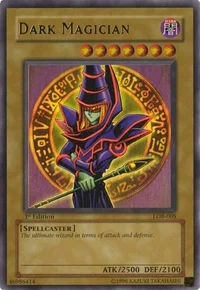 Dark Magician has more than 90 distinct printings in YuScan’s database.
- LOB-005 1st Edition Ultra Rare (2002): $8,000–$15,000 in PSA 10
- LCYW-EN006 Ultra Rare (2013 Legendary Collection): $5–$15
- SDK-006 1st Edition Ultra Rare (2002 Kaiba Starter Deck): $2,000–$4,000 in PSA 10
- DUSA-EN099 Ultra Rare (2016 Duelist Saga): $15–$40
- Common Unlimited reprint (multiple sets): $0.50–$2
The card is the same. The playability is the same. The set code is different, and the price gap is 30,000×.
Variable 2: rarity tier
Within a single set, the same card can appear in multiple rarities. Yu-Gi-Oh! has 14 active rarity tiers from Common through Quarter Century Secret Rare (see our complete rarity guide). Each rarity tier has its own pull rate in the original booster release, which determines its relative scarcity.
Example: 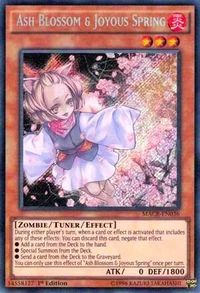 Ash Blossom & Joyous Spring has printings in:
- Common: $2–$5
- Super Rare: $8–$15
- Ultra Rare: $30–$45
- Secret Rare: $80–$120
- Starlight Rare: $400–$700
- Quarter Century Secret Rare: $600–$1,200
The card plays identically at every rarity. Tournament legality is identical. The visual appearance differs, and collectors pay hundreds more for the premium rarities.
Variable 3: 1st Edition vs Unlimited
The silver “1st Edition” stamp on the lower-left of the card face indicates Konami’s first print run of that set. Unlimited prints (subsequent reprints) lack the stamp. For vintage (2002–2005) sets, 1st Edition carries a 5–30× premium over Unlimited; for modern sets, the premium is typically 1.5–3×.
See our 1st Edition vs Unlimited explainer for identification details and specific examples.
Why it matters: at the vintage grail tier, 1st Edition vs Unlimited is the single biggest lever on price. A LOB-005 Dark Magician Unlimited in PSA 10 trades around $800. The same card 1st Edition trades at $12,000+. Same set code, same rarity, same condition, same language — only the stamp differs.
Variable 4: language
Yu-Gi-Oh! is released in English, Japanese (OCG), German, French, Italian, Spanish, Portuguese, and Korean across different markets. Each language has its own print run and pricing dynamics.
English (TCG) prints: the largest market and reference pricing. Most “market price” data reflects English TCG.
Japanese (OCG) prints: a separate market with its own collector dynamics. Cards from specific OCG-exclusive sets command premiums. Some OCG cards predate their English releases by 3–6 months, creating “pre-English” Japanese premiums that fade when English prints arrive.
European-language prints: typically trade at similar or slightly higher prices than English in their respective markets. German and French 1st Edition cards from the 2002–2005 era have their own collector scenes.
Korean prints: the smallest English-world market, with specific Korean-exclusive promotional cards commanding high premiums in specialist markets.
A Dark Magician in 1st Edition LOB Japanese differs substantially in price from 1st Edition LOB English — the two are treated as separate grails.
Variable 5: condition
Condition affects price at every rarity tier. The six-grade scale (Mint, Near Mint, Lightly Played, Moderately Played, Heavily Played, Damaged) applies to every card. See our condition guide for specific criteria.
Condition impact scales with card value:
For $1–$10 cards: condition affects price by maybe 30–50% between NM and HP. Not a huge financial gap.
For $100–$1,000 cards: condition affects price by 50–80%. A NM card trades at the listed market; an HP trades at 20–40% of that.
For $1,000+ cards: condition affects price by 70–95%. A NM LOB Blue-Eyes might sell for $4,000 ungraded; an HP LOB Blue-Eyes is a $500 card. Same set code, same edition, same rarity, same language.
Variable 6: grading
A graded card is a card authenticated by PSA, BGS, or CGC and sealed in a protective slab with a grade. Grades range from 1–10 (PSA and CGC) or 1–10 with sub-grades (BGS).
Grading affects price dramatically at the high end:
For vintage 1st Edition flagship cards: PSA 10 trades at 5–20× the raw NM price. A raw NM LOB Blue-Eyes at $4,000 becomes an $80,000+ PSA 10.
For modern meta cards: PSA 10 trades at 1.5–3× raw NM. A $100 modern Secret Rare becomes a $200–$300 PSA 10.
For budget cards (under $20 raw): grading usually isn’t economically viable. The $40 grading fee exceeds the grading premium.
See our grading guide for specific decision criteria.
Putting it all together
Consider Dark Magician. The variables cascade:
Worst case (cheap): Common printing from a 2013 Legendary Collection, Unlimited, English, MP condition, ungraded — $0.50
Premium case: LOB-005, 1st Edition, Ultra Rare, English, PSA 10 — $12,000
Grail case: LOB-005, 1st Edition, Ultra Rare, English, PSA 10, with a Gem Mint sub-grade or exceptionally low population report — $25,000+
One card name. 50,000× price spread. Every intermediate combination exists at some intermediate price.
This is the core problem that generic price-check tools fail to solve. “What is Dark Magician worth?” has no single answer. The only useful answer requires specifying all six variables.
Why generic price tools fail
Multi-TCG price trackers that cover Magic, Pokémon, and Yu-Gi-Oh! simultaneously typically report a single “market price” per card name. This number is usually a weighted average across all printings — which means it’s almost always wrong for any specific print you actually own. The averaged number is lower than the vintage prints and higher than the common prints; it correctly describes no physical card.
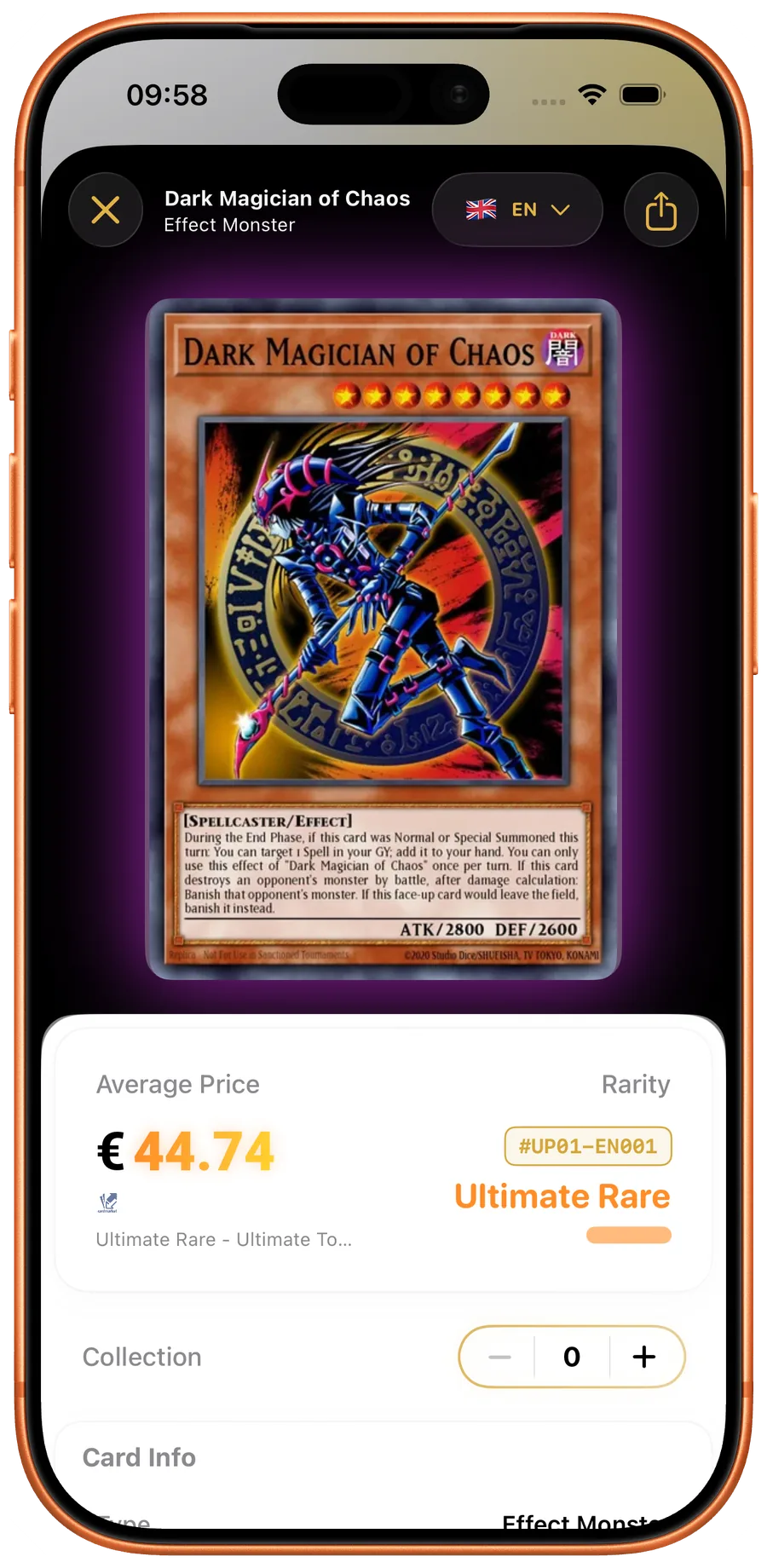
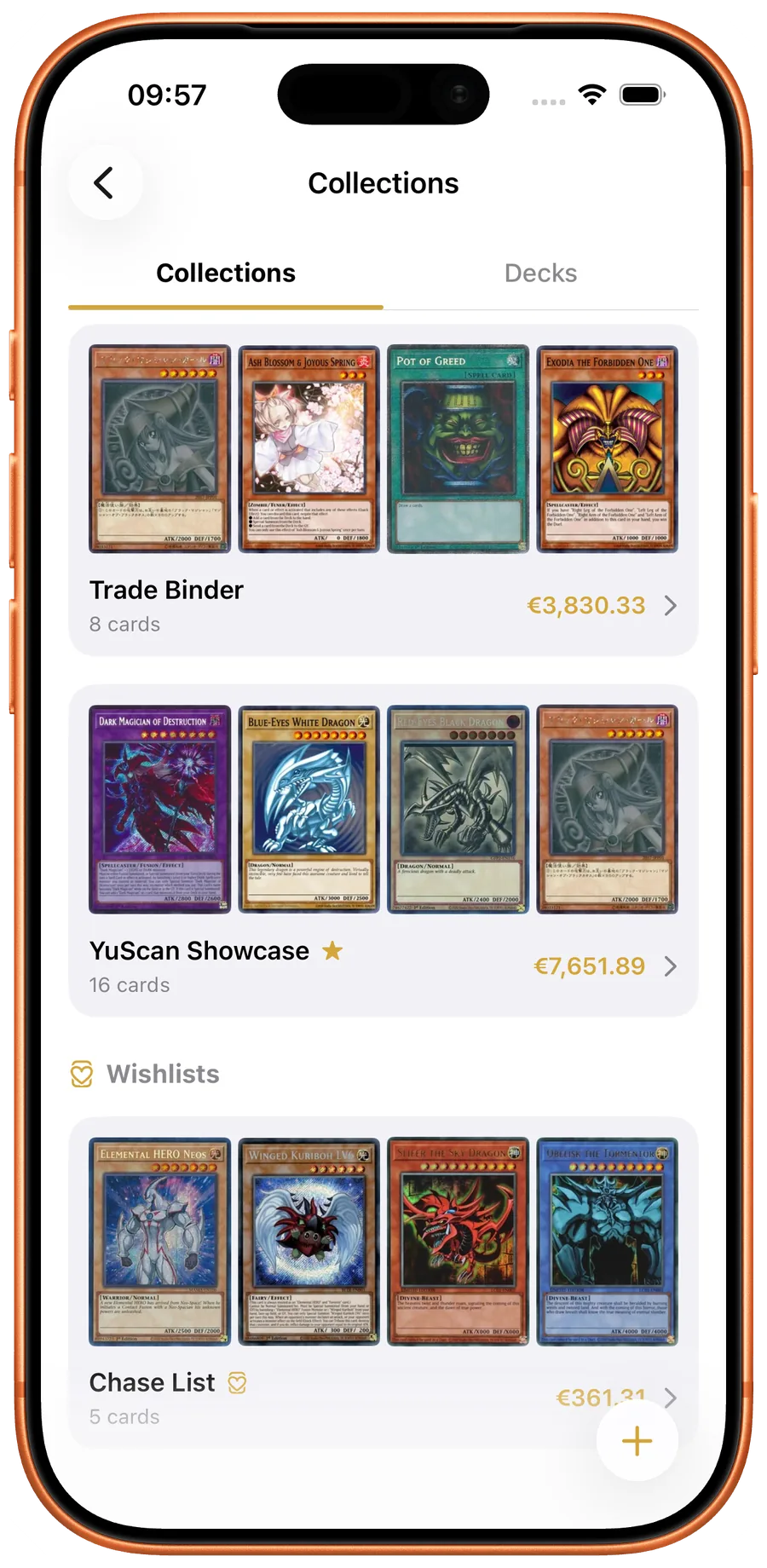
YuScan was built specifically to solve this. Every card page shows per-print pricing across TCGPlayer, Cardmarket, and eBay — separated by set code, rarity, 1st Edition vs Unlimited, and (where data allows) graded sales. A scan from the YuScan app identifies which specific print you own and reports its specific market price.
How to price-check correctly
- Identify the card name
- Identify the set code (lower-right of the card face)
- Identify the rarity (foil pattern)
- Check for the 1st Edition stamp (lower-left of card face)
- Identify the language (card text language)
- Assess the condition (use the six-grade scale)
- Note if the card is graded (slab presence and grade)
Once you have all seven variables, look up the specific price for that specific print in that specific condition. YuScan handles all seven variables automatically when you scan.
On YuScan
Per-print pricing, every card, every era
YuScan's 46,000+ printing database shows live pricing for every printing of every card across TCGPlayer, Cardmarket, and eBay.
Common mistakes
Using generic “market price” for vintage cards. Completely misleading. Use per-print data only.
Ignoring the 1st Edition stamp. Silver mark, lower-left, 15mm × 5mm. Determines 5–20× of vintage card value.
Buying raw vintage expecting NM condition to justify premium. Raw vintage is high-risk. Most raw vintage that grades comes back PSA 8–9, not 10. Buy graded for grail-tier cards.
Averaging across rarities. A Common price and a Quarter Century Secret Rare price are unrelated data points. Never average them.
Scan every Yu-Gi-Oh! card. Track the whole collection.
YuScan is the AI-powered Yu-Gi-Oh! card scanner, collection manager and price tracker for iOS. 13,000+ cards, every expansion since LOB, live prices from TCGPlayer, Cardmarket and eBay.
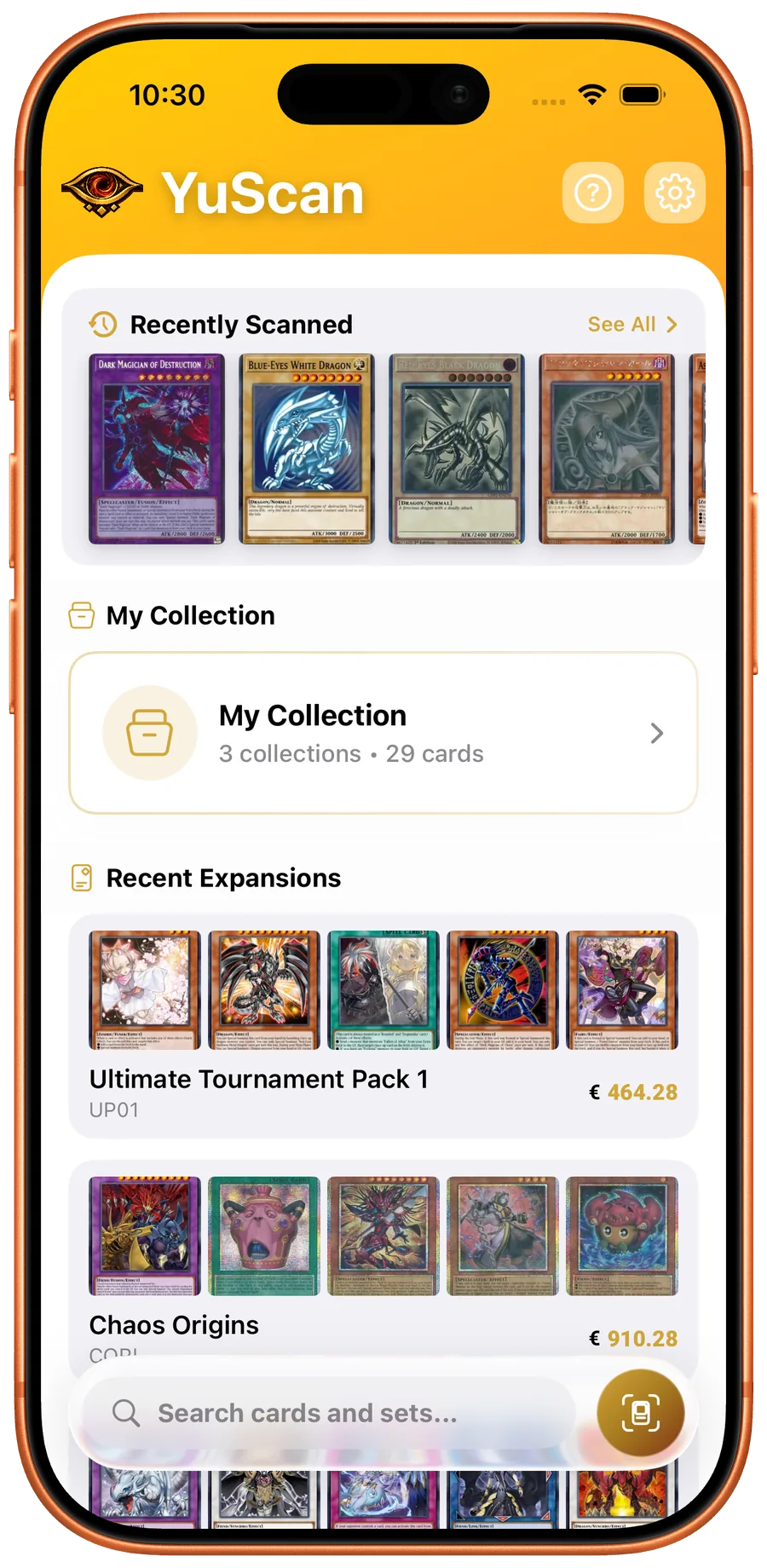
Scan any Yu-Gi-Oh! card with YuScan — the app identifies all six pricing variables automatically and reports the specific market price for the specific card you own.