How to Actually Track Yu-Gi-Oh! Card Prices in 2026 (Ranked Tools)
The five price-tracking approaches Yu-Gi-Oh! collectors actually use — TCGPlayer, Cardmarket, eBay sold listings, and the scanner apps that roll everything into one view. With pros and cons for each.
YuScan app · June 24, 2026
Yu-Gi-Oh! has the hardest per-card price-tracking problem in trading cards. The same card name can span 50+ distinct print runs across two decades, and those prints often differ in value by factors of 10× to 100×. A Dark Magician is $0.50 or $12,000 depending on six characters of set code. No single price source handles this correctly out of the box.
The five tools below are the realistic options for a 2026 Yu-Gi-Oh! collector. Each one has a specific strength and a specific blind spot. The best workflow for most collectors uses at least two of them in combination.
The ranking
YuScan (scanner + per-print price database)
Scans the card, tells you the exact print's price
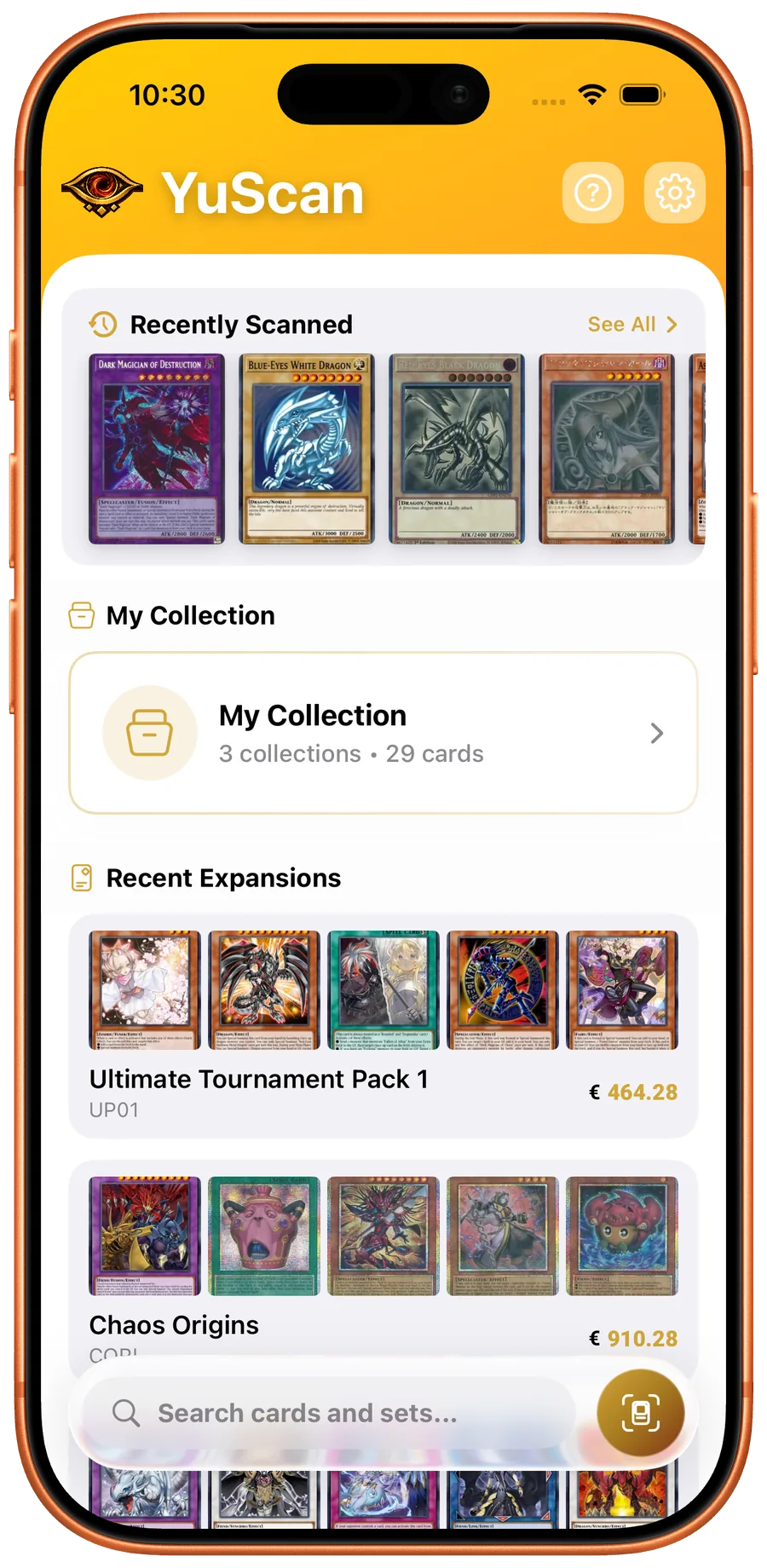
YuScan is built specifically around per-print price resolution. Scan a card, and the app identifies which of the 50+ possible print runs you actually have, then reports TCGPlayer, Cardmarket, and eBay sold-listings prices for that specific print. No averaging across rarities or editions. Price data refreshes twice a week.
Best for: active collectors who own cards from multiple eras and need to know which printings are actually in their collection. For example, a scanned 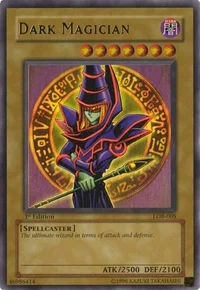 Dark Magician returns the LOB 1st Edition price if that’s what you own, not an averaged number across all 500+ Dark Magician printings.
Limitations: iOS-only at present.
TCGPlayer (direct web)
The North American market baseline
TCGPlayer is the deepest North American card marketplace and its market-price data is the reference standard for the US. Prices are typically within 5% of actual sales, and the site distinguishes print runs and rarities correctly. The mobile interface is serviceable.
Limitations: US-focused. Doesn’t show eBay sold-listings context, which matters for vintage and collector-grade cards where TCGPlayer isn’t the primary marketplace. For cards with low TCGPlayer volume, reported market prices can lag actual sales by days or weeks.
Cardmarket (direct web)
The European market source
Cardmarket is to Europe what TCGPlayer is to North America. Deepest European marketplace, accurate per-print price data, currency conversion at the user level. For European collectors, Cardmarket is the primary reference.
Cross-checking Cardmarket against TCGPlayer also exposes geographic arbitrage opportunities — some cards price noticeably higher in Europe, some noticeably higher in North America. Professional sellers move cards across the Atlantic to capture the gap.
eBay Sold Listings
The only source for grail and auction data
For cards above $500 in collector-grade condition, TCGPlayer and Cardmarket’s market data undercounts reality. The real action is on eBay auctions and Goldin/PWCC sales. eBay’s sold-listings filter is the best free public source for this data.
How to use it: search the card name + set code + condition (graded or ungraded), filter to sold listings in the last 90 days, ignore obvious outliers (listings that didn’t actually sell, dispute-flagged sales). For graded cards, filter further by grade. Public sold-price data is the most reliable way to check grail values.
Generic multi-TCG price trackers
Better than nothing, worse than dedicated tools
Generic trackers that cover Magic, Pokémon, and Yu-Gi-Oh! simultaneously are convenient for multi-game collectors but uniformly weaker than Yu-Gi-Oh!-specific tools. The common failure is print-run averaging: a multi-game tracker often reports “Dark Magician: $15” as if there’s one price for the card, which for Yu-Gi-Oh! is meaningless.
Use these only as a first-pass check. Verify anything that matters against TCGPlayer or YuScan directly.
Cards worth tracking in 2026
The most-frequently-price-checked cards in YuScan’s database as of April 2026 are listed below. These are the cards whose prices move most often and that collectors most commonly want to track:
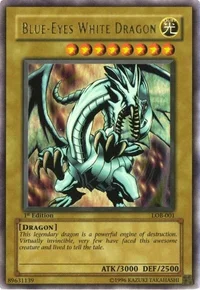 Blue-Eyes White Dragon — LOB 1st Ed tracks $15k–$100k depending on grade
- Dark Magician — LOB 1st Ed tracks $4k–$15k PSA 10
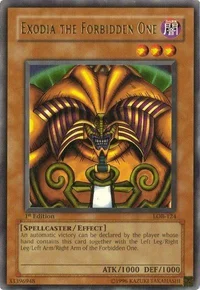 Exodia the Forbidden One — LOB 1st Ed tracks $1.5k–$8k PSA 10
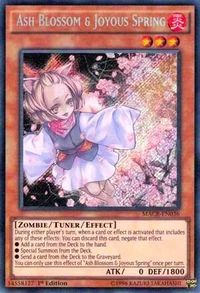 Ash Blossom & Joyous Spring — current meta staple, $3–$120 range across prints
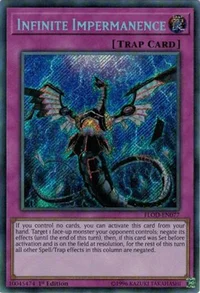 Infinite Impermanence — meta hand trap, $20–$300 across rarities
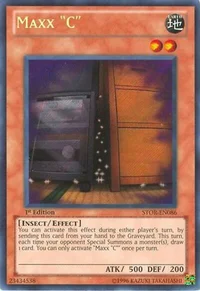 Maxx "C" — TCG-Forbidden, OCG-legal, $200–$1,800 graded
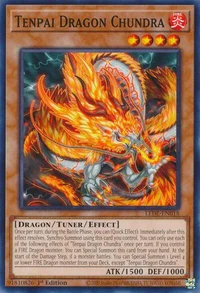 Tenpai Dragon Chundra — current meta, $15–$200 across rarities
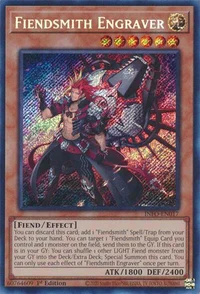 Fiendsmith Engraver — current engine staple, $30–$400
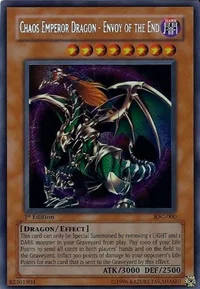 Chaos Emperor Dragon - Envoy of the End — Forbidden grail, $6k+ PSA 10 1st Ed
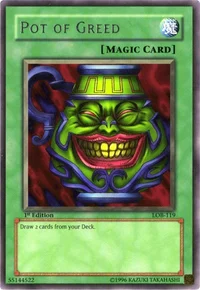 Pot of Greed — the ultimate grail, market is opaque above $100k
On YuScan
Browse every card by current price
Sort and filter 13,000+ cards by live TCGPlayer and Cardmarket pricing on YuScan.
How to price-check a card correctly
Step 1: identify the exact print. Set code, edition (1st / Unlimited / Limited), rarity. A Secret Rare and an Ultra Rare of the same card are different data points.
Step 2: pull TCGPlayer market price. This is your baseline for North American market.
Step 3: cross-check against Cardmarket. If the two prices are within 20% of each other, you have a reliable price. If they diverge significantly, one region may be mispriced — worth investigating.
Step 4: for cards above $500, check eBay sold listings. Actual sales data for graded cards is the only reliable source at the grail tier.
Step 5: for cards above $2,000, check auction house results. Goldin, PWCC, Heritage, and similar venues handle most of the ultra-grail market and their sales are publicly viewable.
Common price-check mistakes
Using “listed” prices instead of “sold.” A card listed at $500 on TCGPlayer may have last sold at $300. The listing is the seller’s hope; the sold price is the market.
Averaging across print runs. “Dark Magician averages $50” is not a useful data point. Specify the print.
Ignoring condition. Raw ungraded vs PSA 9 vs PSA 10 can be 3×–10× price swings. Condition is not optional in vintage card pricing.
Checking only one marketplace. TCGPlayer-only pricing misses European-market premiums and vintage auction floors. Multi-source pricing is mandatory for anything above $100.
How often to check
Daily for active traders. Weekly for collection-value tracking. Monthly for long-term holds.
Banlist weeks move prices dramatically within 48 hours — check immediately after every Konami announcement if you own meta-staple cards. Set-release weeks also move secondary prices as reprints drop existing print runs’ values.
Scan the cards on this list. Watch the prices move.
YuScan identifies any Yu-Gi-Oh! card in under a second and tracks live prices across TCGPlayer, Cardmarket and eBay per print run — so a 1st Edition and an Unlimited don't get averaged into a meaningless number.
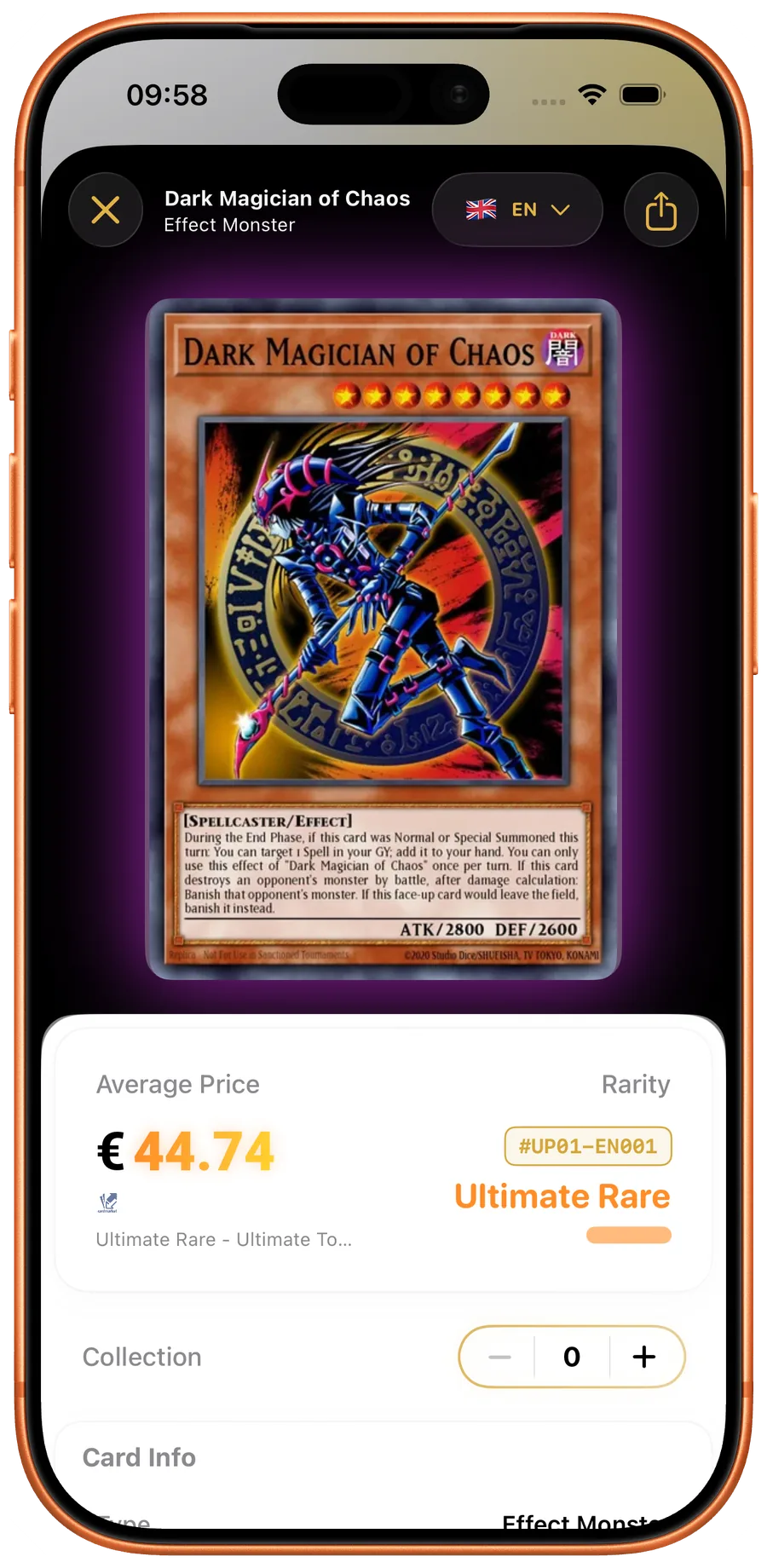
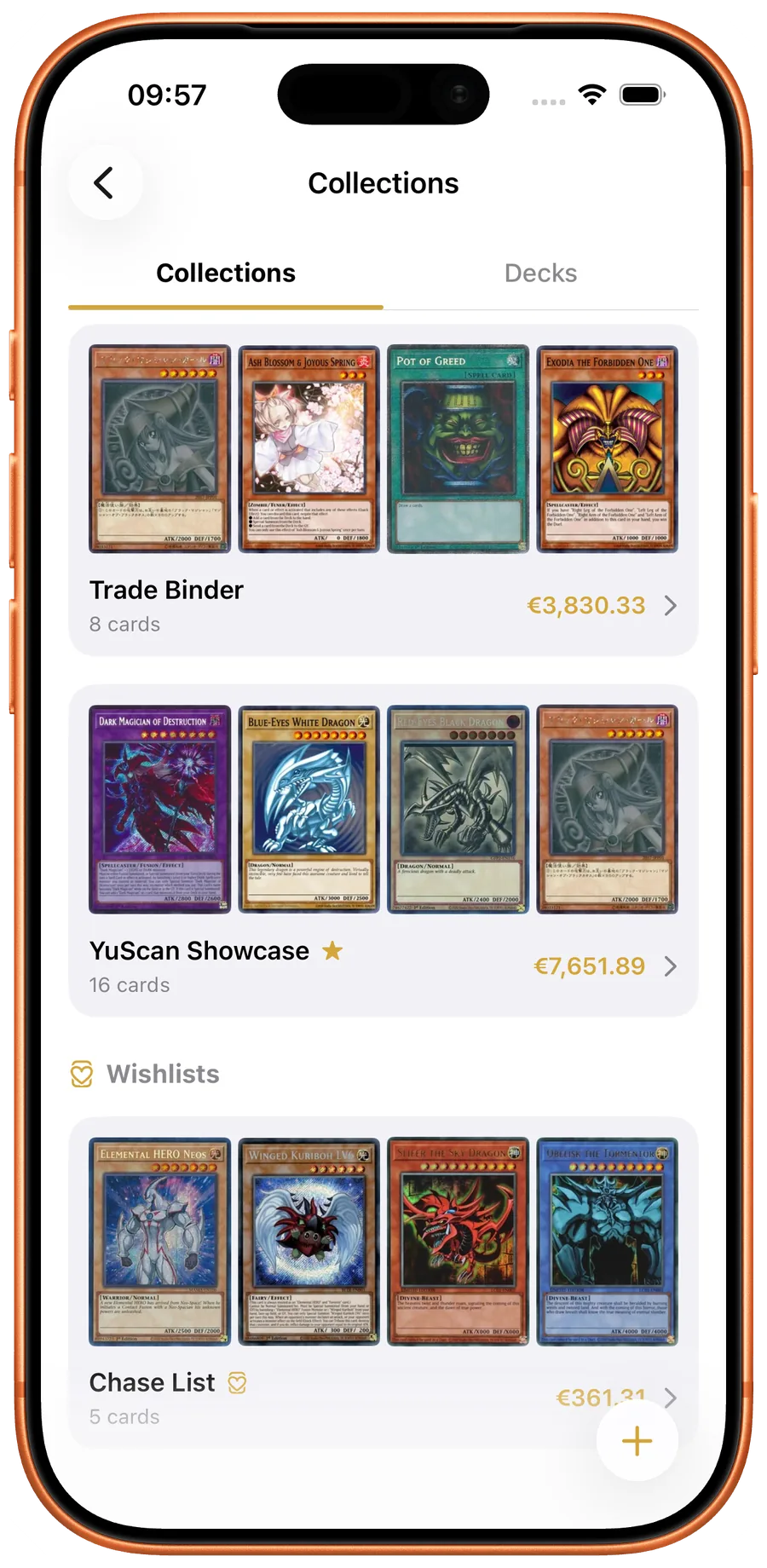
Track every card you own — every print, every rarity — across TCGPlayer, Cardmarket and eBay in YuScan. Price data refreshes twice a week, per print, no averaging.