How to Organize a Yu-Gi-Oh! Collection: 7 Systems That Actually Work
Seven organizing systems for Yu-Gi-Oh! collections — binders, boxes, spreadsheets, and scanner apps — ranked by time investment, retrieval speed, and how they scale past 1,000 cards.
YuScan app · July 8, 2026
Most Yu-Gi-Oh! collections start in a shoebox. They end up in a shoebox, a drawer, three half-filled binders, and a plastic bag of bulk commons nobody has touched in two years. The gap between “a few hundred cards” and “I can find any card in under 30 seconds” is an organizing system. The gap between “any card in 30 seconds” and “I know exactly what this collection is worth” is a digital layer on top of the physical organization.
Below are seven organizing approaches ranked by how well they actually work across a realistic collection size (1,000+ cards). Each system has a setup cost and a maintenance cost. Both matter.
The ranking
Scan-to-digital + physical storage by acquisition date
The modern hybrid — no organizing at all, just indexing
Scan every card as you acquire it into a digital collection manager. Store the physical cards in any acid-free box in any order (usually by acquisition date — oldest at the back, newest at the front). The digital index becomes the search layer; the physical location is a secondary detail.
Setup time: scanning ~120 cards/hour with a dedicated scanner app. A 1,200-card collection is 10 hours to index end-to-end. Retrieval time: digital search is instant, physical retrieval takes 1–3 minutes to dig through the archive box.
Scaling: this is the only system that genuinely scales past 5,000 cards without collapsing. Most long-term serious collectors converge on some version of this workflow.
Binder by archetype + bulk box by rarity
The hybrid for collectors who want display + storage
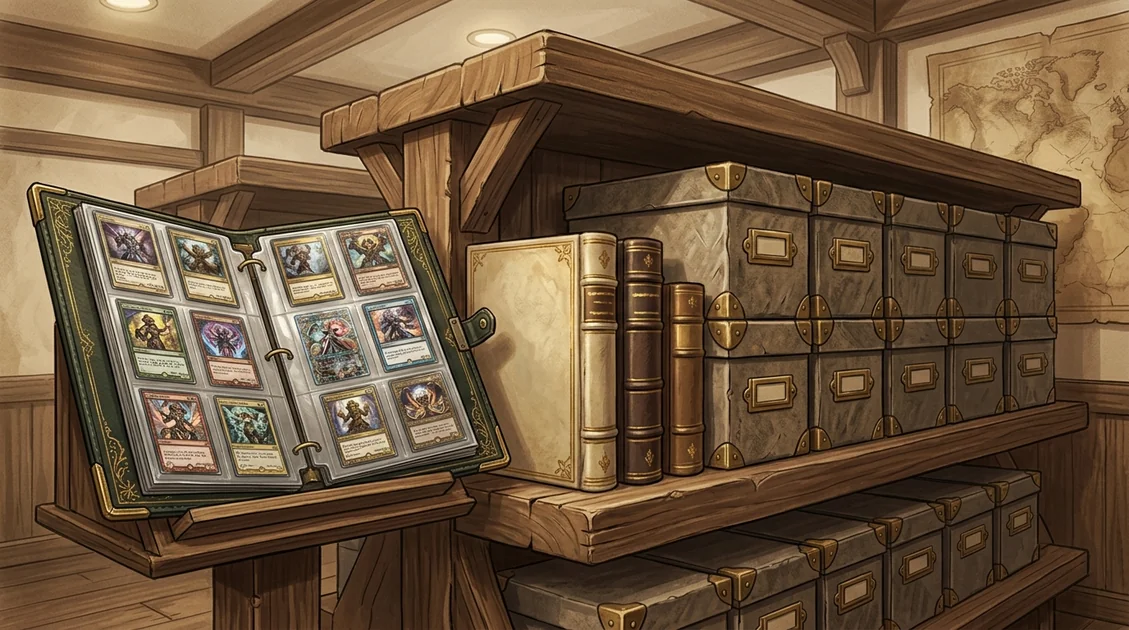
Put the cards you actually care about (by archetype) into 9-pocket binders. Put the bulk commons and duplicates into storage boxes sorted by rarity or by era.
Setup time: slower — sorting by archetype requires knowing every card’s archetype, which takes time. Roughly 30 cards/hour during initial setup. Retrieval: fast for binder cards (under 30 seconds to find a specific card in a well-organized archetype binder), slow for bulk box cards.
Scales reasonably to 2,000–3,000 cards. Breaks down above that — the archetype binders overflow and the rarity boxes get too full to scan efficiently.
Alphabetical binder organization
The simplest system that works
Everything in 9-pocket binders, alphabetical by card name. One approach, all cards in one system, no ambiguity about where anything goes.
Setup time: 40 cards/hour for initial sorting. Retrieval: binary-search through binders takes 45–90 seconds. No memory of archetypes or sets required — you only need to know the card’s name.
Scales to about 3,000 cards in 3–4 large premium binders. Above 3,000 cards, the number of binders becomes cumbersome and cross-binder retrieval degrades.
Spreadsheet + boxed storage
The old-school power user approach
Every card logged in a spreadsheet (name, set, rarity, condition, location code). Physical cards stored in numbered boxes matching the spreadsheet’s location column.
Setup time: very slow initially — typing card details is much slower than scanning them. Roughly 30–50 cards/hour for manual entry. Retrieval: Ctrl+F in the spreadsheet is instant, then physical retrieval matches a numbered location.
Scales well (the database approach is scale-friendly in principle), but the manual-entry setup cost is prohibitive. Most spreadsheet organizers eventually migrate to scanner-based systems once they discover them.
Binder by set / expansion
The set-collector approach
Organize each expansion into its own binder or binder section. Useful for collectors whose primary interest is completing sets — LOB binder, MRD binder, and so on.
Setup time: 25 cards/hour (requires identifying set for each card). Retrieval: fast if you know which set a card is from, slow if you don’t. For current-meta players who move cards across decks, this system fights the natural workflow.
Best for pure collectors. Poor fit for players.
Color-coded deck box system
Active-deck-focused organization
Decks live in labeled deck boxes. Spare cards and the card pool live in separate storage. Every card is either in a deck, in the active-rotation staples box, or in bulk storage.
Setup time: fast (15 minutes to label boxes). Retrieval: instant for deck cards, slow for anything else.
Best for players who rotate 3–5 decks and don’t care about bulk storage beyond “don’t lose it.” Scales poorly past 2,000 cards — too many boxes, no search layer.
No system (the pile)
Also known as 'the shoebox method'
Every card in a single container, no organization. For collections under 200 cards, this actually works — manual sort through 200 cards takes 2–3 minutes.
Setup time: zero. Retrieval: 2–10 minutes depending on pile size. Scales catastrophically — 2,000 cards in a single container means 30+ minute searches.
Listed for completeness. Everyone starts here. Nobody should stay here.
On YuScan
YuScan's collection manager
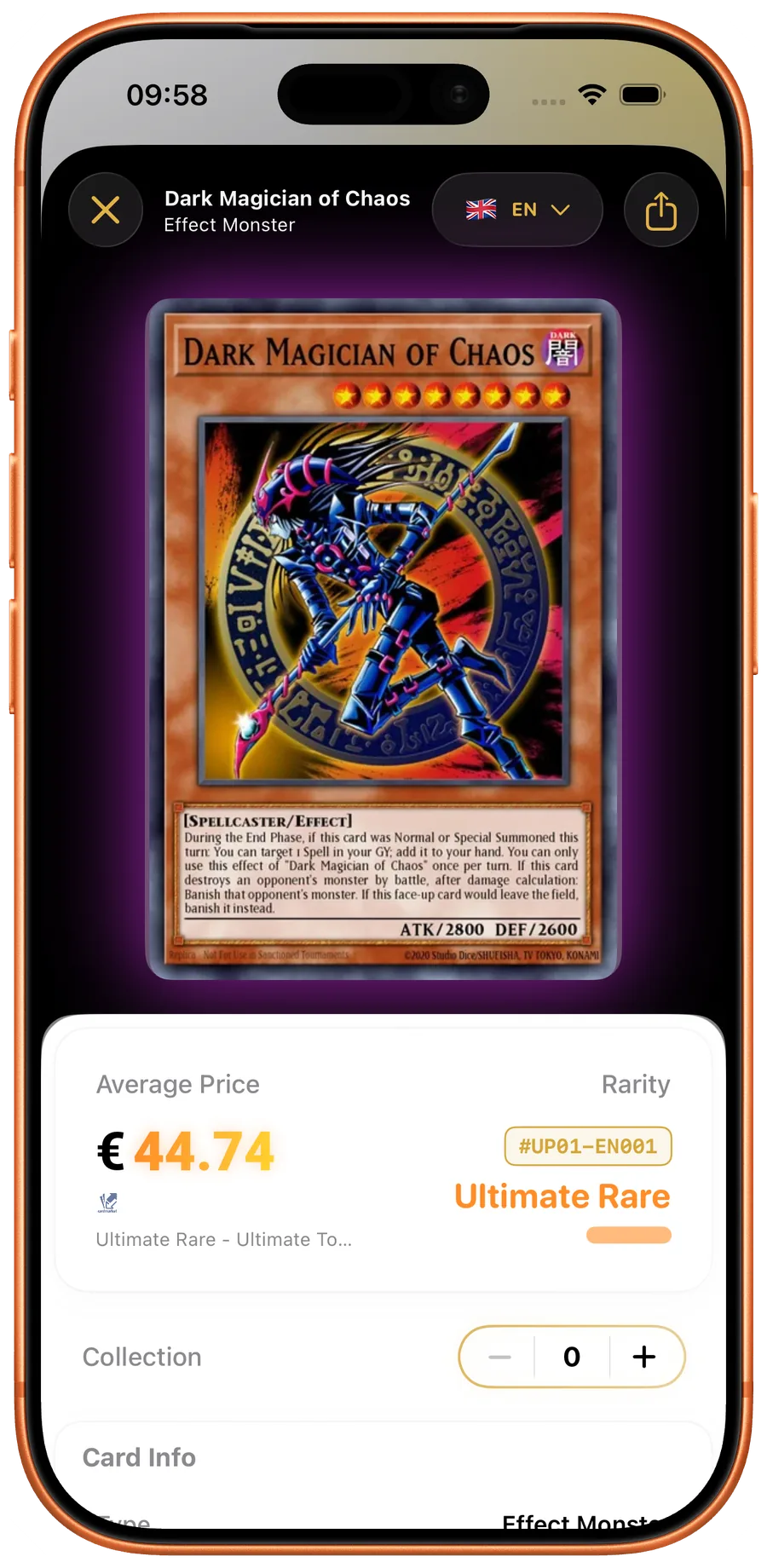
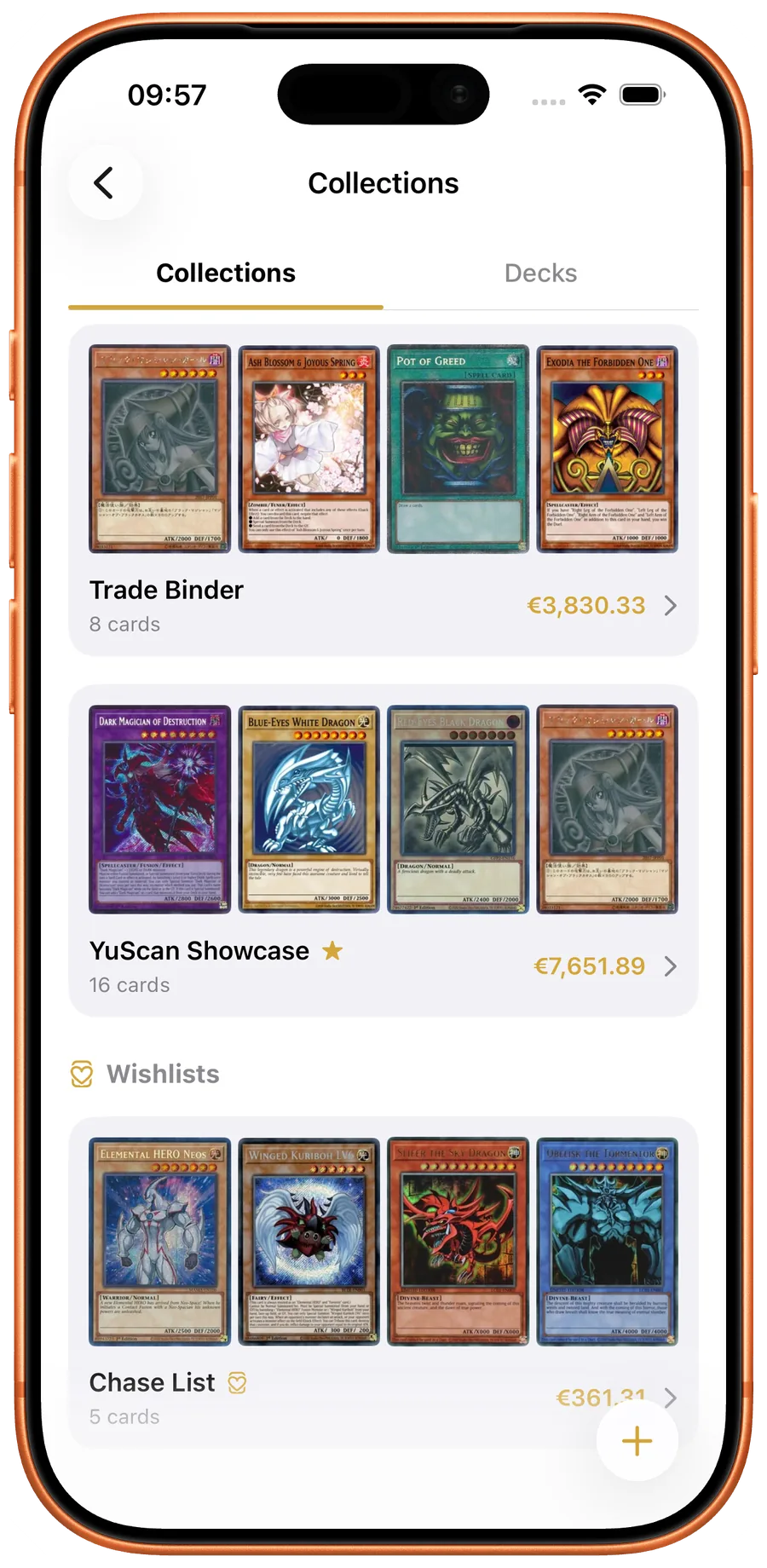
Scan cards, track condition and location, log collection value across TCGPlayer, Cardmarket and eBay.
How to migrate from an existing system
Most collectors reach a breaking point around 1,500–2,500 cards where their initial organizing approach stops working. Migration patterns that actually succeed:
Shoebox → Scanner-based (direct migration). Skip the intermediate binder phase. Scan every card directly into a digital manager and move them into a boxed archive. This is the fastest path from chaos to organized for any collection above 500 cards.
Binder-only → Scanner + binder hybrid. Keep the binders you enjoy displaying. Scan them into the digital manager so you have a searchable index. Move bulk cards out of binder rotation into boxed archive.
Spreadsheet → Scanner. The spreadsheet conversion is usually a one-way street; almost nobody who adopts scanner-based collection management goes back to manual spreadsheet entry. The time savings are large.
Condition tracking
Any organizing system above a raw pile should track card condition. The standard scale is:
- Mint — no visible flaws, centering acceptable
- Near Mint (NM) — minor handling, no visible surface marks, clean corners
- Lightly Played (LP) — minor corner wear or surface marks, no structural damage
- Moderately Played (MP) — visible corner whitening, edge wear, card is still tournament-legal
- Heavily Played (HP) — severe visible wear
- Damaged (DMG) — bent, creased, surface damage affecting playability
Track condition at the time you acquire the card. Cards degrade over time — a condition note attached to an acquisition date is far more useful than a single “current condition” field. Our condition grading guide covers the detailed criteria.
Storage environment
Independent of organizing system, storage environment matters:
- Temperature — 15–25°C / 60–75°F stable. Avoid garages, attics, uninsulated spaces.
- Humidity — 40–55% relative humidity. Above 60% accelerates card warping; below 30% accelerates corner embrittlement over years.
- Light — avoid direct sunlight and fluorescent lighting for long-term storage. UV fades ink and foil over years.
- Pressure — don’t stack heavy objects on cards. Don’t over-fill binder pages (compressed pocket corners crease over time).
A boxed archive in a climate-controlled room closet is strictly better than a binder on a sunlit desk, regardless of how well-organized the binder is.
Scan every Yu-Gi-Oh! card. Track the whole collection.
YuScan is the AI-powered Yu-Gi-Oh! card scanner, collection manager and price tracker for iOS. 13,000+ cards, every expansion since LOB, live prices from TCGPlayer, Cardmarket and eBay.
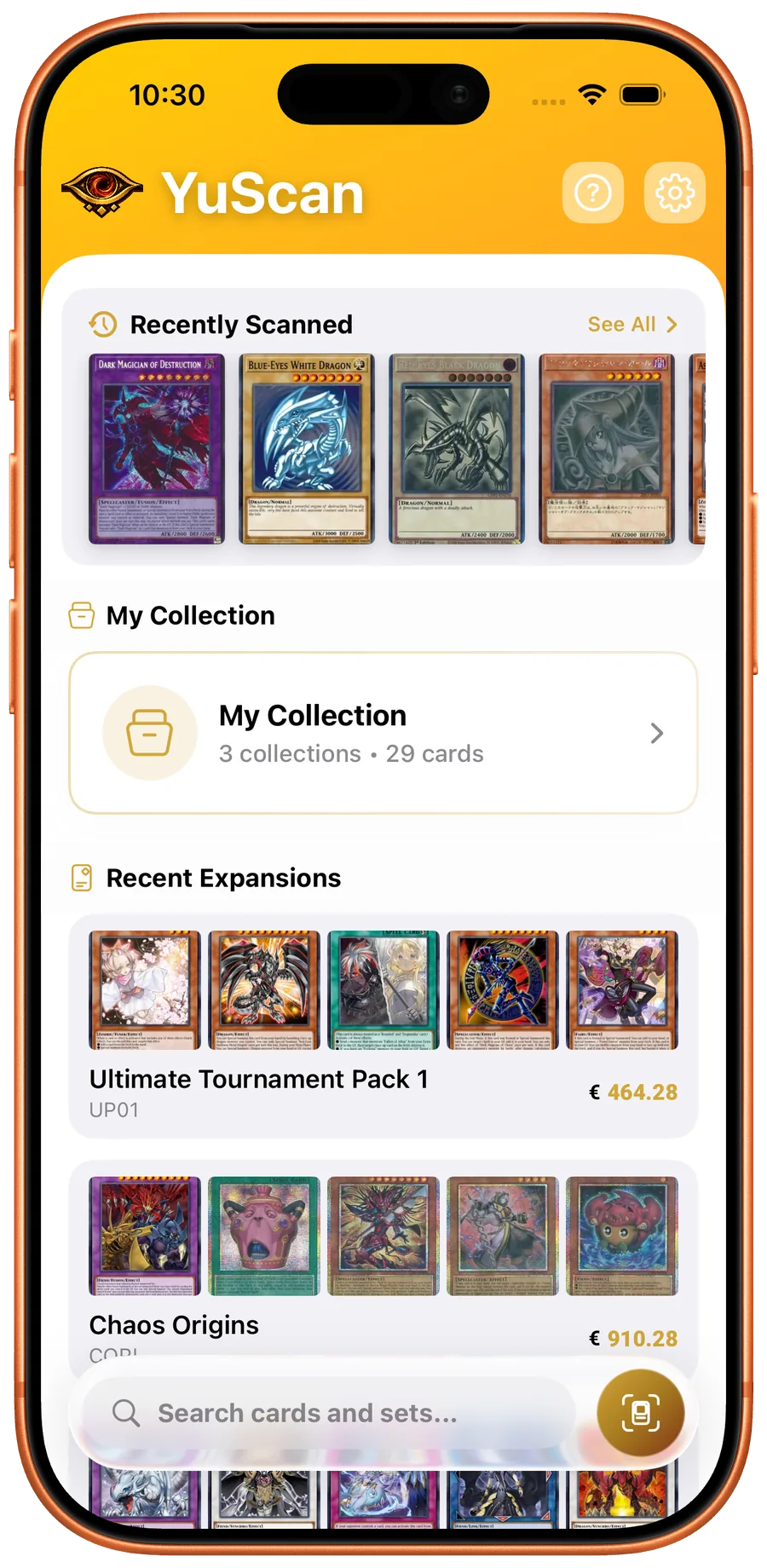
Organize your whole collection inside YuScan — scan once, index forever. The app tracks condition, location, acquisition price, and current market value for every card you own.