Every price. Every marketplace.
Multi-Currency Pricing
YuScan aggregates pricing data from six major marketplaces and supports automatic currency conversion, so you always know what your cards are worth.
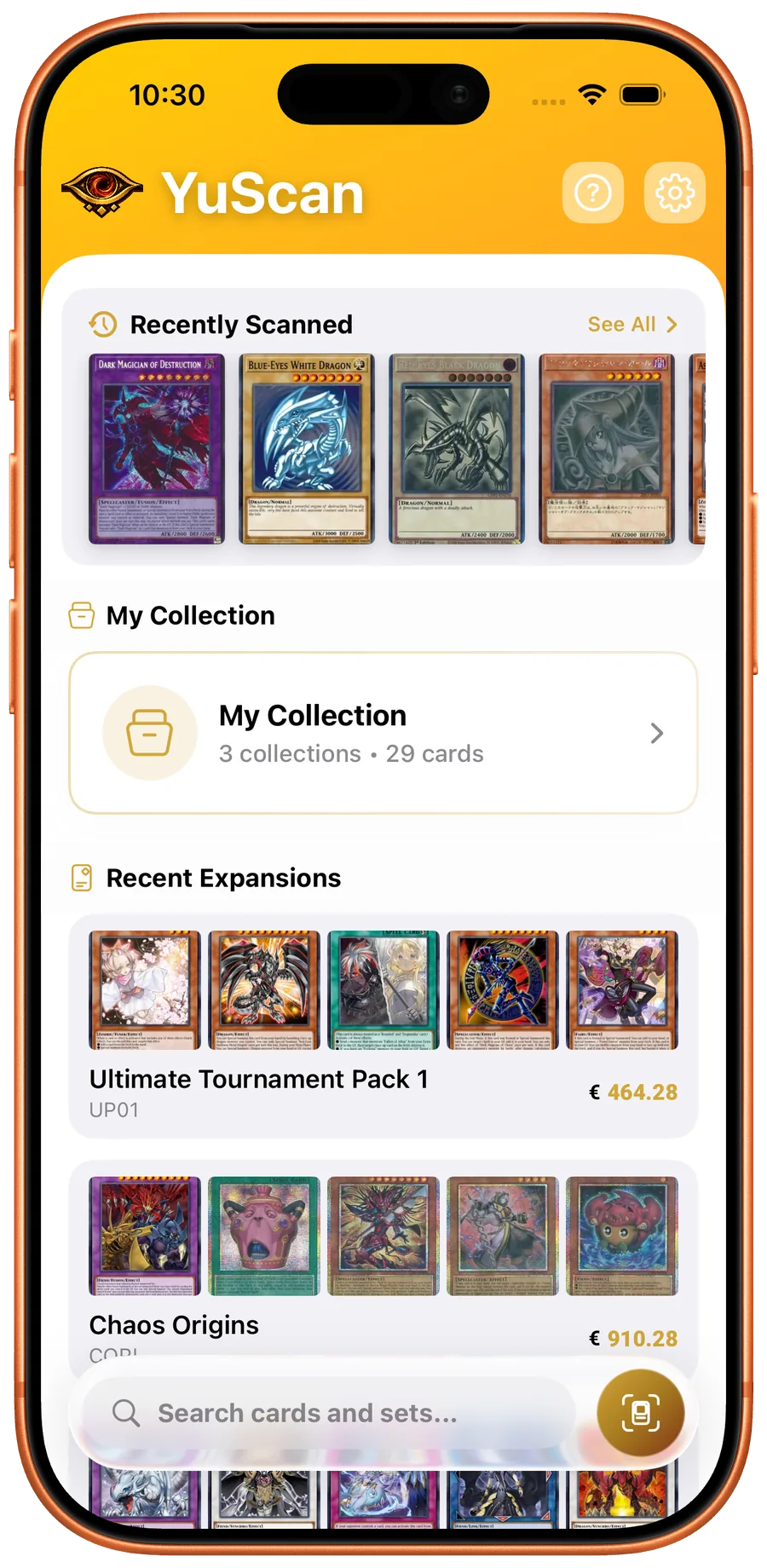
Yu-Gi-Oh! card prices are not a single number. Every card has a price per marketplace, per printing, per condition, and per currency — and those numbers move every day. YuScan aggregates live data from six major sources (TCGPlayer, Cardmarket, eBay, Amazon, CoolStuffInc, and more) and presents a per-printing market view that lets you compare like-for-like instead of guessing from a single listing.
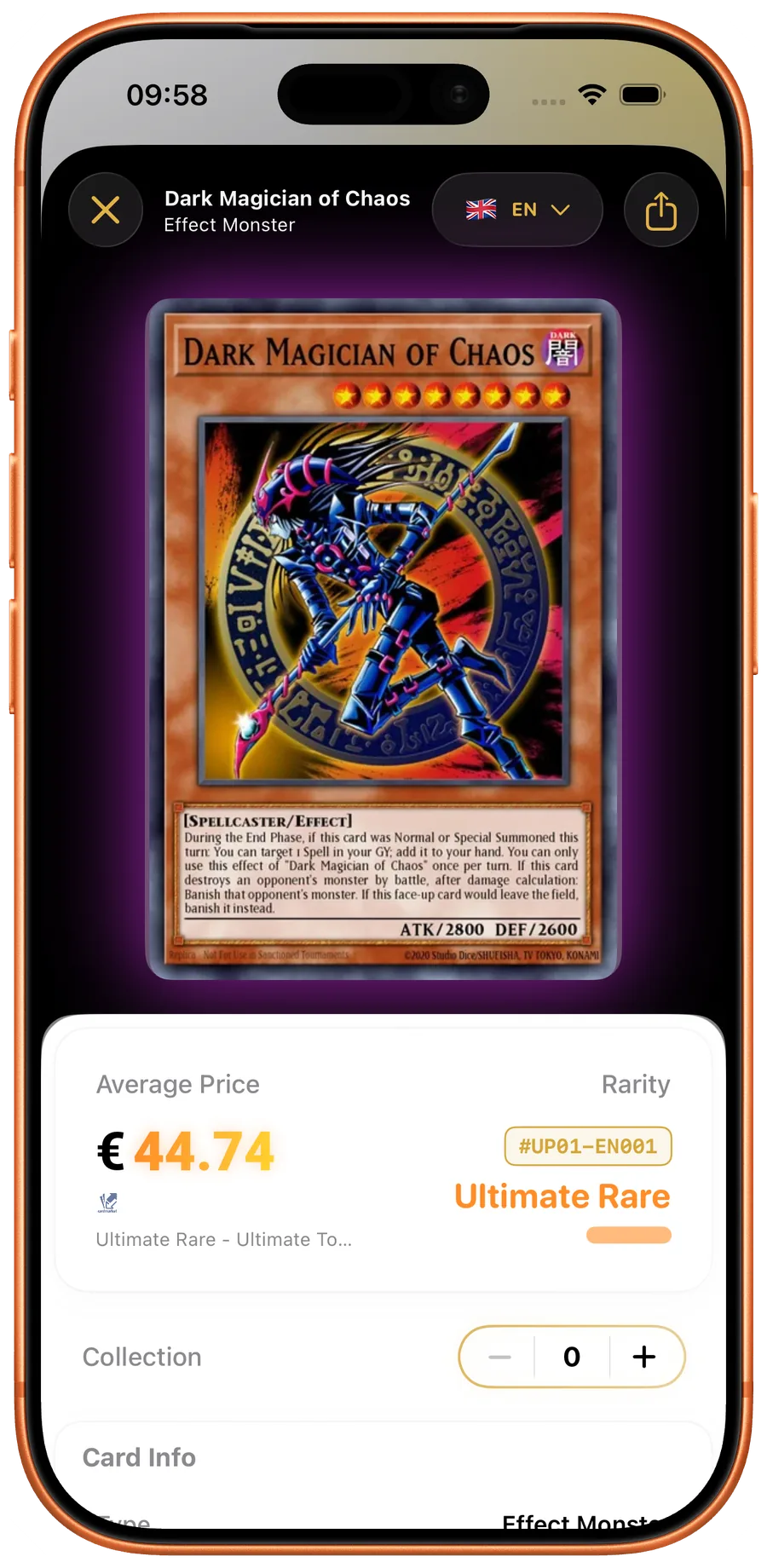
The single most common mistake new and returning players make is paying the wrong-rarity price for a tournament-legal card. A Common Effect Veiler from a 2010 Duelist Pack and a Quarter Century Secret Rare reprint of the same card play identically in every format — but one is $1 and the other is $40. YuScan surfaces every printing of every card with current marketplace pricing so you can buy the cheapest legal copy for the deck you are actually building.
For collectors and graded-card-curious players, the same data feed exposes price spreads across marketplaces and over time. eBay sold-listing medians, Cardmarket trend lines, and TCGPlayer market prices are all visible side by side, so you can tell whether a sudden listing spike is a real movement or a single optimistic seller.
See YuScan in action
Six Price Sources
Live pricing from TCGPlayer, Cardmarket, eBay, Amazon, CoolStuffInc, and more. See low, mid, market, and trend prices.
Currency Conversion
Automatic exchange rate conversion between EUR, USD, and other major currencies. Prices update with live rates cached for 24 hours.
Price Categories
Cards are categorized into tiers — Budget, Low, Medium, High, Premium, and Collectible — with color-coded visual indicators.
Per-Printing Prices
Different printings of the same card can vary wildly in price. YuScan shows pricing for each specific printing, set code, and rarity.
Collection Value
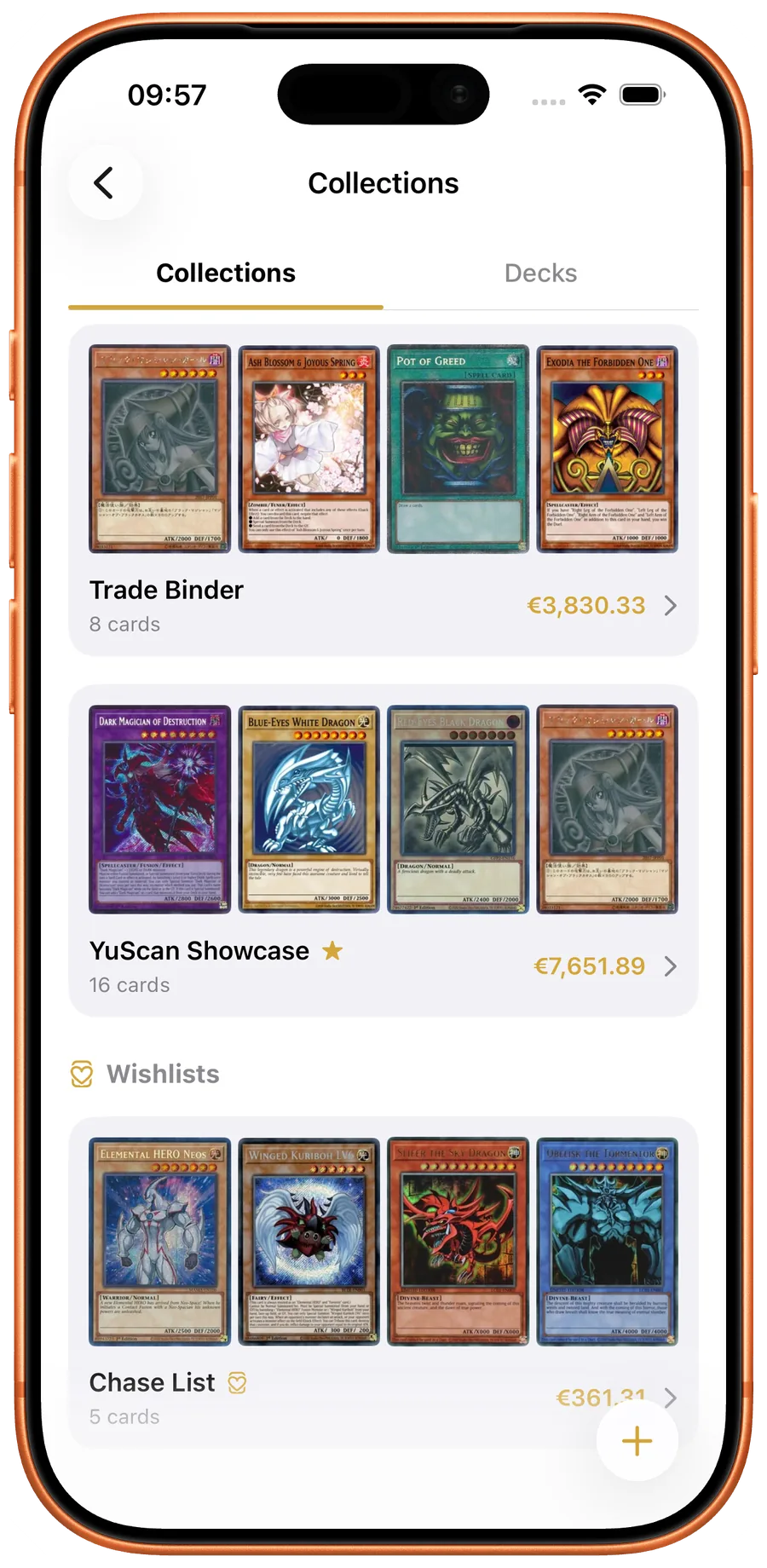
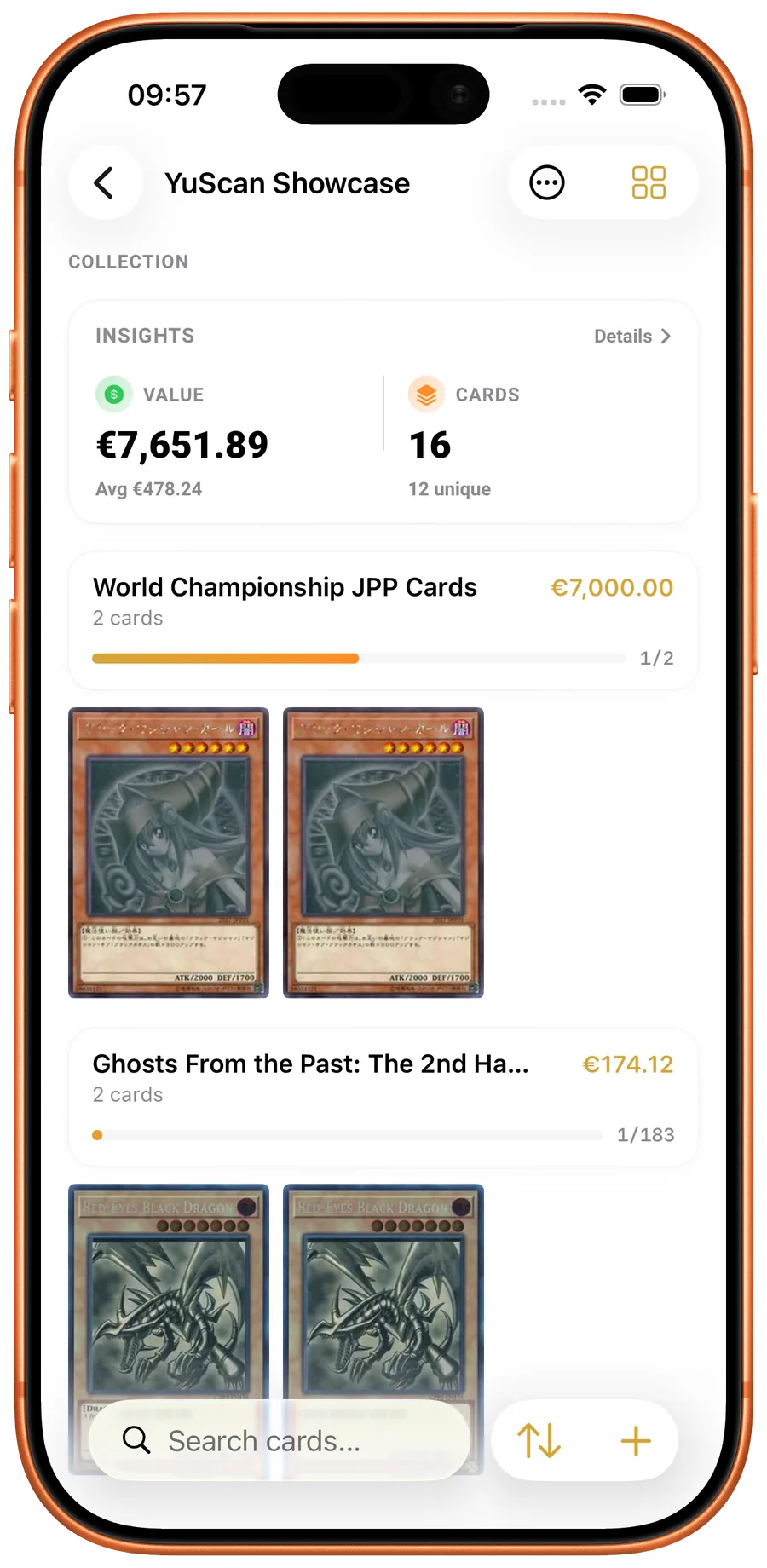
See the total value of your collections and decks updated with the latest market data from your preferred price source.
Shop Links
Direct marketplace links for every card printing. Buy from TCGPlayer, Cardmarket, or search eBay — all with one tap.
How YuScan pricing data works
Pricing is fetched continuously from each marketplace API and joined to the printing graph by set code, rarity, and edition. A single Yu-Gi-Oh! card often has 10 to 30 distinct printings; the database holds a current price tuple for each marketplace that reports the printing, plus the historical trend where available. When you open a card page in the app or on the website, you see the most recent fetch for every printing and every source.
Currency conversion is a layer on top of the per-marketplace prices. YuScan caches exchange rates against a small set of base currencies (USD, EUR, GBP, JPY) for 24 hours and converts on display, so a German user looking at a TCGPlayer price sees the EUR equivalent computed at the cached rate. The original USD source value is preserved internally; switching display currency is instantaneous and does not require a price refetch.
Cards are tagged with a price tier (Budget, Low, Medium, High, Premium, Collectible) computed from the cheapest legal printing. The tiers are not opinions — they are deterministic thresholds against the TCGPlayer market price — and they exist so that you can sort or filter a long list of cards (an entire archetype, an expansion, your collection) by affordability without reading every individual price.
When to use the YuScan price feed
Use it before any purchase. If you are buying a card single, scan or search the card, look at every printing in the price view, and pick the cheapest legal one. Most of the time the difference is dollars; on staple cards with a Quarter Century Secret Rare reprint cycle, it can be tens of dollars per copy. Saving $30 across three copies is a Structure Deck.
Use it before any sale or trade. The trade-binder workflow is: scan the card you want to trade, see what the buyer can fairly offer based on cross-marketplace data, and counter with confidence. Knowing the spread between TCGPlayer market and Cardmarket trend is the difference between a fair trade and one you will regret.
Use it for sealed-product decisions. Booster boxes, Structure Decks, and special products all have implied per-card value vs. expected pull value. The price feed surfaces the per-set total for the cards inside, which is the number that tells you whether buying sealed is a good idea (it usually is not — singles are almost always cheaper).