Every Yu-Gi-Oh! Format Explained: Advanced, Speed, Rush, Goat, Edison
Yu-Gi-Oh! has six major tournament formats in 2026. Here's what each one actually plays like, the card pool differences, banlists, and which format is the right fit for you.
YuScan app · July 24, 2026
Yu-Gi-Oh! has more tournament formats than almost any other TCG. The mainline game — Advanced Format — is what most discussion refers to, but there are five other active formats in 2026 with distinct card pools, banlists, and competitive scenes. Each one plays differently, costs differently, and appeals to a different kind of player.
This guide covers the six most-played formats, what makes each one distinct, and how to pick the one that fits your playstyle and local community.
Advanced Format (the mainline TCG)
The default format. Full card pool from 2002 through current releases, quarterly banlist updates from Konami’s TCG team, and the format all major events (YCS, regionals, Worlds) run. This is what 90% of Yu-Gi-Oh! discussion is about.
Card pool: complete, 13,000+ cards Banlist: TCG list, updated every ~3 months. See our banlist explainer. Deck size: 40–60 main + 15 side + 15 extra Game length: typically 10–25 minutes per match (best of 3) Cost to build competitive: $400 (Tier 2) to $1,800 (Tier 1) Where to play: local card shops run weekly events; regionals and YCS for higher-level play
Current Tier 1 is 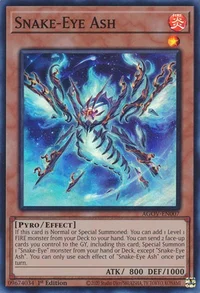 Snake-Eye Ash-based Snake-Eye. Our tier list has full details on the current meta.
Master Duel
Konami’s official digital client. Free to play, runs on PC, PS4/5, Xbox, Switch, iOS, and Android. Uses modern Yu-Gi-Oh! rules, enforced automatically.
Card pool: subset of TCG, with additions from OCG that aren’t in TCG yet. Expands over time via Master Duel-specific set releases. Banlist: separate from TCG and OCG lists. Updates on Konami’s Master Duel cadence (roughly every 2–3 months). Deck size: same as Advanced Game length: faster than paper, typically 5–12 minutes Cost: free; optional microtransactions for card acquisition shortcuts
Master Duel is the easiest way to learn modern Yu-Gi-Oh! without buying cards. The rules enforcement is automatic, the matchmaking is functional, and the ladder system provides ranked play. Most serious paper players also play Master Duel for testing and practice.
Note the banlist difference. 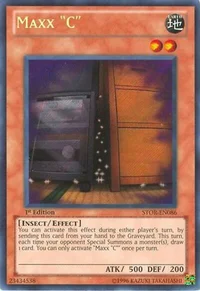 Maxx "C" is legal in Master Duel and Forbidden in the TCG;
 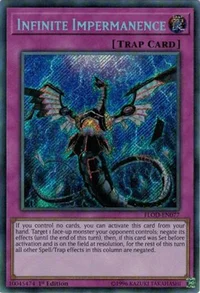 Infinite Impermanence has different copy limits. Don’t assume your Master Duel deck is legal in paper without checking.
Speed Duel
A simplified TCG format with a smaller card pool and faster games. Designed to be more beginner-friendly than Advanced.
Card pool: Speed Duel-specific releases, plus a curated subset of the main TCG. Around 1,500 total cards. Banlist: Speed Duel-specific. Separate from Advanced banlist. Deck size: 20–30 main + 6 side + 5 extra. Starts with 4,000 LP (vs 8,000 in Advanced). Game length: 5–10 minutes per game Cost: $50–$150 for a competitive Speed Duel deck Where to play: limited to card shops that specifically run Speed Duel events, or casual home play
Speed Duel is good for family/casual play and for players who find Advanced too complex or too expensive. Tournament scene is small compared to Advanced.
Goat Format
A nostalgia format frozen at the April 2005 banlist. Uses only cards printed up to IOC (Invasion of Chaos), with the April 2005 banlist applied.
Card pool: 2002–2004 era cards, about 2,000 cards total Banlist: fixed April 2005 TCG banlist Deck size: same as Advanced (40–60 main + 15 side) Game length: typically 20–40 minutes per match — slower than modern Yu-Gi-Oh! Cost: $300–$800 for a competitive build using Unlimited reprint cards (much more for 1st Edition vintage) Where to play: Goat-specific tournament scenes in major cities, online via Dueling Book
Named after Scapegoat, the dominant card of the era. Goat Format is popular with players who prefer slower, more interactive Yu-Gi-Oh! — the modern game is combo-heavy, and Goat is meaningfully different in pace. Chaos-based decks around 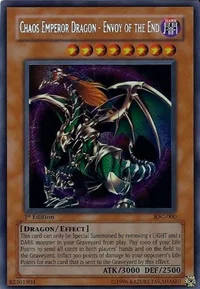 Chaos Emperor Dragon - Envoy of the End and the broader early-meta archetypes are still viable.
Edison Format
Another historical frozen format, this one at the April 2010 banlist. Named after the city of Edison, New Jersey, where the format was popularized.
Card pool: 2002–2010 era cards, about 4,000 cards total Banlist: fixed April 2010 TCG banlist Deck size: same as Advanced Game length: 15–30 minutes per match Cost: $400–$1,000 for a competitive Edison build Where to play: Edison-specific tournaments, online via Dueling Book
Edison sits between Goat’s pure vintage feel and modern Yu-Gi-Oh!‘s extra-deck-heavy play. Introduces Synchro Summoning (the 2008 addition) which expands strategic depth meaningfully over Goat.
Rush Duel
A separate format originally released in Japan in 2020. Different rules from Advanced TCG — no Extra Deck summoning restrictions, different trap rules, faster turn structure. Rush Duel has its own card pool that doesn’t overlap with Advanced.
Card pool: Rush-Duel-specific cards, growing but much smaller than Advanced Banlist: Rush-specific Deck size: 40-card main, no side, no extra Game length: very fast, 5–10 minutes per game Cost: $100–$300 for a competitive Rush build Where to play: primarily Japanese and Asian markets; limited Western presence
Rush Duel is the hardest format to access from the West — card availability is limited and English support is uneven. For players specifically interested in the Rush Duel rules set, the format is active but small.
Picking a format
You want the biggest competitive scene: Advanced Format. Most events, deepest card pool, most top-level competition.
You want free, instant access to modern Yu-Gi-Oh!: Master Duel. No card purchases required.
You want casual or family play: Speed Duel. Faster games, simpler decisions.
You want slower, more interactive Yu-Gi-Oh!: Goat Format. Early-era pace, no Extra Deck.
You want slower than modern but more dynamic than Goat: Edison. Includes Synchro Summoning.
You want to play Rush Duel specifically: Rush Duel, with limited Western support.
Multi-format players
Many serious Yu-Gi-Oh! players play two or three formats. Common combinations:
- Advanced + Master Duel — paper for weekend events, digital for daily practice. Most common combination.
- Advanced + Goat — modern for competition, vintage for casual. Different card pools mean no direct cost overlap.
- Advanced + Edison — modern plus one nostalgia format. Broader history than Advanced-only, less commitment than Advanced + Goat.
Playing multiple formats increases card ownership cost but also increases the variety of Yu-Gi-Oh! experiences. Most collectors in the hobby for 5+ years settle into a multi-format rhythm.
Format-specific card legality
A single Yu-Gi-Oh! card may have different legality in different formats simultaneously. Chaos Emperor Dragon - Envoy of the End is legal in Goat, banned in Advanced. 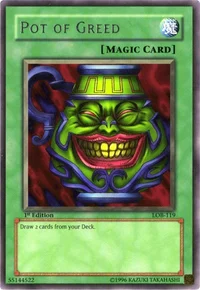 Pot of Greed is legal in Goat, banned in Advanced, legal in Edison depending on date. Always check the specific format’s banlist before assuming legality — YuScan tracks all major format banlists per card.
On YuScan
Every card, every format legality
YuScan shows TCG, OCG, Goat, and Speed Duel banlist state for every card in the database.
The short version
Advanced is the default. Master Duel is free and educational. Goat and Edison are specialty nostalgia scenes. Speed Duel is casual. Rush Duel is niche in the West. Pick based on what your local scene supports and what kind of gameplay appeals to you.
Scan every Yu-Gi-Oh! card. Track the whole collection.
YuScan is the AI-powered Yu-Gi-Oh! card scanner, collection manager and price tracker for iOS. 13,000+ cards, every expansion since LOB, live prices from TCGPlayer, Cardmarket and eBay.
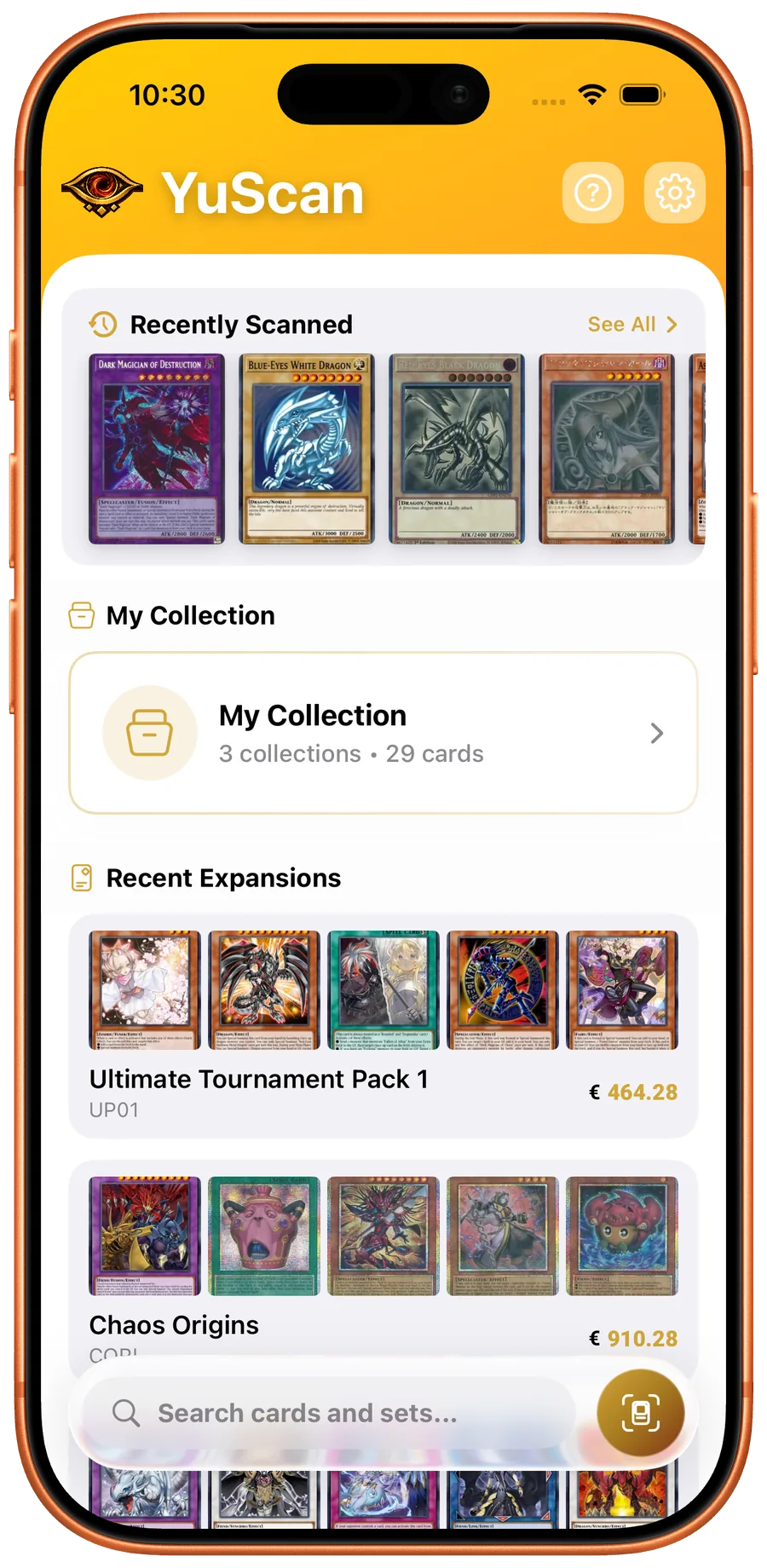
YuScan tracks format legality for every card you own — across TCG, OCG, Goat, and Speed Duel — so you know what’s legal where without cross-referencing multiple banlists.