How to Build a Yu-Gi-Oh! Side Deck in 2026 (15 Cards That Win Game 2 and Game 3)
The side deck is where Yu-Gi-Oh! matches are actually decided. Here's how to construct a 15-card side deck that swings specific matchups — the staples, the flex slots, and the format-specific cards for 2026.
YuScan app · May 28, 2026
In competitive Yu-Gi-Oh!, matches are played best-of-three. Between games, each player can swap up to 15 cards between their main deck and side deck. The side deck is where deck-level adaptation lives — where a player who lost game 1 to a combo deck swaps in hand traps, where a player who lost to a control deck swaps in negation breakers. A well-built side deck wins roughly 15–25% more matches than a weak side deck against the same main deck.
This guide covers side deck construction for 2026 — what to include as universal staples, what to flex by matchup, and how to actually execute side deck swaps under tournament time pressure.
Side deck fundamentals
15 cards, 15 swaps. A side deck contains exactly 15 cards. Between games, you can swap any number up to 15 between your side deck and main deck. Your main deck must still be 40–60 cards and your side deck must still be exactly 15 after the swap.
Two goals. The side deck does two things: (1) counters specific matchups that your main deck doesn’t handle well, and (2) replaces main deck cards that are dead in specific matchups (e.g., Droll & Lock Bird becomes dead against non-search decks).
Three-card modules. Side deck cards typically come in 2- or 3-card modules — you swap all three copies together when the module is relevant. A 15-card side deck might be 5 three-card modules, or some mix of 2-card and 3-card modules.
The universal staples (every side deck)
3x Called by the Grave. Counters opponent hand traps. Limited to 1 in the main deck, but you can side in from 1-of in main to 2-of total with the side copies; the current TCG banlist interpretation varies by tournament so check local rules.
2–3x Super Polymerization. Opponent-combo board removal via Mudragon of the Swamp or Starving Venom Fusion Dragon. Many competitive builds run 1 in main + 2 in side for total 3 copies.
2–3x Forbidden Droplet. Breaks through negation boards going second. Often flexed between main and side depending on go-first vs go-second metagame read.
1–2x Lightning Storm. Go-second board wipe. Usually main-decked with 1 side copy as backup.
That’s 8–11 cards in universal staples; 4–7 slots remain for matchup-specific tech.
Matchup-specific modules
Against combo decks (Snake-Eye, Tenpai):
- 2–3x Nibiru, the Primal Being
- 1–2x Evenly Matched (great going second against wide boards)
- 1–2x Dark Ruler No More
Against control / grind decks (Labrynth, Eldlich):
- 2–3x Cosmic Cyclone or Twin Twisters (floodgate trap removal)
- 1x Lava Golem (bypass defensive monsters)
- 1–2x Droll & Lock Bird (if the control deck searches)
Against GY-focused decks (Tearlament, Branded, Fiendsmith):
- 2–3x Ghost Belle & Haunted Mansion
- 2x D.D. Crow (cheaper alternative when Ghost Belle is budget-excluded)
- 1x Dimensional Shifter (nukes GY activation for the turn)
Against your own mirror:
- 3x Droll & Lock Bird (prevents opponent from executing their search lines)
- 2x extra hand traps not in main deck
Format-specific floodgates
Some formats reward including floodgates in the side deck. In April 2026 the meta leans combo-heavy, which makes these floodgates side-worthy:
- Dimensional Barrier — locks out one Extra Deck summoning type for the turn. Side tech against decks committed to a single summoning mechanic.
- Skill Drain — negates monster effects while face-up. Hard-counter to combo decks that rely on repeated monster effects.
- Anti-Spell Fragrance — forces Spells to be Set before activation, destroying combo tempo.
- There Can Be Only One — opponent can only control one monster per type. Strong against type-focused archetypes.
- Gozen Match or Rivalry of Warlords — attribute or type lock. Matchup-specific.
Floodgates are powerful but brittle — they get hit by generic removal (Lightning Storm, Raigeki). Include them when the matchup can’t easily remove them.
How to actually side
After game 1, you have 5–10 minutes to side between games. Apply these rules:
-
Review the matchup in your head. What deck is your opponent playing? What did they reveal that changed your read? What of their cards did you see?
-
Identify dead cards in your main deck. Cards that don’t function in the matchup. Example: Droll & Lock Bird is dead against decks that don’t search; swap out.
-
Identify live side cards. Cards from your side deck that specifically counter what you just saw. Swap in.
-
Don’t over-swap. Common beginner mistake. More than 7–8 swaps between games introduces too much variance and weakens your main deck’s consistency. Swap 4–6 cards per side decision is typical.
-
Consider going first vs second. Winner of game 1 chooses whether to go first or second in game 2. Some side decks are built for the go-second variant specifically; others for going first.
Side decking as a meta read
The deepest side deck skill isn’t knowing which cards to include — it’s knowing which cards to expect your opponent to side in. Opponents side cards at you too.
If you’re playing Snake-Eye going first in game 2, your opponent is likely siding in extra hand traps and Ghost Belles. Counter-side: Crossout Designator (banish their hand traps), extra Called by the Grave (negate their hand traps).
If you’re playing Labrynth going second in game 2, your opponent is likely removing their dead hand traps and siding in floodgate removal. Counter-side: floodgate protection (Lovely Labrynth, which defends from targeting), Solemn Strike (negate removal spells).
Side-deck reads at the competitive level are multi-layered. A tournament-tier player sides differently against an opponent siding against them than against an opponent siding blind.
Side deck construction for different archetypes
For Snake-Eye (combo Tier 1): side lean combo-mirror (Droll, Called by the Grave) + anti-control (Cosmic Cyclone) + Super Poly / Droplet.
For Labrynth (control Tier 2): side lean anti-floodgate-removal (Solemn Strike, Solemn Warning) + anti-combo (Nibiru, Droll) + Evenly Matched.
For Runick (budget rogue): side specialized tech — Dimensional Shifter (negate GY decks), Anti-Spell Fragrance (shut down combo spell chains), plus 2x Lava Golem for bosses you can’t otherwise remove.
For Tenpai Dragon (OTK Tier 1): side lean anti-disruption (Forbidden Droplet, Super Polymerization) + floodgate breakers.
Each deck has a different default side deck template. Copy a competitive tournament-placing decklist’s side deck when you first build the archetype, then adjust after 20+ games of play experience.
On YuScan
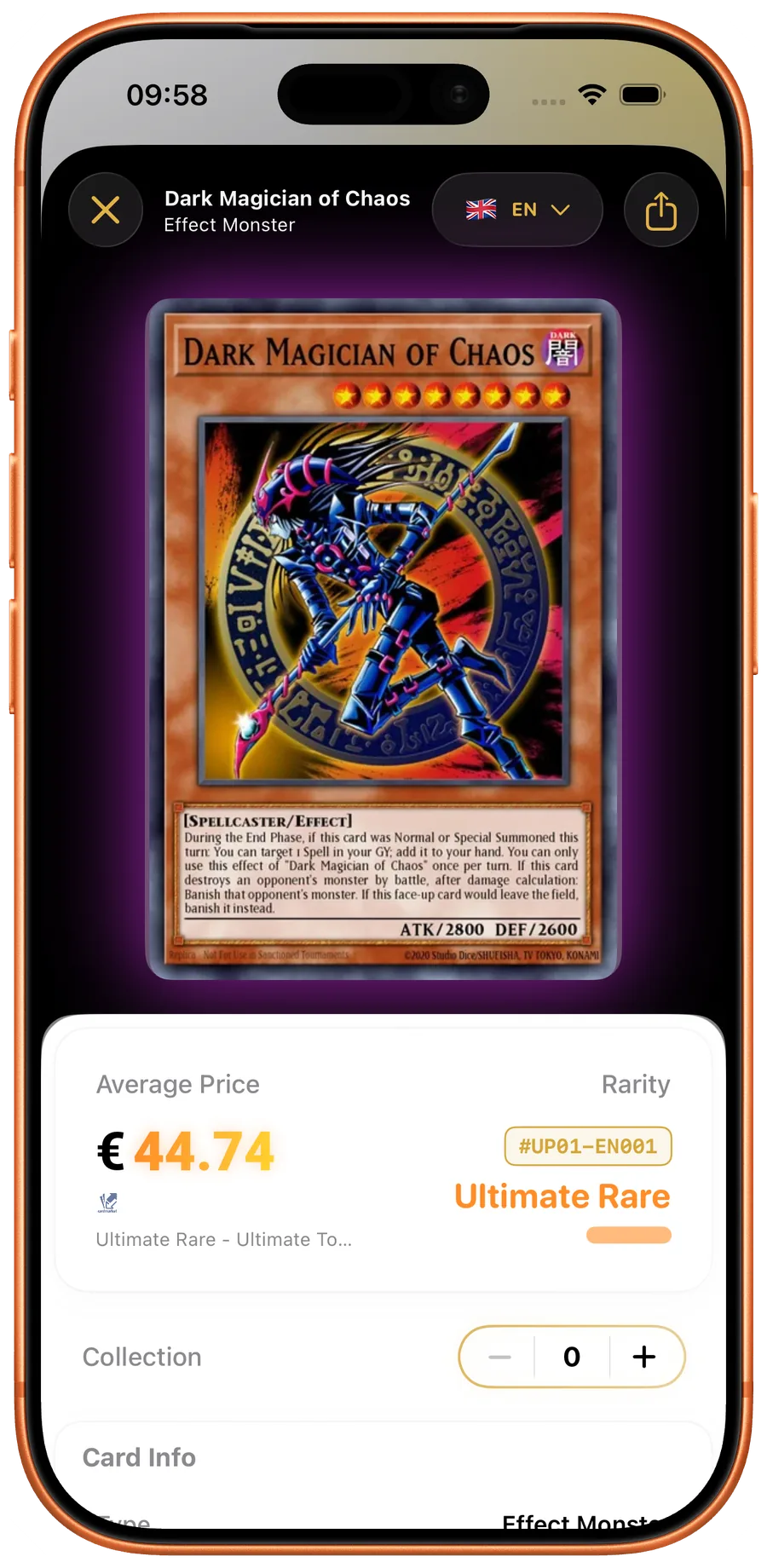
Find the cheapest print of every side tech
Side decks evolve every format. YuScan's per-print pricing lets you buy tech cards at Common prices when the premium rarity adds no tournament value.
Common mistakes
Side deck too specific. If your side deck only handles one matchup, the other matchups exploit your main deck. Build a side that covers 3–4 common matchups, not one perfectly.
Side deck too generic. If your side deck is all universal staples, you waste side slots that could swing specific matchups. Include 5–8 universal, 7–10 matchup-specific.
Forgetting to un-side after game 2. If you swapped 6 cards in for game 2 and then lose game 2, you need to undo some swaps for game 3 based on what happened. Players new to competitive often forget to re-evaluate the swap between games 2 and 3.
Not practicing siding. The side deck is its own skill. Practice siding against friends playing top decks before you bring a side deck to a tournament.
Scan every Yu-Gi-Oh! card. Track the whole collection.
YuScan is the AI-powered Yu-Gi-Oh! card scanner, collection manager and price tracker for iOS. 13,000+ cards, every expansion since LOB, live prices from TCGPlayer, Cardmarket and eBay.
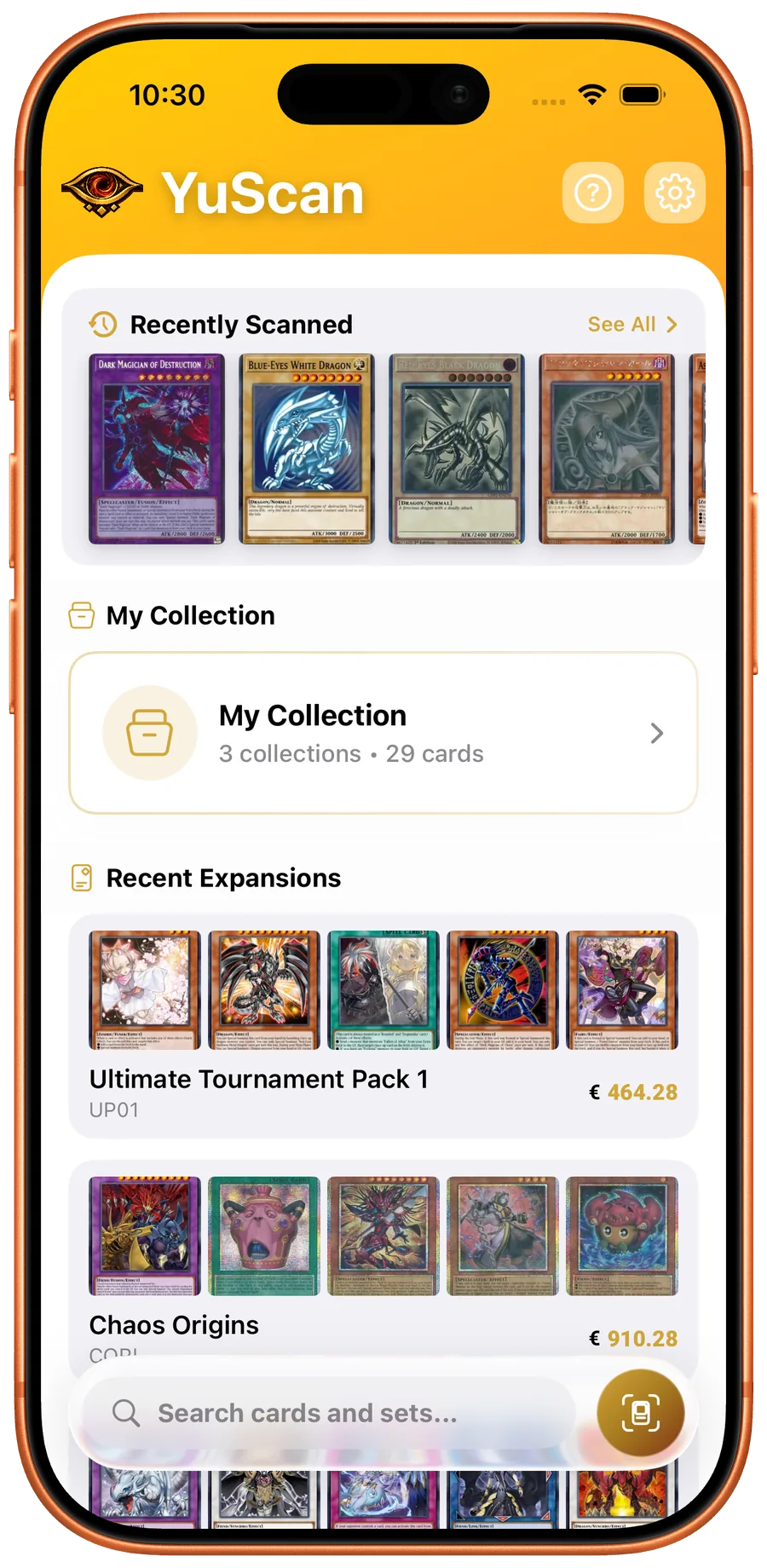
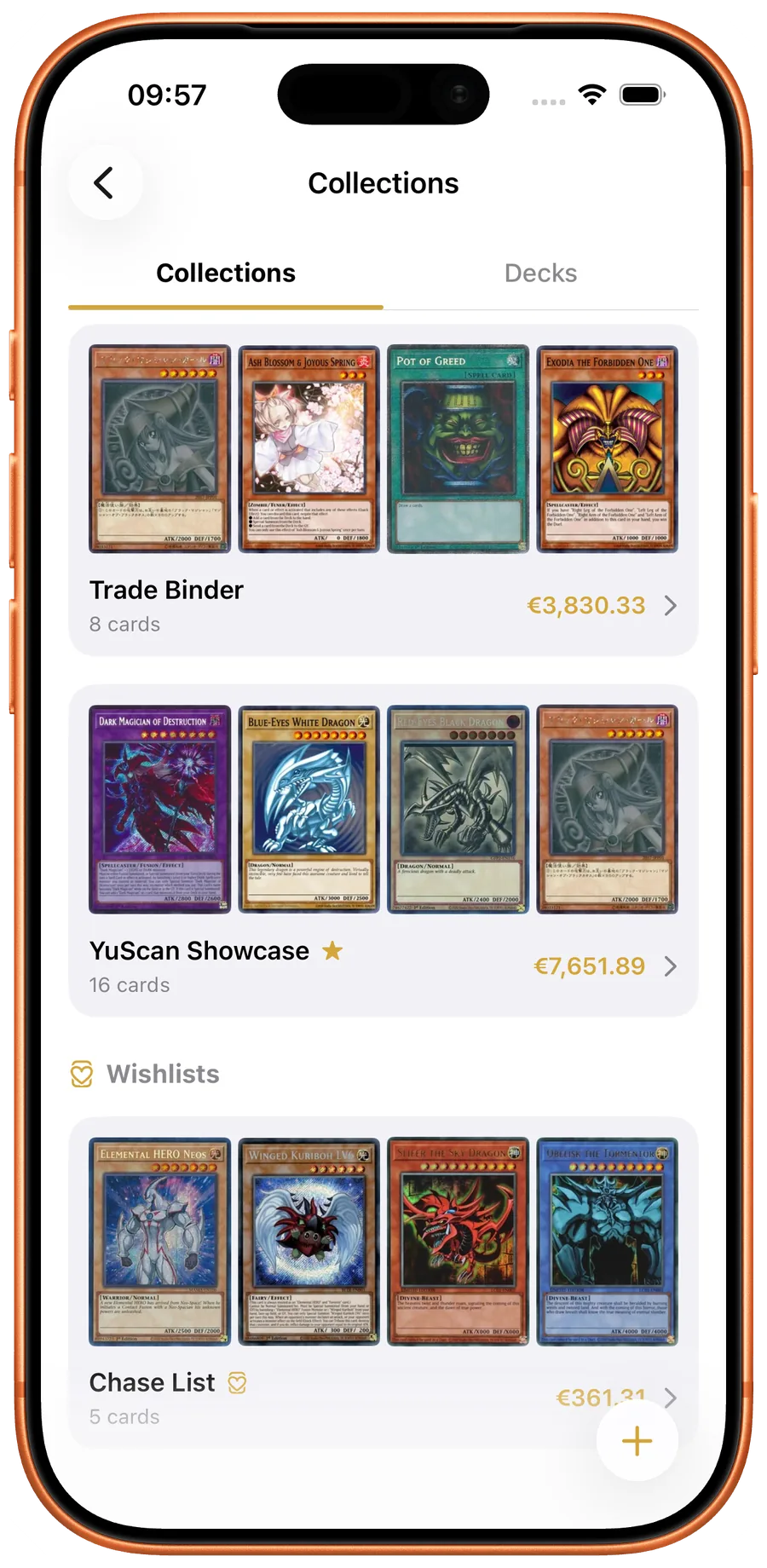
Build your side deck inside YuScan — track which cards are in main vs side, verify current format legality, and see the cheapest print of every tech card across TCGPlayer, Cardmarket, and eBay.