Yu-Gi-Oh! Reprints: When Does a Card Crash in Price?
The mechanics of Yu-Gi-Oh! reprint cycles — when Konami reprints meta staples, how price crashes typically play out, and how to time buying and selling around announcements.
YuScan app · June 11, 2026
Yu-Gi-Oh! card prices are shaped by two forces: tournament demand (players need the card to compete) and reprint supply (Konami produces new copies at calibrated intervals). When these two forces sync, prices stay stable. When Konami announces a reprint of an expensive staple, the existing printings’ prices often crash by 40–70% within two weeks.
Understanding the reprint cycle lets you buy and sell at better times, avoid the worst-case scenarios of holding cards through major reprints, and predict which cards are likely to get reprinted next. This guide covers how the cycle actually works in 2026.
Why Konami reprints
Konami reprints for commercial and ecosystem reasons, not collector reasons. The motivations:
1. Protect competitive accessibility. When a tournament staple’s cheapest printing climbs above $30–$50, the tournament scene develops an accessibility gap — new players can’t afford to compete. Konami responds with reprints that bring the cheapest printing back to $5–$15.
2. Drive sealed product sales. A new Secret Rare reprint of a meta staple in a booster set increases the set’s expected value, which increases buyer enthusiasm for the sealed product. Konami reprints staples specifically to boost sealed box value perception.
3. Anniversary and tier-introduction events. The Quarter Century Secret Rare rarity tier was introduced in 2023 for the 25th anniversary. Every year since, major anniversary products have included QCSR reprints of iconic cards. These reprints serve the rarity tier itself — Konami wants QCSR collectors to chase specific desirable cards in that rarity.
4. Banlist recovery. When Konami un-bans a previously Forbidden card, they often coincide the unban with a new reprint to ensure the card is accessible. Pot of Greed unbans (if they ever happened in the TCG) would likely include structured deck reprints.
The standard reprint cycle for meta staples
For tournament-relevant cards that aren’t current booster releases, the cycle runs roughly:
Month 0. Card is first printed in its main booster release. Primary printing is typically Ultra or Secret Rare. Initial price: $15–$60 depending on card.
Months 1–6. Price discovery. Tournament demand stabilizes the price.
Months 6–12. If the card becomes a meta staple and the price climbs above $40, Konami begins planning a reprint.
Months 12–18. Reprint appears in a mass-market product (Structure Deck, Mega Tin, Duel Devastator-style compilation). The cheapest printing available drops to $3–$15 depending on new print rarity.
Months 18–24. Secondary reprints in further products (Legendary Collection, anniversary boxes). Prices stabilize at the new lower level.
Months 24+. Premium-rarity reprints (Starlight Rare, QCSR) may appear, commanding temporary premiums before also fading.
The 12–24 month window is when existing high-rarity printings lose the most value.
What a reprint announcement actually does
When Konami announces a reprint of a $40 card:
Days 0–1. Announcement posts on social media and Konami’s official channels. Sellers notice immediately.
Days 1–3. Dumping begins. Sellers with inventory list cards at below-market prices to clear stock before supply arrives. Typical price drop: 20–35% in first 3 days.
Days 3–14. Price finds new equilibrium. Buyers waiting for the reprint hesitate; sellers continue to discount. Final drop from pre-announcement peak typically 40–70%.
Weeks 2–12. The reprint product is released. Cheap Commons enter market. High-rarity older printings (the pre-reprint versions) find their long-term price floor — usually 30–60% below pre-announcement.
Months 3–18. Price gradually stabilizes. The original rare printing may recover slightly if it has collector value beyond tournament use.
How to time buying
Best time to buy a meta staple: 2–4 weeks after a reprint. The new supply has dumped prices below equilibrium; equilibrium recovery takes a few weeks. Buy Commons from the reprint product; avoid premium rarities that are still oversupplied.
Worst time to buy: 1–3 months before a predictable reprint. Annual Mega Tins drop in September each year — buying a meta staple in July is a common mistake. Konami’s anniversary products tend to release in Q1; buying November–December can coincide with a reprint announcement two weeks later.
Safe times: Between reprint cycles. A card that was reprinted 12–18 months ago and hasn’t been re-reprinted since usually has a stable price for 6+ months. This is the window where the price reflects real tournament demand, not reprint-timing speculation.
How to time selling
Best time to sell: 2–6 months after price peaks. If a card climbs from $15 to $60 over a competitive cycle, sell while it’s still above $50. Don’t wait for the absolute top — the top is only visible in retrospect, and a reprint announcement can erase gains overnight.
Worst time to sell: 1–2 weeks after a reprint announcement. The panic dump window. Prices are falling, buyers are waiting for the reprint, and you’re competing against every other seller with the same thought. If you missed the sell window before the announcement, wait 2–3 months for the new equilibrium before listing.
Sell by category:
- Premium rarities (QCSR, Starlight) of current meta: hold long-term only if card is archetype-defining
- Secret / Ultra of meta cards: sell within 6 months of peak
- Common / Rare of any card: rarely worth selling; they trade at commodity prices
Identifying reprint candidates
Which card will Konami reprint next? Signals to watch:
The card’s cheapest printing is above $40. Reprint is very likely within 6–12 months.
The card is Limited to 1 and rotation-stable. Limited cards get reprinted less aggressively because demand per player is lower — but when they do get reprinted, the price crash is sharp.
The card was first printed in a low-distribution set. World Championship Qualifier promos, OCG-exclusive releases, and Legendary Duelist Special prints often get mass-market reprints 12–24 months later.
The archetype is getting new support. Konami typically pairs new archetype support with reprints of existing archetype staples. A new Snake-Eye support wave almost certainly reprints 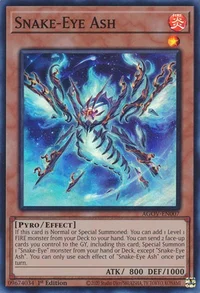 Snake-Eye Ash in some form.
The card is associated with an upcoming anniversary product. Look at Konami’s release calendar — every major anniversary tin in 2024–2026 has reprinted specific iconic cards. Pattern matching helps predict the next wave.
What doesn’t crash in price
Some card categories remain stable through reprints:
Vintage 1st Edition grails. A LOB 1st Edition 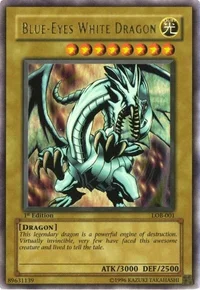 Blue-Eyes White Dragon PSA 10 is not affected by modern reprints. The vintage market is structurally separate from the tournament market.
Promotional prize cards. Shonen Jump Championship prize versions of cards remain valuable despite mass-market reprints. Prize versions and mass-market versions are treated as separate markets.
Graded modern cards. A PSA 10 QCSR of a current meta card holds value better than an ungraded QCSR because the grading premium offsets the reprint dilution.
Cards with sentimental or anime significance. Certain cards (Exodia, Blue-Eyes, Dark Magician) retain collector premiums across reprints because the demand isn’t purely tournament-driven.
The Master Duel factor
Since 2022, Konami has also released Master Duel-specific rarities and promotional cards. These don’t affect TCG paper prices directly — but when Konami announces a new Master Duel product that includes a physical-paper reprint component, TCG paper prices react.
Monitor Konami’s digital announcements for paper-reprint signals. This window opened in 2022 and has affected secondary market behavior continuously since.
On YuScan
Track reprint history per card
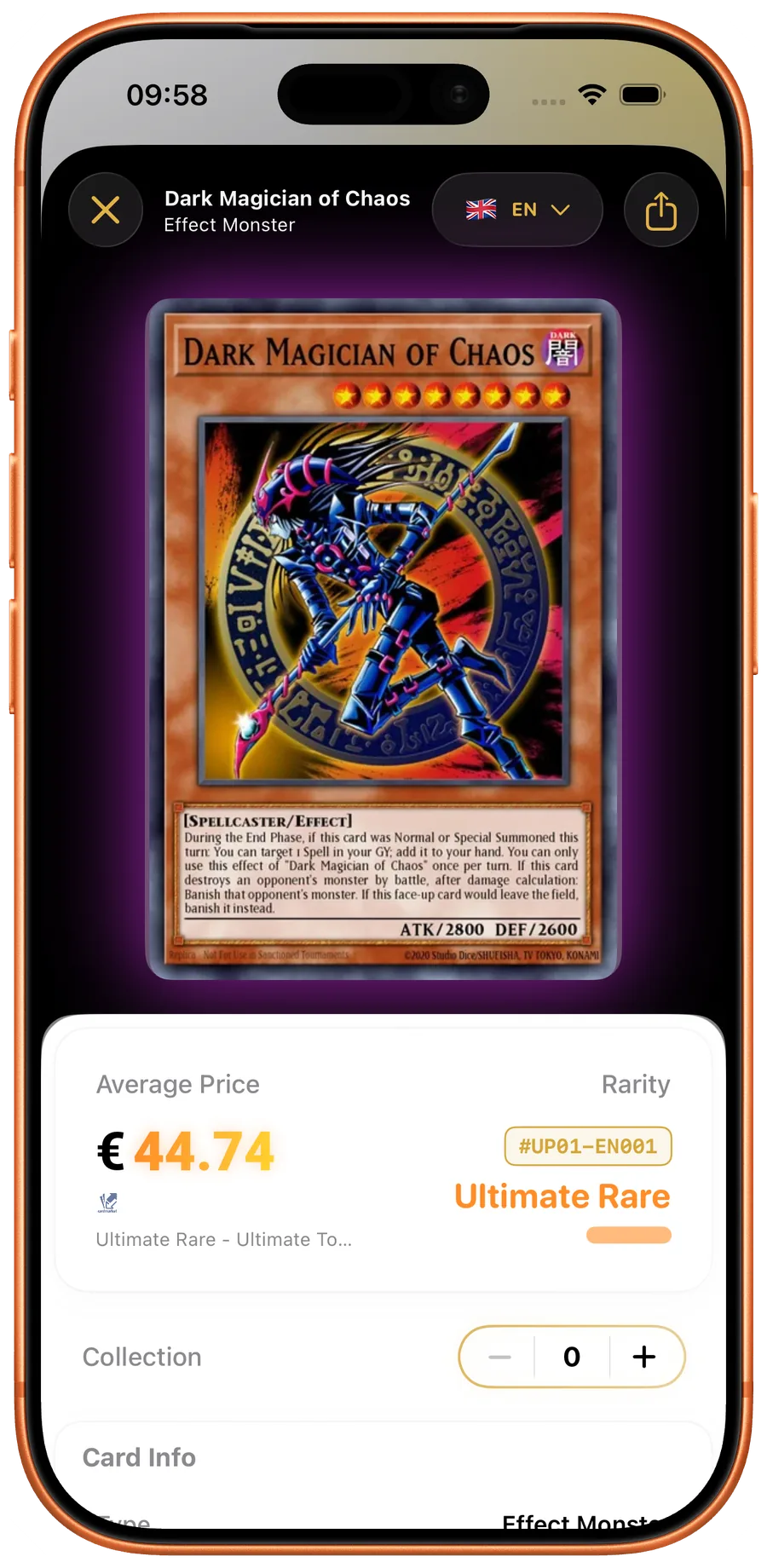
YuScan's per-card print listings show every historical printing with its release date — see at a glance when a card was last reprinted.
Common mistakes
Buying a meta staple because of rising price. Rising prices are often a signal of upcoming reprint (Konami responds to rising prices with supply). Buying into a rally can mean buying weeks before a 50% crash.
Holding premium rarities expecting long-term appreciation. Modern premium rarities (QCSR, Starlight, Prismatic Secret) rarely appreciate beyond their initial sale. Holding them for years typically loses to buying them back later.
Panic-selling after a reprint announcement. If you already hold the card through the announcement, waiting 2–3 months for the new equilibrium is usually better than dumping at the panic bottom.
Assuming vintage is safe. LOB 1st Edition is safe. Mid-era (2008–2015) vintage is not — new Secret Rare reprints of 2010-era iconic cards in anniversary products have crashed 2010 prints repeatedly.
Scan every Yu-Gi-Oh! card. Track the whole collection.
YuScan is the AI-powered Yu-Gi-Oh! card scanner, collection manager and price tracker for iOS. 13,000+ cards, every expansion since LOB, live prices from TCGPlayer, Cardmarket and eBay.
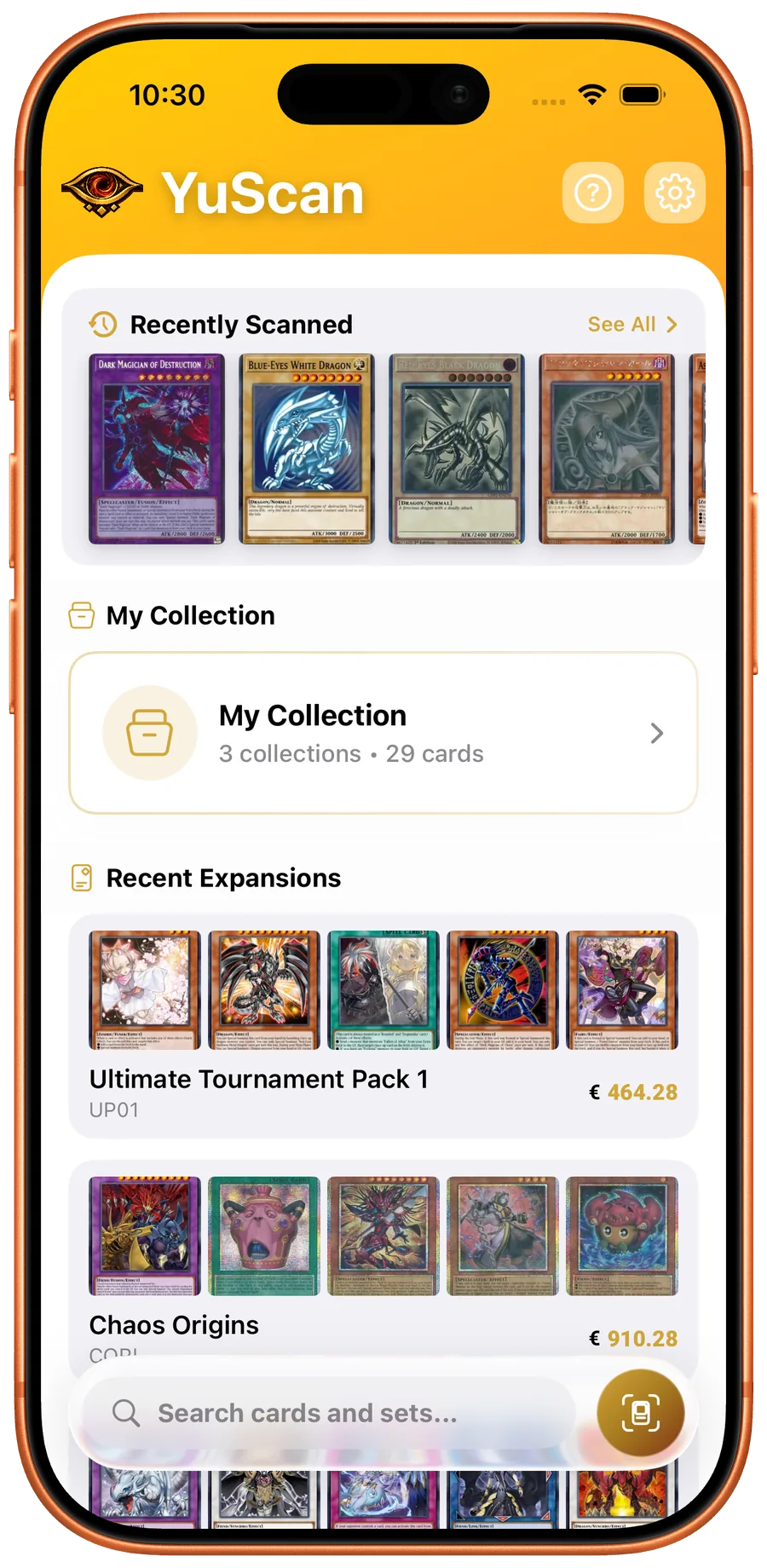
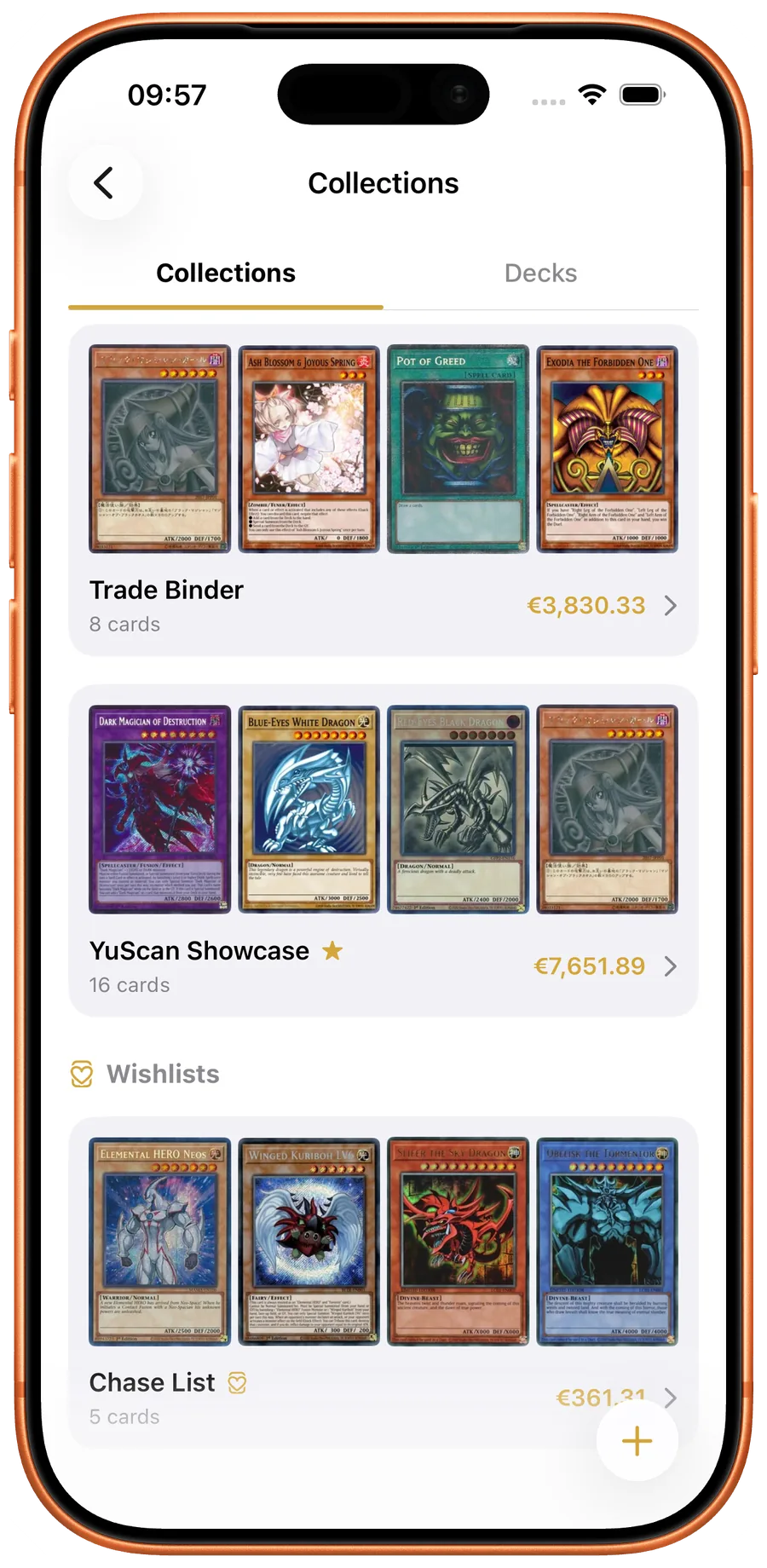
Track price history for every card in your collection in YuScan — see reprint events, price responses, and current market value per printing across TCGPlayer, Cardmarket, and eBay.