Every Yu-Gi-Oh! Rarity, Ranked (Common to Quarter Century)
All 14 Yu-Gi-Oh! rarities explained — from base Commons through Starlight and Quarter Century Secret Rares — with real card examples and what each one actually costs in 2026.
YuScan app · June 3, 2026
Yu-Gi-Oh! has fourteen active rarity tiers in 2026 — more than any other mainstream TCG. Each tier has its own holofoil pattern, its own pull rate, and its own price multiplier over the base Common version of the card. For collectors and budget players both, knowing which rarity to buy (and which to skip) is the single biggest lever on collection cost.
This ranking goes from cheapest to most expensive. Each tier lists a real example card at that rarity so you can see the visual difference; YuScan’s card pages show every rarity a card has been printed in, with current market prices per print.
The ranking
Common
The baseline — no holofoil, no premium
Common is the default rarity for the majority of cards in any booster pack. No holofoil, matte finish, no rarity stamp. A Common card’s price is set purely by the card’s playability — if the card doesn’t see tournament play, it’s a bulk card worth under $0.10. If it does, Common prints of meta staples trade from $1 up to $15.
Example: 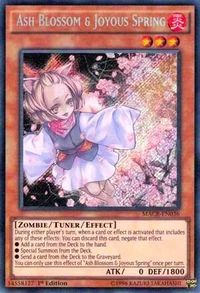 Ash Blossom & Joyous Spring has a Common printing that trades for a fraction of the Secret Rare alternative. For budget deck builders, Commons are the default.
Short Print (SP)
Common, but scarcer
Short Prints look identical to Commons but appear at a lower rate in a print run. Not visually distinguishable without reference to Konami’s published print distribution. Price premium over Common is typically 2–4× for playable cards.
Mostly relevant for set-completion collectors; casual players rarely distinguish SP from Common.
Rare
Silver foil on the name, nothing else
Rare cards have a silver holofoil lettering on the card name and nothing else. Unlike Common, the holofoil is visible in most lighting conditions. Pull rate is roughly 1-in-4 in modern boosters. Price premium over Common for the same card is 1.5–3×.
A rare-tier chase card is typically $2–$10 for modern meta staples.
Super Rare
Holofoil image, standard finish
Super Rare introduces a holographic finish on the card art itself. The name remains black text (not silver like Rare). Pull rate is roughly 1-in-8 in modern boosters. Super Rare is the rarity most casual players associate with “special” cards.
Price premium: 3–8× Common for playable cards. Modern Super Rare prints of meta cards sit in the $10–$40 range.
Ultra Rare
Gold foil name, holographic image
Ultra Rare adds gold holofoil lettering to the Super Rare pattern. Pull rate in modern boosters is roughly 1-in-12. This is the rarity most meta staples appear in at their “premium but accessible” price point. Price premium over Common is 5–15×.
A modern Ultra Rare of a tournament-defining card typically runs $30–$80.
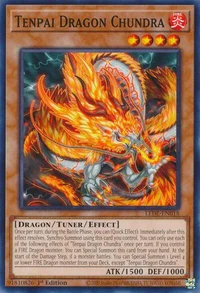
Tenpai Dragon Chundra
Secret Rare — foil covering the entire card surface
Secret Rare is the first rarity where the holofoil extends across the full card, including borders and text areas. Pull rate in modern boosters is roughly 1-in-24. Price premium over Common is 10–40×.
Tenpai Dragon Chundra has a Secret Rare printing that traded for $60+ during its competitive window and sits at $35–$50 today. Secret Rare is the rarity where price sensitivity becomes meaningful — a budget player runs the Ultra Rare version, a collector runs the Secret.
Ultimate Rare
Relief-textured foil — the tactile one
Ultimate Rare uses a raised, relief-textured foil on the card art that you can feel with your fingertips. Pull rate in older sets was roughly 1-in-24; modern sets have largely replaced Ultimate Rare with other premium tiers. Price premium varies widely — Ultimate Rares of cards from 2005–2015 trade at significant premiums due to the tactile distinctiveness.
Best collector target: CRV-era 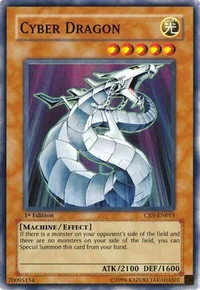 Cyber Dragon in 1st Edition Ultimate Rare.
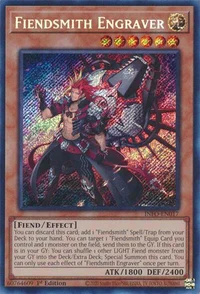
Fiendsmith Engraver
Collector's Rare — matte metallic foil with etched detail
Collector’s Rare, introduced in 2019, features a metallic matte finish with etched texture detail across the entire card. Originally a Japanese-exclusive rarity that has since expanded to limited English distribution. Pull rates are extremely low — roughly 1-in-100 in compatible sets.
Fiendsmith Engraver in Collector’s Rare is a current-era example of the rarity applied to a meta-defining card.
Prismatic Secret Rare
Diagonal rainbow reflection pattern
Prismatic Secret Rare has a distinctive diagonal rainbow foil pattern that shifts through the full visible spectrum as the card tilts. Introduced for specific anniversary products and special sets. Not a regular booster-pack rarity.
Price premium is typically 2–4× the equivalent Secret Rare of the same card.
Platinum Secret Rare
Silver-toned Secret Rare variant
Platinum Secret Rare uses a silver-toned holographic foil instead of the standard rainbow pattern. Introduced 2022–2023. Appears in limited product releases rather than standard boosters.
Price premium is similar to or slightly above Prismatic Secret Rare.
Gold Rare
Metallic gold throughout, Gold Series exclusive
Gold Rare cards have gold-toned metallic foil across text, borders, and image — distinctively not the same as Ultra Rare’s gold-name-only pattern. Originated in the Gold Series sets (GLD1 through GLD5, 2008–2013). Current Gold Rare printings are rarer than their print-run would suggest because Gold Series was a specific limited product line.
Premium over standard rarity is 3–8× depending on the card.
Ghost Rare
Monochrome silver — the one that looks broken
Ghost Rare is the rarity that makes new collectors think their card is miscut or misprinted. The entire image is rendered in monochrome silver with near-invisible outlines. Pull rate is roughly 1-in-400 or lower in eligible sets. Price premium is 10–40× the base Secret Rare of the same card.
Best example: Ghost Rare Blue-Eyes White Dragon trades in the low four figures in PSA 10.
Starlight Rare
Full-art holofoil everywhere, including borders
Starlight Rare, introduced 2020, extends the holographic pattern to the entire card face including the normally-opaque text box and borders. Pull rates are extremely low — roughly 1-in-700 in eligible booster sets. Price premium is typically 20–60× the base Secret Rare of the same card.
A Starlight Rare of a current meta card can trade for $400–$1,500+ at competitive release.
Quarter Century Secret Rare
The current top of the pull-rate pyramid
Quarter Century Secret Rare, introduced 2023 for Yu-Gi-Oh!‘s 25th anniversary, features a foil pattern marked with the “25th” anniversary logo. Pull rate is extremely low — estimated 1-in-1,000+ in compatible sets. Price premium over Secret Rare ranges from 30× to 100× for current meta cards.
This is the most expensive regular-production rarity in Yu-Gi-Oh! as of April 2026.
On YuScan
Browse every rarity
Filter YuScan's database by rarity — Common through Quarter Century — across every expansion since 2002.
How to read a rarity stamp
The rarity of a card is identified by the foil pattern, not the set code. A card printed in Super Rare in one set and Ultra Rare in another set is functionally the same card — only the market price and the visual appearance differ. Rarity identification matters for two reasons: (1) buying the correct rarity for your budget, and (2) correctly grading your collection’s value.
YuScan’s scanner reads rarity automatically as part of print identification. You don’t need to memorize pull rates or foil patterns — scan the card and the app reports the rarity and the current market price for that specific print.
What to buy, and what to skip
Budget players: buy Common or Rare prints of everything that has them. Price delta between Common and Secret Rare on a meta staple is often 20× or more; tournament rules don’t care which you play.
Collectors: decide your scope before you start. Full-rarity set completion for any current booster means chasing Starlight and Quarter Century Secret Rares at 1-in-1,000 pull rates. Partial-rarity completion (Commons through Secret only) is 10–50× cheaper and achievable.
Mid-range players: run Super or Ultra Rare versions of your chase cards. The visual upgrade over Common is meaningful, the price premium is manageable, and the cards hold value better than Commons when decks rotate out of the meta.
Scan the cards on this list. Watch the prices move.
YuScan identifies any Yu-Gi-Oh! card in under a second and tracks live prices across TCGPlayer, Cardmarket and eBay per print run — so a 1st Edition and an Unlimited don't get averaged into a meaningless number.
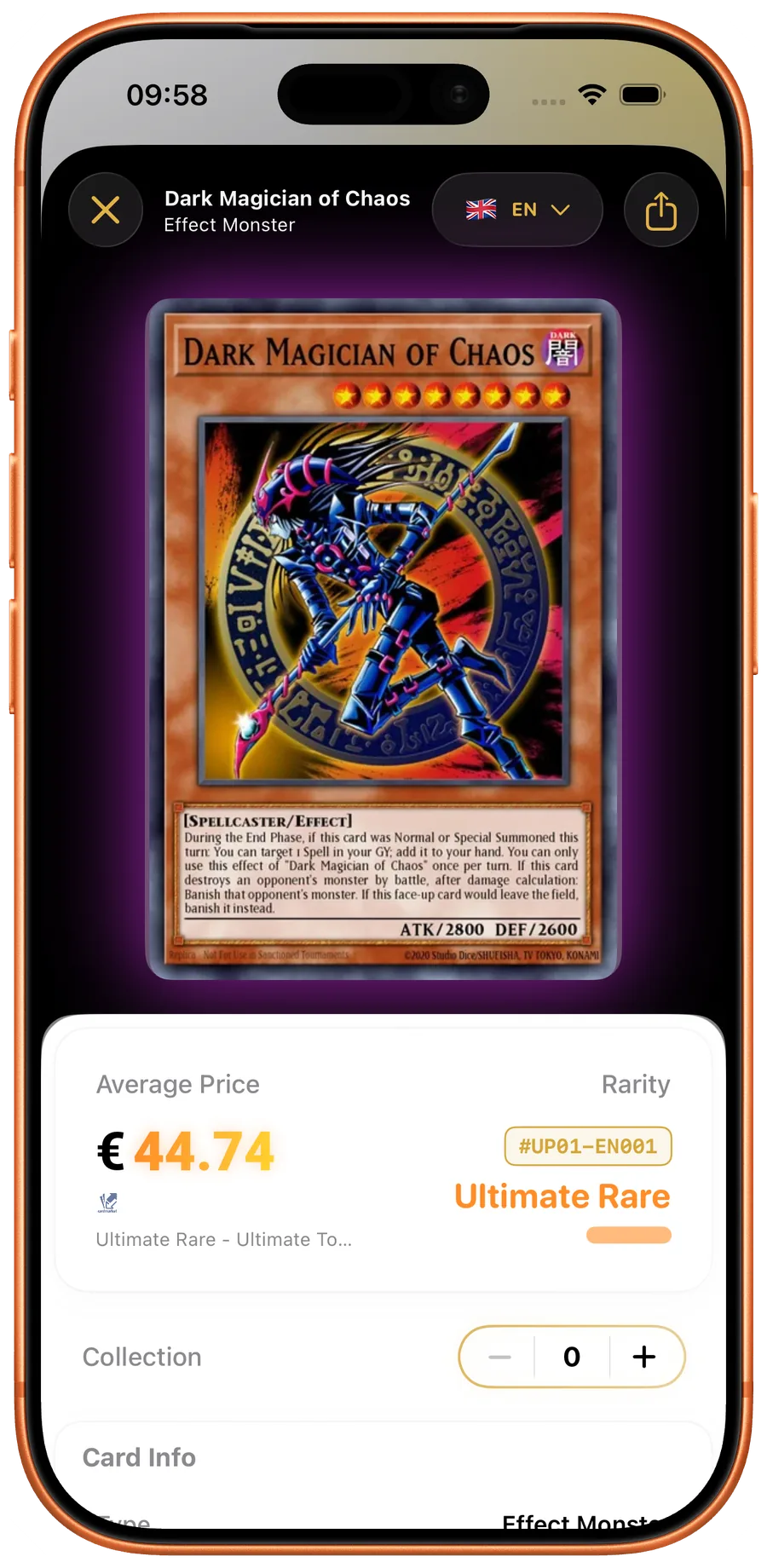
Track every rarity you own, every print run, and every current market price across TCGPlayer, Cardmarket and eBay — per print, not averaged — in the YuScan iOS app.