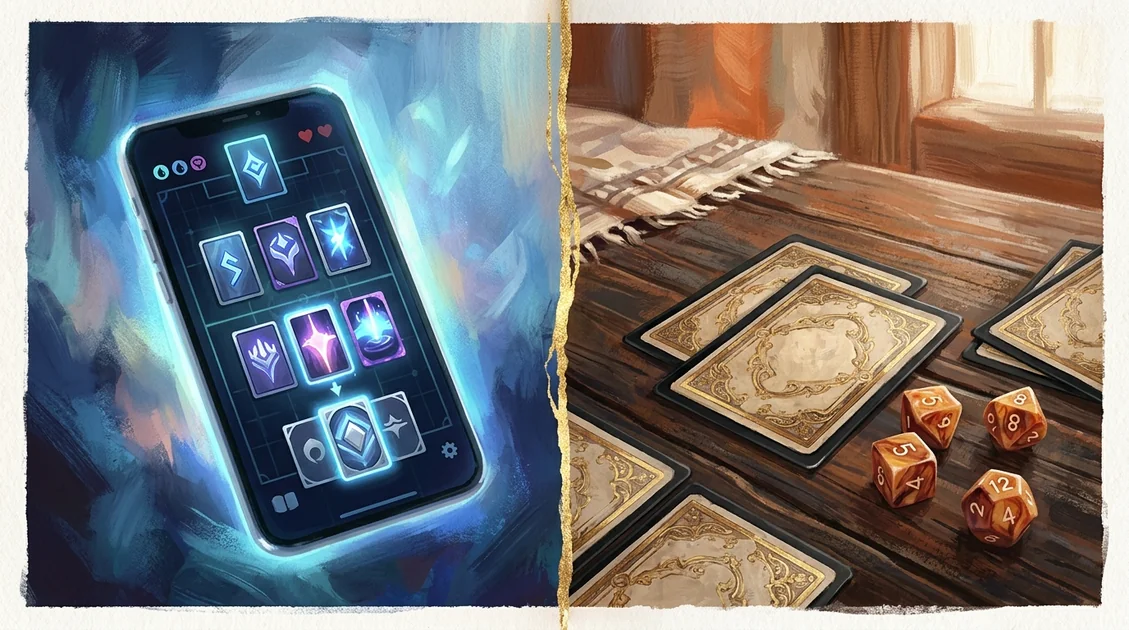
Master Duel vs Paper Yu-Gi-Oh!: Why They're Two Different Games
Master Duel has its own card pool, its own banlist, its own meta. Here's how Konami's digital client actually differs from paper Yu-Gi-Oh! — and which one fits which kind of player.
YuScan app · July 31, 2026
Yu-Gi-Oh! Master Duel launched in 2022 and has become Konami’s second-largest Yu-Gi-Oh! product after paper. It’s free to play, runs on every major platform, and uses modern Yu-Gi-Oh! rules with automated enforcement. For new players it’s the easiest entry point into the game; for experienced players it’s a practice and ladder environment parallel to paper play.
But it’s not the same game. The card pools overlap significantly but differ at the margins. The banlists are distinct. The meta is different. The experience of winning in Master Duel and winning at a paper local are meaningfully different experiences — and the deck that wins one may not win the other.
Shared mechanics
Both versions of Yu-Gi-Oh! use the same core rules:
- Same turn structure (Draw → Standby → Main 1 → Battle → Main 2 → End)
- Same summoning mechanics (Normal, Tribute, Fusion, Synchro, Xyz, Pendulum, Ritual, Link)
- Same Chain/Priority rules per Konami’s current Problem-Solving Card Text
- Same deck construction: 40–60 main deck, 15 side deck, 15 extra deck
- Same card effects (with a few edge cases where Master Duel’s automation resolves differently than paper tournament rulings)
If you understand modern Yu-Gi-Oh! rules, you can play either format. The rules don’t need re-learning.
Card pool differences
Master Duel’s card pool is a subset of the TCG + OCG combined pool, released on Konami’s Master Duel cadence. Specifics:
Cards in Master Duel: about 85% of the TCG card pool, plus OCG cards not yet printed in the TCG. Master Duel gets new sets on a roughly 2-month cycle.
Cards not in Master Duel: recent TCG releases Konami hasn’t yet added to the digital client (typical lag 3–6 months after TCG release), and some promotional or tournament-only prints that never make it to Master Duel.
Cards only in Master Duel: occasional Master Duel-exclusive cards or early OCG releases that aren’t in the TCG yet.
In practice: most decks can be built in both Master Duel and paper, but some specific cards may be one-only. Check YuScan’s card database for format availability before committing to a deck.
Banlist differences
Each Master Duel banlist update is independent of the TCG and OCG updates. Notable current-format differences as of April 2026:
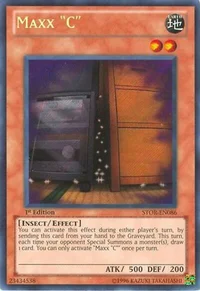 Maxx "C" — legal in Master Duel, Forbidden in TCG
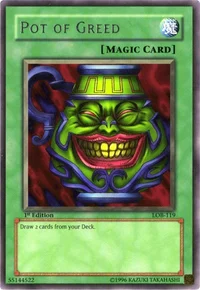 Pot of Greed — Limited in Master Duel, Forbidden in TCG
- Various combo cards have different copy limits across the two formats
This means a Tier 1 deck in Master Duel may not be Tier 1 in paper, and vice versa. Example: Snake-Eye is strong in both formats but the specific build differs because the available hand trap suite differs.
Speed differences
Master Duel is faster. Automated rules resolution means no pauses for rulings, no chain-negotiation with opponents, no manual card counting. A Master Duel match typically completes in 5–12 minutes versus 10–25 minutes for a paper match.
Paper is slower but more interactive. Chain negotiations, timing reads, and opponent tells all matter in paper and are absent in Master Duel.
Players who prefer fast games lean Master Duel. Players who value slow, thoughtful play lean paper.
Cost differences
Master Duel is free with optional microtransactions for gems used to craft cards. Most decks can be built via gameplay rewards over 4–12 weeks of regular play. For impatient players, spending $50–$150 on gems unlocks a complete competitive deck in days.
Paper Yu-Gi-Oh! ranges $120 (budget Tier 2) to $1,800 (competitive Tier 1) for a full deck. See our budget ranking for specifics.
For pure rules-learning and gameplay practice, Master Duel is dramatically cheaper. For building a collection that holds value and connects you to a community, paper is the investment.
Community differences
Master Duel community is largely online — Discord servers, Twitch streams, Reddit, and YouTube guides. Ladder-focused, meta-focused, fast feedback loops on what’s winning.
Paper community is local + regional + international. Card shops host weekly events, regionals bring together the local scene, and YCS (major tournaments) represent the top end of the competitive ecosystem. The collector side of the community — vintage grading, set completion, trade binders — lives almost entirely in paper.
Players who want to compete online choose Master Duel. Players who want a local community choose paper. Many serious players do both.
What transfers, what doesn’t
Transfers from Master Duel to paper:
- Rules knowledge
- Combo familiarity with modern archetypes
- Hand trap decision-making
- Side deck theory
Doesn’t transfer:
- Physical shuffling skills
- Chain negotiation with opponents
- Reading physical opponent tells
- Managing time pressure in paper matches
- Sleeving, organizing, and transporting decks
Transfers from paper to Master Duel:
- All rules knowledge
- Deck construction theory
- Matchup knowledge (for archetypes in both formats)
Doesn’t transfer:
- Paper tournament-specific skills (time management, sleeve/deck handling, ruling disputes)
Which to pick
Totally new to modern Yu-Gi-Oh!: Master Duel. Zero cost, automatic rules, fast learning curve.
Returning player coming back after 5+ years: Master Duel for a month to learn modern rules, then paper or both.
Competitive player: both. Master Duel for practice and ladder; paper for events and community.
Collector: paper, primarily. Master Duel’s digital “collection” has no resale value; paper cards hold value over years and form the basis of the Yu-Gi-Oh! collector market.
Budget-constrained: Master Duel. Free to play is free to play.
Casual / social player: paper if you have a local scene; Master Duel if you don’t.
The short version
Master Duel is a free, fast, automated version of Yu-Gi-Oh! that’s great for learning, ladder play, and practice. Paper Yu-Gi-Oh! is slower, more expensive, and includes the community, collecting, and tournament ecosystem that make the hobby interesting long-term.
Play Master Duel to learn and ladder. Play paper to compete, collect, and connect locally. Most serious players do both.
On YuScan
Cross-reference format availability
YuScan shows TCG, Master Duel, and OCG legality per card — so you always know where your deck is legal.
Scan every Yu-Gi-Oh! card. Track the whole collection.
YuScan is the AI-powered Yu-Gi-Oh! card scanner, collection manager and price tracker for iOS. 13,000+ cards, every expansion since LOB, live prices from TCGPlayer, Cardmarket and eBay.
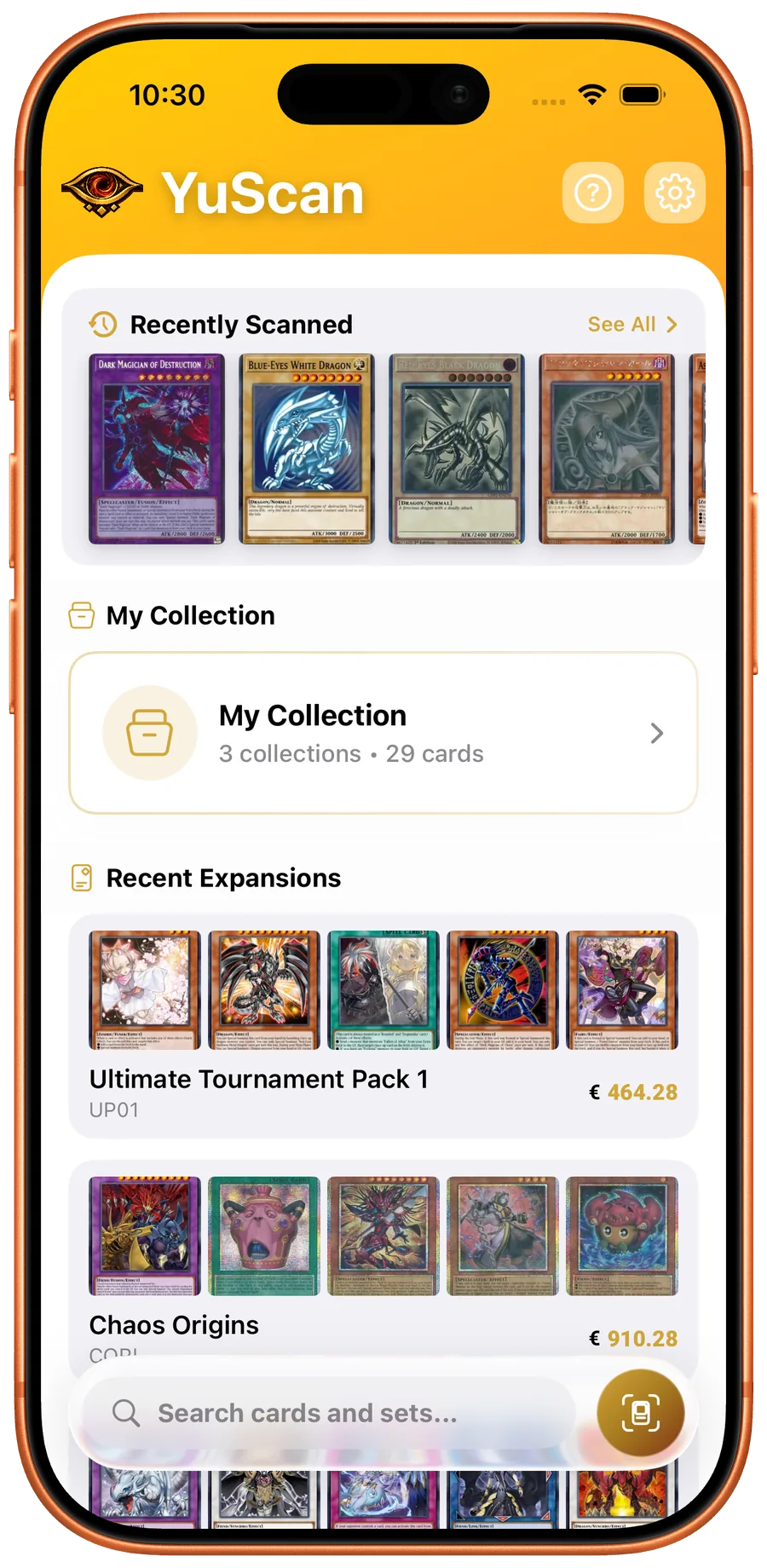
YuScan tracks paper Yu-Gi-Oh! — physical collection, per-print pricing, condition tracking. Master Duel’s digital card collection doesn’t need a tracker because it lives in Konami’s client. Paper cards are the ones where knowing what you own matters.