The Yu-Gi-Oh! Card Protection Guide: Sleeves, Toploaders, Binders (Ranked)
Every product category for Yu-Gi-Oh! card protection, ranked by use case — tournament shuffling, long-term collection storage, grading-grade preservation. With specific product recommendations.
YuScan app · July 1, 2026
Yu-Gi-Oh! cards, especially vintage 1st Edition prints, degrade more quickly than collectors tend to expect. The Konami card stock used from 2002 onward is softer than modern Magic or Pokémon stock, edges bruise easily, and corners whiten from routine handling. Protection isn’t optional if you plan to preserve cards long-term — and the differences between “adequate” and “wrong product entirely” are meaningful.
This ranking covers the product categories most Yu-Gi-Oh! players and collectors actually use, ranked by how well each one fits its primary purpose. Specific product recommendations are included where one option is clearly ahead of others.
The ranking
Inner sleeves (perfect-fit)
The first layer — always non-negotiable
Perfect-fit inner sleeves are clear, tight-fitting sleeves that sit directly against the card. They protect against surface marring, moisture transfer from outer sleeves, and routine shuffle friction. Every card you care about should be in a perfect-fit inner sleeve before anything else touches it.
Recommended: Ultra Pro Small Card Perfect Fit, KMC Perfect Fit, or Ultimate Guard Katana Inner. All three perform comparably on 500-shuffle durability testing. Don’t use store-brand cheap perfect-fits — the tolerances are loose enough to defeat the purpose.
Standard outer sleeves (tournament)
The working layer for active decks
Standard Yu-Gi-Oh!-size outer sleeves (63x90mm fit for Small/Japanese card sizing) are the tournament-play layer. Konami rules require opaque or semi-opaque sleeves of uniform color across your entire deck; clear sleeves are not tournament-legal at official events.
Recommended: KMC Hyper Mat (matte finish, good shuffle feel, stable corners after 500 shuffles), Ultimate Guard Supreme UX (durable, slightly thicker), or Ultra Pro Pro-Matte. All three pass tournament requirements and perform well across 500+ shuffle tests. Replace sleeves every 3–6 months of active play — sleeve corner whitening transfers to cards eventually.
Double-sleeving for high-value decks
Inner + outer, the grail-deck setup
Double-sleeving means running a perfect-fit inner sleeve plus a standard outer sleeve on every card in the deck. Adds a small amount of deck thickness but dramatically reduces wear on the underlying cards. For any deck that contains Secret Rare or higher chase cards worth $50+ each, double-sleeving is standard practice.
Double-sleeved decks shuffle slightly stiffer; some players prefer bending the outer sleeve corners before play to improve shuffle feel. Don’t skip the inner sleeve just because the deck shuffles better without it — the inner sleeve is the part that actually protects the card surface.
Toploaders (graded and raw storage)
Rigid protection for individual high-value cards
Toploaders are rigid plastic card holders used to protect individual cards during shipping, display, or careful storage. Two categories: thin (35pt, for raw ungraded cards) and thick (100pt+, for double-sleeved or vintage cards needing extra rigidity).
Recommended: Ultra Pro 35pt for raw cards, Ultra Pro 100pt for thick/vintage cards, and specialty 130pt+ for double-sleeved vintage. Always store toploadered cards with the card’s surface against the toploader’s clear side (not the opaque side) — toploader opacity is inconsistent and some brands can transfer imprint marks over long storage periods.
Binders (4-pocket and 9-pocket)
Long-term collection storage and display
Binders are the standard for organized Yu-Gi-Oh! collection storage. Two form factors matter: 9-pocket binders for general collection organization, and 4-pocket binders for premium-rarity display (the 4-pocket layout shows each card larger and reduces page-flex pressure).
Recommended: Ultra Pro Premium 9-pocket (zipper closure, acid-free pages, stable over multi-year storage), Vault X Exo-Tec (hardcover, zipper, high-end feel for personal collection display). Avoid cheap ring binders — the center rings mar card edges over time and ring-based binders are not archival.
Card savers (grading submission)
Semi-rigid holders for PSA/BGS/CGC submission
Card savers are semi-rigid thin plastic holders designed specifically for grading submission. Most grading services require or strongly prefer card savers over toploaders for submitted cards — the thinner form factor fits the grading machinery and reduces handling risk at the grader.
Recommended: Card Saver 1 (the industry standard used by PSA, BGS, and CGC). Do not submit cards to grading in toploaders; most graders will re-sleeve them anyway, adding handling opportunities.
Storage boxes (long-term archival)
The final storage layer
Storage boxes house toploadered or sleeved cards long-term. Key features for archival-grade storage: acid-free interior, rigid walls, low-UV closure.
Recommended: BCW card boxes (cardboard, functional and cheap, good for working collections), or UV-protective plastic cases (Ultra Pro or Ultimate Guard options) for high-value archival storage. Store in climate-controlled space — humidity over 60% accelerates card warping meaningfully over years.
Deck boxes (tournament transport)
Transport, not storage
Deck boxes carry sleeved decks to and from events. Important features: lid locks (to prevent spillage in transit), dividers (for main / side / extra deck separation), and material durability.
Recommended: Ultimate Guard Boulder 100+, Ultra Pro Satin Tower. Both hold 100+ sleeved cards, are Konami-tournament-compatible in sizing, and survive routine travel. Do not store cards long-term in deck boxes — they aren’t archival.
On YuScan
Track your protected collection in YuScan
Log condition, sleeves, storage location, and current value for every card in your collection.
How to build a protection workflow
For active tournament decks:
- Perfect-fit inner sleeve every card
- Tournament-legal opaque outer sleeve over that
- Replace outer sleeves every 3–6 months
- Deck box with internal dividers for transit
For raw (ungraded) collection cards:
- Perfect-fit inner sleeve
- Toploader (35pt for most cards, 100pt for vintage)
- Store in a card storage box, not a binder (binder page pressure accumulates)
For graded cards: Graded slabs are self-protective. Store in a case designed for slab storage (MGC box, PSA-branded display box) to prevent scuffing of the slab surface itself.
For pre-grading submissions:
- Perfect-fit inner sleeve
- Card saver (not toploader)
- Team bag over the card saver if shipping to the grader
Common mistakes
Skipping the inner sleeve. The most frequent protection failure. Outer sleeves alone allow sleeve-ink transfer onto card surfaces over time. Inner sleeves solve this at $3 per 100 cards.
Using mismatched sleeves in tournament play. Konami rules require all sleeves in a deck to be identical. Mixed sleeves are a tournament offense and a shuffle-timing tell opponents can pick up on.
Long-term storage in active deck boxes. Deck boxes aren’t archival. Cards stored in deck boxes for more than a few months show corner wear from repeated access.
Relying on opacity alone. Some “opaque” tournament sleeves are opaque from the back but translucent in certain lighting. Test your sleeves against a flashlight before committing to a full deck set.
When to retire a sleeve
Replace sleeves when:
- Any corner shows visible whitening or bending
- The sleeve has a visible slit or tear, even a tiny one
- Shuffle feel changes noticeably (a sign of accumulated friction damage)
- Every 6 months of regular tournament use regardless of visible condition
Scan the cards on this list. Watch the prices move.
YuScan identifies any Yu-Gi-Oh! card in under a second and tracks live prices across TCGPlayer, Cardmarket and eBay per print run — so a 1st Edition and an Unlimited don't get averaged into a meaningless number.
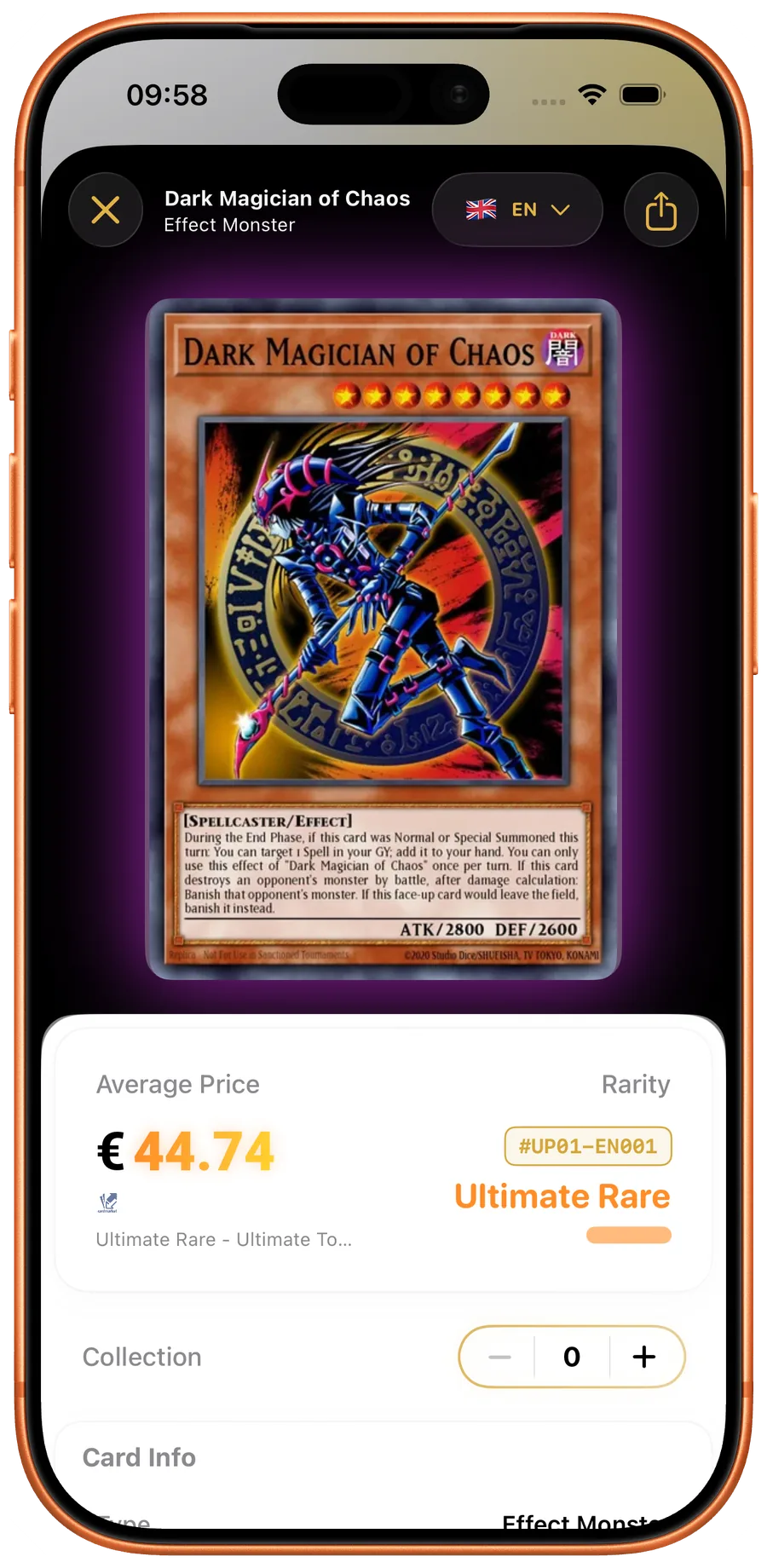
Log card condition, sleeve status, and storage location for every card in your collection. YuScan tracks everything you need to know per card — including when you last protected it.