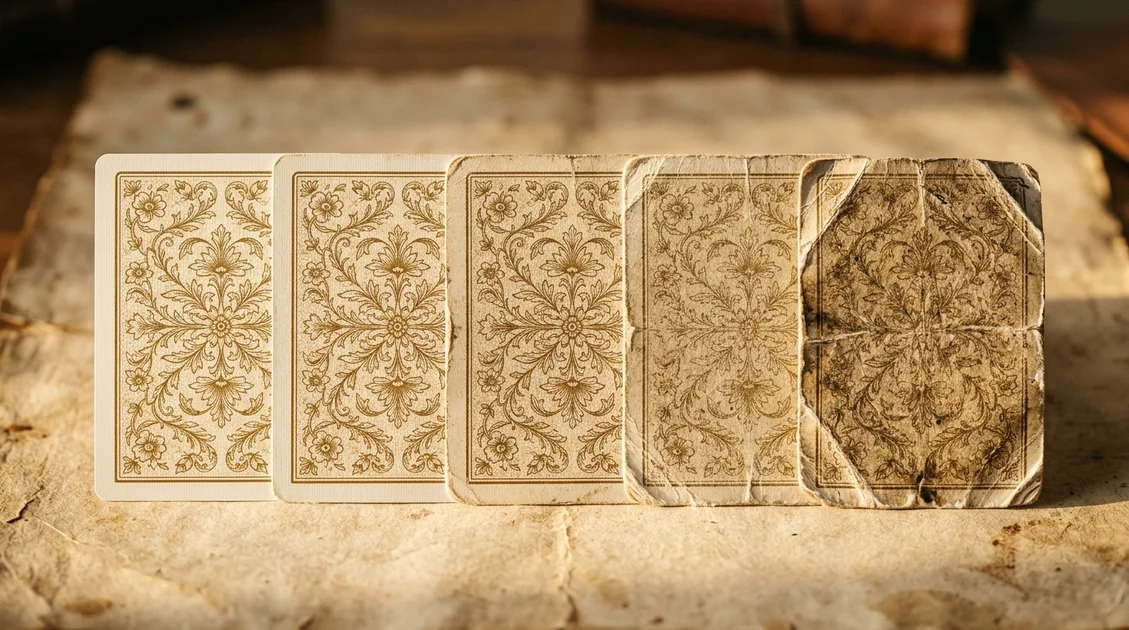
Yu-Gi-Oh! Card Condition Grading Explained (M, NM, LP, MP, HP, DMG)
The six-grade card condition scale used by TCGPlayer, Cardmarket, and PSA pre-grading — with specific visual criteria for each grade and the price impact at each tier.
YuScan app · July 15, 2026
Card condition is the second-biggest price driver in Yu-Gi-Oh! after print variant. The same card in different conditions can trade at 2–5× price differences. A Near Mint modern Secret Rare selling at $80 might be $60 in Lightly Played, $40 in Moderately Played, and $20 in Heavily Played. Vintage cards show even larger condition-related price swings.
This guide covers the six-grade scale used across the hobby, the specific criteria that place a card in each grade, and how to evaluate condition consistently when buying, selling, or preparing cards for grading submission.
The six-grade scale
Mint (M) — indistinguishable from a card just pulled from a booster pack. No visible flaws under close inspection. Centering within Konami’s production tolerances, sharp corners, no surface marks, crisp edges. This is the rarest condition for cards more than a few weeks old. Typically reserved for cards that have been in protective storage since opening.
Near Mint (NM) — the de facto “new card” grade. Visible inspection reveals minor handling: perhaps a whisker of corner wear, a minor surface scratch only visible at certain angles, or slightly off-center printing that still falls within acceptable tolerances. The overwhelming majority of cards sold as “new” are NM, not Mint. TCGPlayer’s “Near Mint” grade corresponds to this.
Lightly Played (LP) — visible handling without structural damage. Minor corner whitening, light edge wear, possibly a small surface scuff. The card is still clearly presentable and tournament-legal. LP corresponds roughly to TCGPlayer’s “Lightly Played” grade and Cardmarket’s “Good.”
Moderately Played (MP) — clearly handled. Corner whitening is visible without close inspection, edges may show wear, surface may have minor scratches or printing imperfections. Card is tournament-legal (it’s not damaged enough to be a marked card) but collectors generally won’t accept this grade for high-value purchases.
Heavily Played (HP) — significant visible wear. Multiple corner flaws, clear edge whitening, possible surface issues. Card is still legally playable as long as the artwork and text are clearly readable, but its collector value is substantially reduced.
Damaged (DMG) — bent, creased, torn, water-damaged, or otherwise structurally compromised. Cards in this condition are often not tournament-legal (bent cards are considered “marked” if they can be identified by feel in a sleeved deck). Collector value is near bulk.
Specific criteria by grade
Centering is how even the white border appears on all four sides of the card face. Konami’s production tolerance is roughly 60/40 (the heaviest side at most 60% of the border, the lightest at least 40%). Centering beyond this range affects grade.
- Mint: 55/45 or better on all axes
- NM: within production tolerances (60/40)
- LP: slight miscut visible (65/35)
- MP: noticeable miscut (70/30)
- HP: severe miscut (>70/30)
Corners are the most common failure point. Evaluate under 10× loupe magnification:
- Mint: no visible whitening, wear, or layer separation
- NM: a single corner with minor whitening acceptable; all four sharp
- LP: light whitening on 1–2 corners
- MP: whitening on 3+ corners or visible bending on any corner
- HP: severe whitening, bending, or layer separation on multiple corners
- DMG: broken corner, missing corner paper
Edges are the card’s outer rim. Run a fingertip along each edge:
- Mint: smooth, no whitening, no fray
- NM: barely perceptible fray acceptable
- LP: visible but minor edge whitening
- MP: clear edge wear throughout
- HP: frayed edges, visible whitening on most sides
- DMG: torn or cracked edges
Surface is the card face itself. Inspect under bright light at multiple angles:
- Mint: flawless, no scratches, no clouding on holos
- NM: one or two very minor surface marks acceptable
- LP: minor surface scratches or light holo clouding
- MP: visible scratching or light surface indentations
- HP: clear surface damage, scratches visible at a glance
- DMG: gouges, large indentations, or surface delamination
Backs matter too. Yu-Gi-Oh! backs are distinctive brown-purple and any scratching, staining, or wear on the back affects grade:
- Mint: pristine back
- NM: minor back wear acceptable
- LP/below: back wear more visible, typically drops the overall grade by one tier
Price impact by grade
For modern cards (2015+):
- NM to LP: typically 15–20% price drop
- LP to MP: typically 20–30% price drop
- MP to HP: typically 30–50% price drop
- HP to DMG: typically 50–80% price drop
For vintage cards (2002–2010):
- NM to LP: typically 30–40% price drop
- LP to MP: typically 40–50% price drop
- MP to HP: typically 50–70% price drop
- HP to DMG: typically 70–90% price drop
Vintage grade-to-grade drops are larger because the pool of high-grade vintage cards is scarcer — a PSA 10 LOB 1st Edition Blue-Eyes clears $80k, while a PSA 7 clears $8k. The same modern card in PSA 10 vs PSA 7 typically has a 2–3× spread, not 10×.
When to trust a seller’s grade
TCGPlayer and Cardmarket both enforce seller grading through return policies — buyers can return cards that arrive in worse condition than listed. This creates real accountability for grading accuracy.
That said, grading is subjective and different sellers have different thresholds. A “Near Mint” card from one seller might be a “Lightly Played” card from a stricter seller. For purchases above $50, buying from sellers with explicit return policies and high feedback scores is the reliable approach.
For purchases above $500, authentication via grading (PSA, BGS, CGC) is more reliable than trusting seller grades. A PSA 9 is a PSA 9 regardless of who the seller is.
Grading your own cards
When you sell or list cards you own, grade honestly. Overstating condition damages seller reputation and leads to returns; understating condition leaves money on the table.
Quick process:
- Clean your hands before handling the card
- Hold the card under bright light, examine all four corners under 10× loupe
- Check centering against the scale above
- Inspect the surface at multiple angles
- Check the back
- Assign the most conservative grade — if you’re between two grades, list the lower one
Buyers who receive cards better than listed are happy. Buyers who receive cards worse than listed file returns.
Preparing cards for grading submission
If you plan to submit cards to PSA, BGS, or CGC, only Mint and NM candidates justify the fee. Submitting LP or worse cards is almost always a financial loss — the graded PSA 7 or PSA 8 market typically clears at a price similar to raw LP.
Pre-submission checklist:
- Centering 55/45 or better on all axes
- No visible corner wear under 10× loupe
- No surface scratches visible at any angle
- No edge wear
- Clean, unblemished back
- Card has been in protective storage, not actively played
Cards passing all six checks are PSA 10 candidates. Cards failing any one check are PSA 9 maximum — which usually means grading is not economically justified.
On YuScan
Log condition for every card
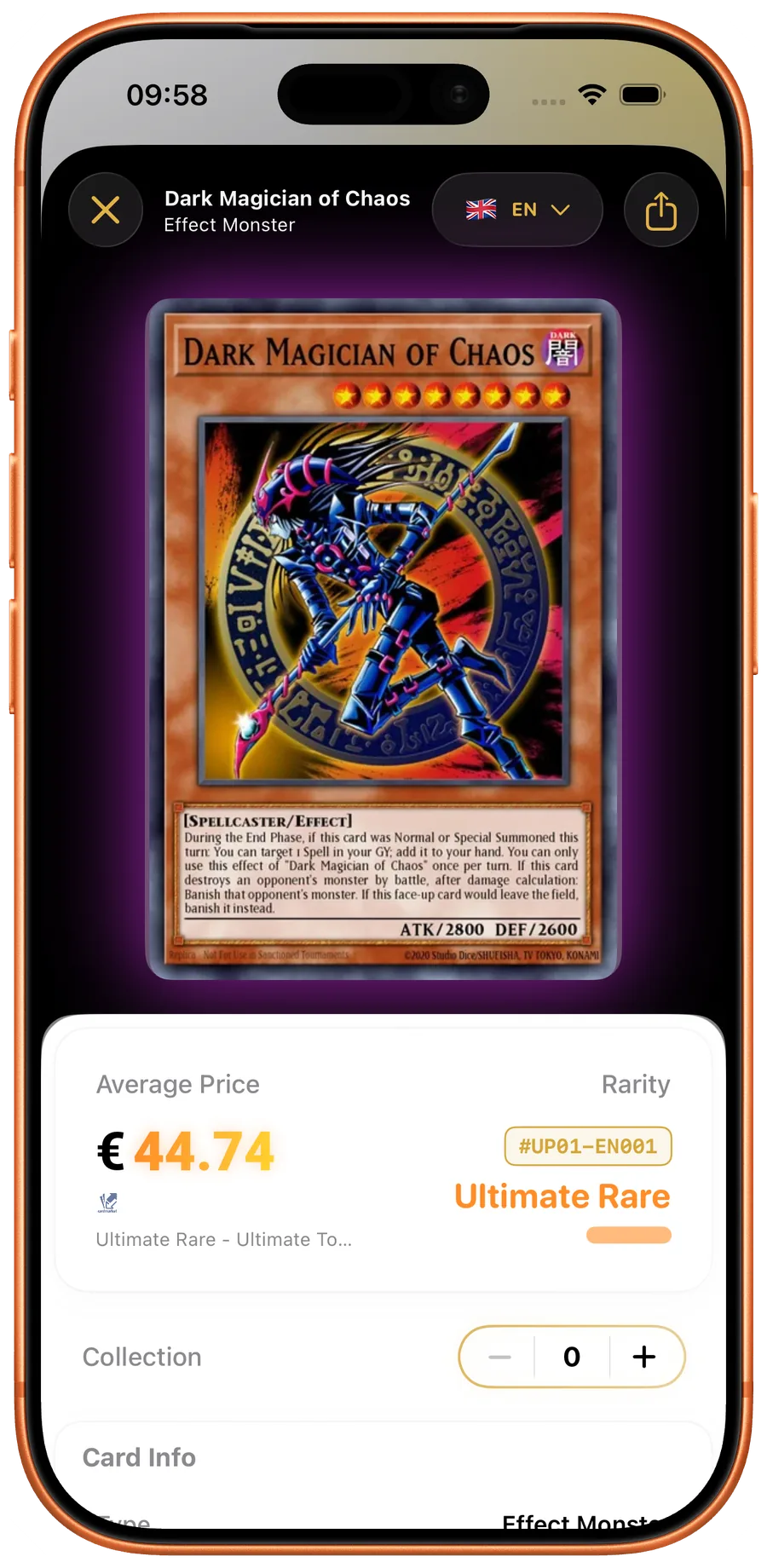
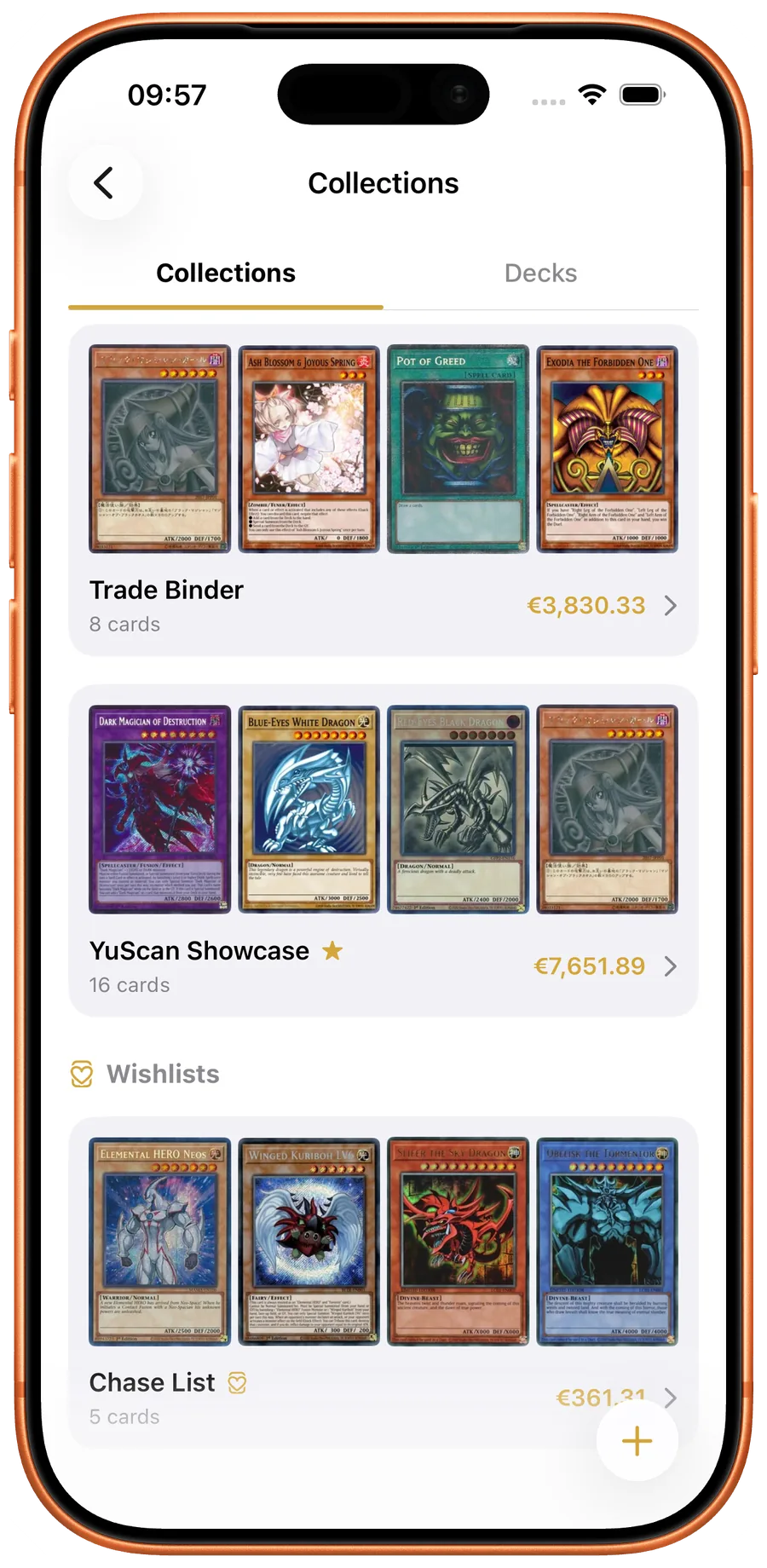
YuScan's collection tracker lets you record card condition per printing — critical for accurate collection value.
The short version
Learn the six-grade scale. Apply it consistently. Buy with expectation based on listed grade + seller reputation. Sell with honest grades. Submit to formal grading only for Mint and NM candidates. Everything else is math.
Scan every Yu-Gi-Oh! card. Track the whole collection.
YuScan is the AI-powered Yu-Gi-Oh! card scanner, collection manager and price tracker for iOS. 13,000+ cards, every expansion since LOB, live prices from TCGPlayer, Cardmarket and eBay.
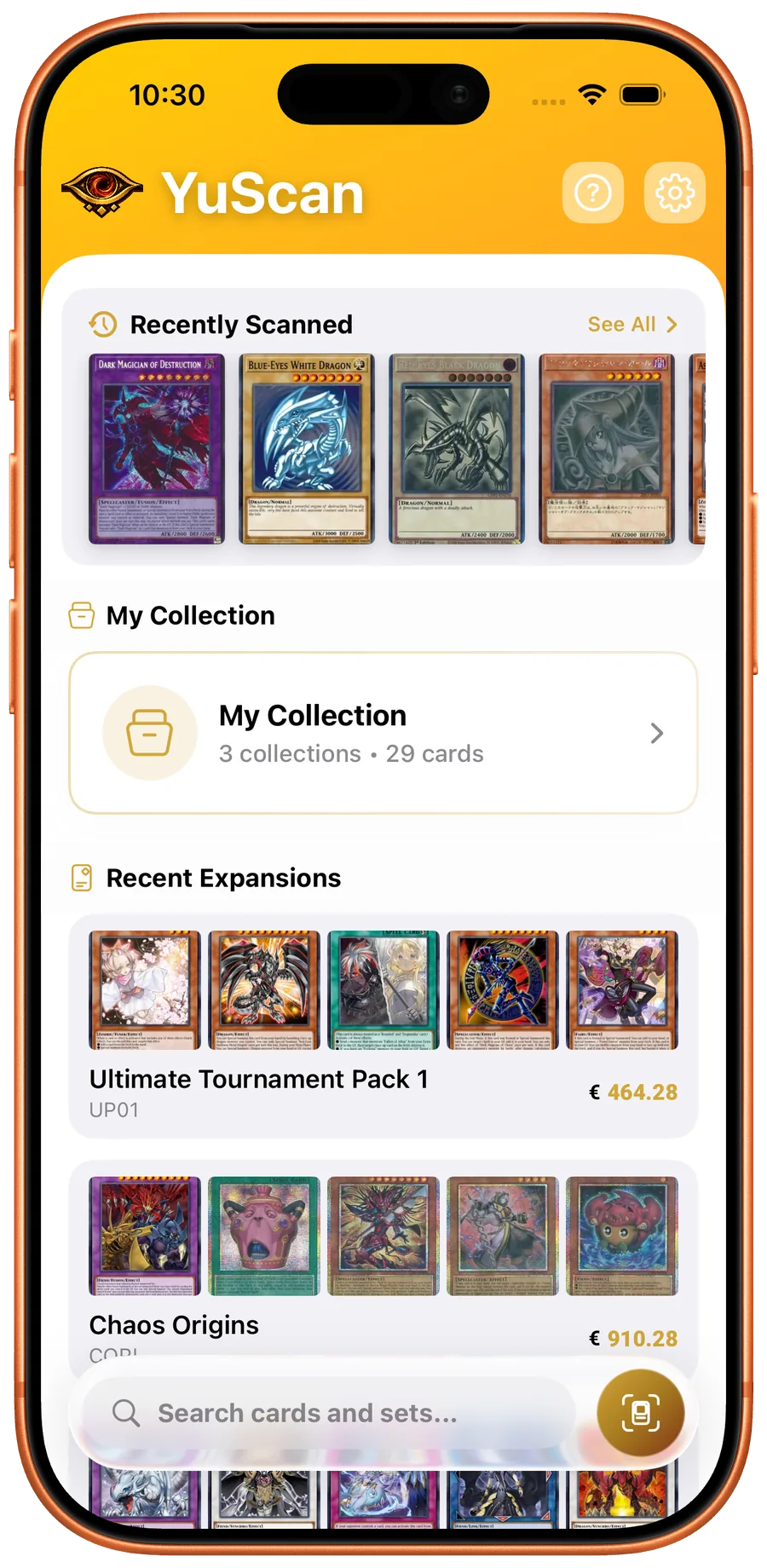
Track condition and market value for every card in your collection in YuScan — condition-adjusted pricing means your collection value is based on what your cards actually are, not the Near Mint ideal.