The Yu-Gi-Oh! Banlist Explained (and Why Your Deck Broke Last Tuesday)
How the Yu-Gi-Oh! Forbidden & Limited list actually works — four statuses, four updates a year, three parallel formats — and why an OCG ban has no effect on your TCG deck at all.
YuScan app · May 6, 2026
If you have ever built a Yu-Gi-Oh! deck, left it on the shelf for a month, and then discovered that three of your cards are now illegal to play, the banlist is the reason. Konami rebalances tournament-legal Yu-Gi-Oh! four times a year by moving specific cards into one of four status buckets. Decks that sit on top of the meta for three months often wake up to a quarterly update with their best card cut to one copy.
This is the short version of how the system works, why the same card can be legal in North America and banned in Japan, and what to do when your deck’s core card gets hit.
The four statuses
Every card in Yu-Gi-Oh! exists in one of four banlist states at any given moment:
Unlimited — you can run three copies. This is the default for the vast majority of cards.
Semi-Limited — you can run two copies. A soft touch, usually applied to cards that are strong but not deck-defining.
Limited — you can run one copy. The most common tournament-ban status. If a deck’s best card is Limited, the deck usually survives, but its opening-hand consistency drops noticeably.
Forbidden — you cannot run any copies. A total ban from competitive play. Some cards have been on the Forbidden list for nearly two decades (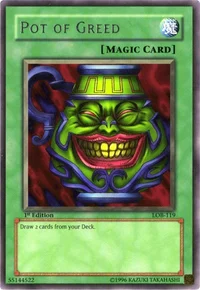 Pot of Greed since 2007,
 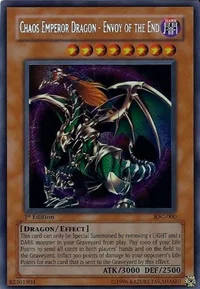 Chaos Emperor Dragon - Envoy of the End since 2005,
 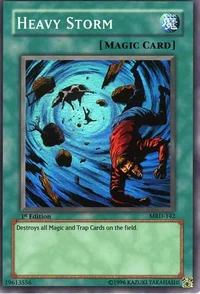 Heavy Storm off and on for almost as long).
A typical quarterly update moves 10–30 cards across these four buckets. Most updates demote currently-dominant cards from Unlimited to Limited, and promote previously-Forbidden cards back to Limited or Semi-Limited to see if they are still broken in the modern game. Konami has un-banned 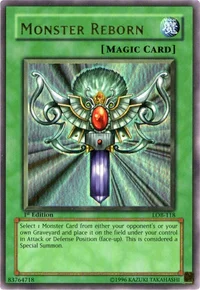 Monster Reborn and
 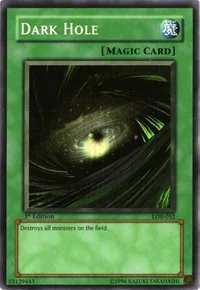 Dark Hole (Magic) multiple times across the game’s history.
Three parallel formats
This is the part that catches returning players out. Yu-Gi-Oh! has three separate banlists, each governed by a different team at Konami:
TCG (North America + Europe) — the list that applies to YCS, regionals, and most Western paper tournaments. Updates every ~3 months. This is the banlist most English-language articles are talking about when they say “the banlist.”
OCG (Japan, Korea, much of Asia) — a separate list. Japan gets cards 3–6 months before the West, and Konami’s Japanese team hits the OCG list on a different schedule than the TCG list. A card Forbidden in the OCG can be Unlimited in the TCG. 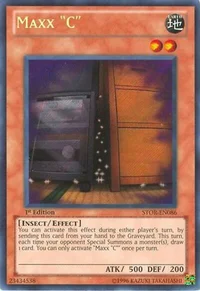 Maxx "C" is the classic example: it has been Forbidden in the TCG for years and is fully legal in the OCG.
Master Duel — Konami’s digital client has its own banlist, updated on its own cadence, usually lagging the OCG by a few months and occasionally diverging sharply. Master Duel players should assume the TCG banlist is not their banlist.
Speed Duel, Goat Format, Edison Format, and Rush Duel each have their own separate lists beyond these three. YuScan’s format explainer covers the non-Advanced formats in detail.
Why Konami issues a banlist
The stated reason is “game health.” The actual reason is usually “the top eight of the last YCS was the same deck eight times.” Konami’s banlist team watches top-cut data, sales velocity, and community sentiment, and publishes a new list when one deck has been dominant for roughly a format or when a new card unexpectedly breaks a previously balanced matchup.
Three cards that tend to appear on every banlist are 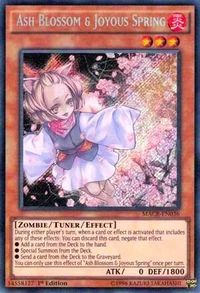 Ash Blossom & Joyous Spring,
 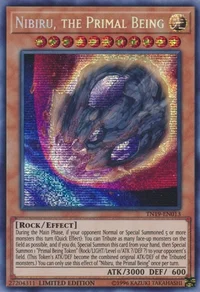 Nibiru, the Primal Being, and
 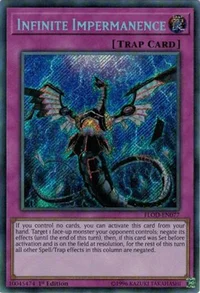 Infinite Impermanence — the hand traps. These are the cards that define the format’s pace. Konami tunes the banlist around them.
What happens when your deck gets hit
In practice, a banlist hit plays out one of three ways:
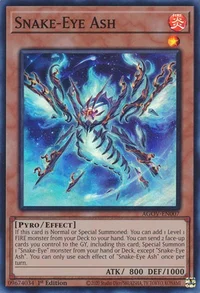
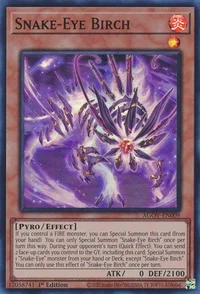
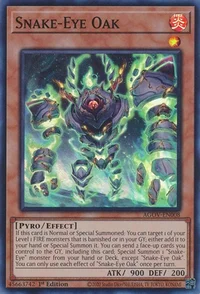
Minor hit — one copy Limited. Your deck is probably fine. Snake-Eye Ash being Limited in 2024 did not kill Snake-Eye. The engine still works at one copy; you just brick slightly more often. Our best-archetypes ranking is built around decks that survive this kind of hit.
Moderate hit — core card Forbidden. The deck transforms but doesn’t die. Kashtira lost its best card to a banlist hit in late 2024 and immediately repositioned as a splashable engine inside Snake-Eye and Fiendsmith builds. You will have to relearn the deck. You will not have to throw it out.
Severe hit — multiple engine pieces Forbidden in one update. This is the “your deck is dead” outcome. It happens maybe once every few years, usually to a deck that has been unambiguously Tier 0 for a full format. When it happens, selling the deck’s staples quickly is often the right move — prices on the engine cards crash within 48 hours of the announcement.
How to read a banlist announcement
Konami publishes the list as a PDF with four columns: Forbidden, Limited, Semi-Limited, and Unlimited. The announcement itself usually names the changes — “X is now Forbidden, Y moves from Limited to Semi-Limited” — and the community decodes the meta implications over the following 24 hours.
A useful habit: before a banlist update, write down which cards you think should be hit. After the announcement, compare. Over time you will develop a feel for Konami’s priorities — which are not always what the competitive community expects.
On YuScan
Look up any card on the list
Search YuScan's card database for every card named on a banlist announcement — with per-print pricing across every expansion it appeared in.
Common misconceptions
“An OCG ban affects my deck.” It doesn’t. If you play the TCG, only the TCG list applies. If you play Master Duel, only the Master Duel list applies. The OCG list matters only for metagame forecasting — cards hit in the OCG often get hit in the TCG 3–6 months later.
“Konami unbans cards to sell reprints.” Partially true. Unbans do tend to cluster around secret-pack releases and booster launches that contain reprints of the unbanned cards. But plenty of unbans happen with no commercial motive visible. Treat the “money grab” accusation as half-true.
“The banlist is random.” Also partially true. The banlist team has internal priorities that do not always map cleanly to competitive results. The Labrynth archetype has never been Tier 1 and has rarely been hit, because its win condition (long grind games) is considered healthy for the format. Meanwhile, purely combo-based decks tend to get hit harder even at comparable tier levels.
“A new banlist kills the game.” In 20+ years of Yu-Gi-Oh!, no banlist has ever killed the game. The meta shifts, dominant decks drop to Tier 2, new decks rise to Tier 1, and three months later Konami does it again. The game has been balanced this way since 2004. It works.
What to do when your next banlist hits
- Read the announcement. Do not read the community reaction first — it will bias your read.
- Check each hit card against your current deck. Most hits will not affect you.
- If a core card is hit, wait 48 hours before making any buy/sell decision. The market overcorrects in both directions during the first two days.
- Check our current best-archetypes ranking and look for decks that share an engine with yours — cheaper to pivot than to build fresh.
- If you play Master Duel, check the Master Duel list separately. It is not the TCG list.
Scan every Yu-Gi-Oh! card. Track the whole collection.
YuScan is the AI-powered Yu-Gi-Oh! card scanner, collection manager and price tracker for iOS. 13,000+ cards, every expansion since LOB, live prices from TCGPlayer, Cardmarket and eBay.
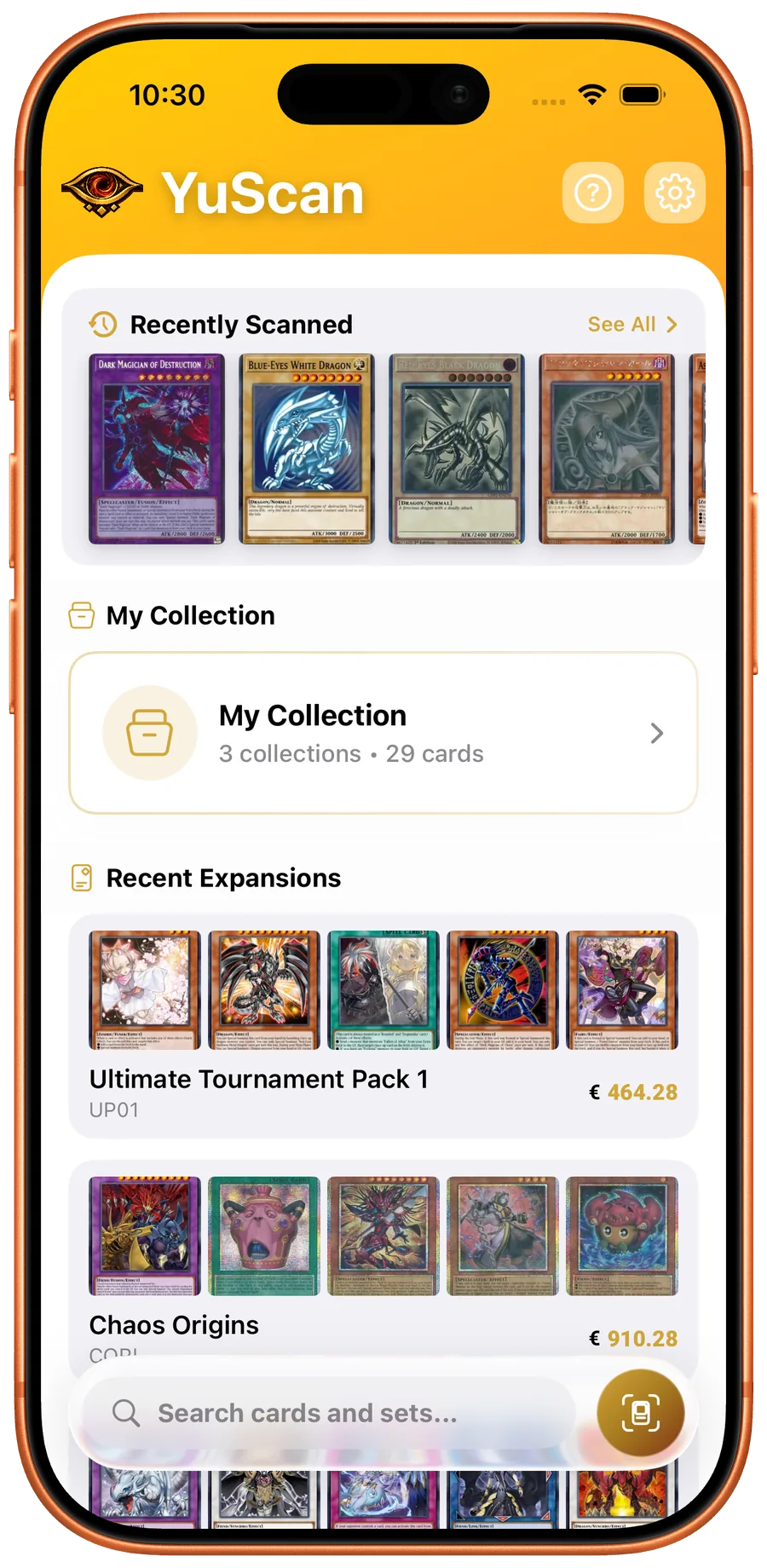
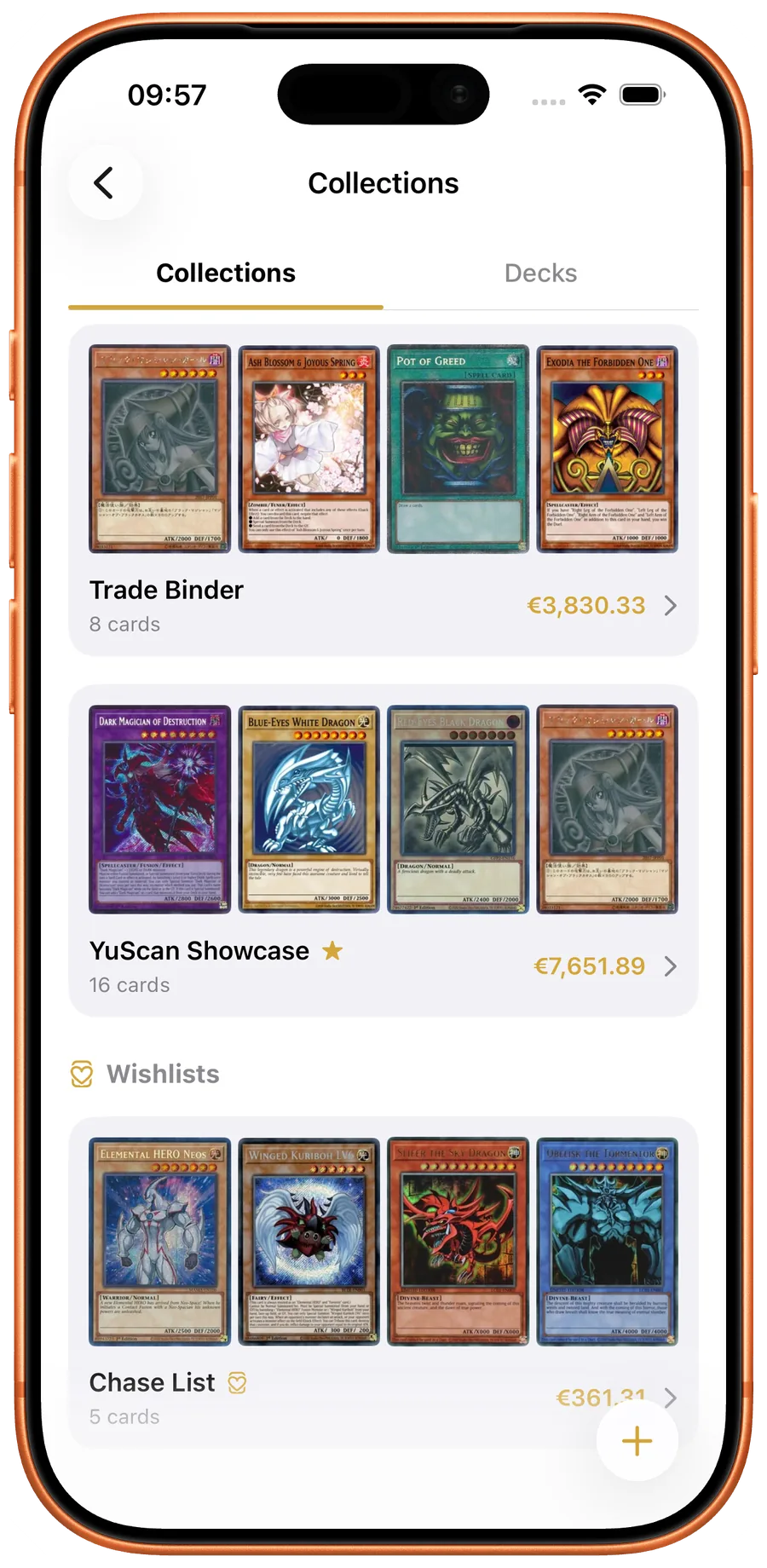
Track banlist-affected cards in YuScan — the app flags every card’s current TCG, OCG, and Goat Format status per printing, so you know which of your owned copies are still tournament-legal.