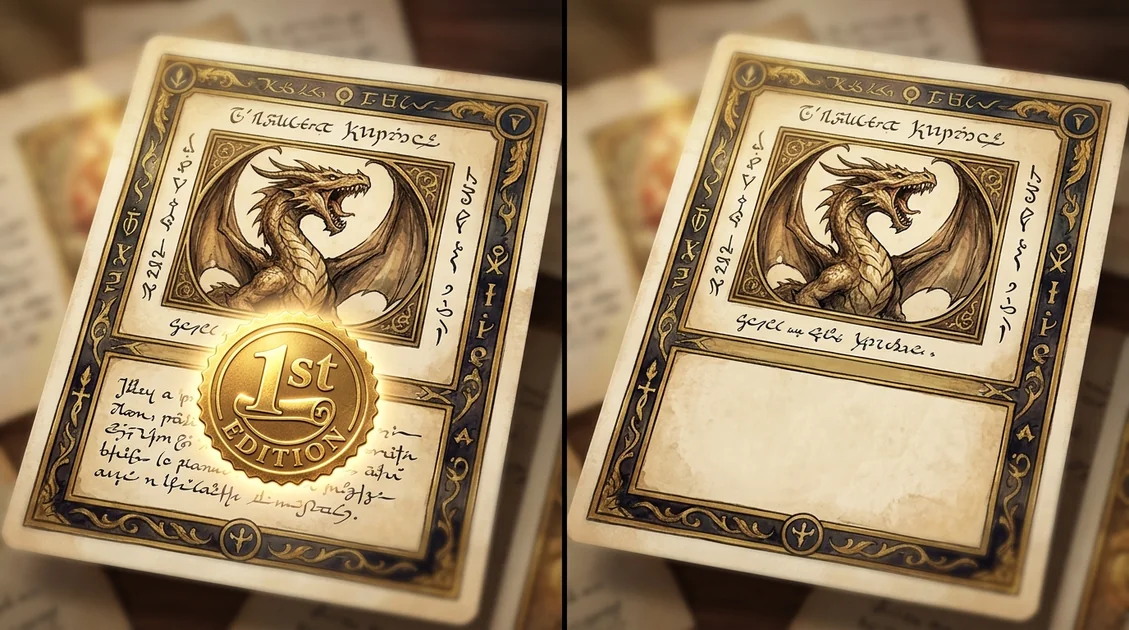
1st Edition vs Unlimited Yu-Gi-Oh! Cards: Why the Stamp Is Worth Thousands
The difference between 1st Edition and Unlimited Yu-Gi-Oh! cards — what the stamp actually means, how to identify it, and why the same card can be $50 or $50,000 depending on six characters of print code.
YuScan app · July 29, 2026
The single-biggest price driver in vintage Yu-Gi-Oh! is a small silver stamp in the lower-left corner of the card. That stamp — the “1st Edition” mark — separates the first print run of a set from every reprint that followed. A  Blue-Eyes White Dragon without the stamp trades for a few thousand dollars in PSA 10. The same card with the stamp clears $80,000+. The cards look identical in every other way.
This guide covers what the 1st Edition stamp means, how to identify it reliably, when the premium matters most, and the common identification mistakes that cost collectors money.
What the 1st Edition stamp means
When Konami releases a new Yu-Gi-Oh! set, the first print run of that set is marked with a 1st Edition stamp on every card. The stamp is a small silver mark in the lower-left of the card face, next to the set code. Every card in every pack of the 1st Edition print run carries this mark.
After the 1st Edition run sells out (typically 3–6 months after release for modern sets, longer for vintage), Konami reprints the same set without the 1st Edition stamp. These reprints are called “Unlimited” — the same art, same effects, same set code, but no 1st Edition mark. Unlimited prints are functionally identical cards in tournament play and visually distinguishable only by the absence of the stamp.
A small number of early-era cards have a third print variant called “Limited Edition,” which is specific to certain North American launch products and carries its own pricing tier. For most collection purposes, the 1st Edition vs Unlimited distinction is the one that matters.
Why the premium exists
The 1st Edition premium reflects print-run scarcity. Konami’s initial print run for a set is limited by production planning; subsequent reprints respond to demand. For 2002–2005 vintage sets, the 1st Edition run was small (Yu-Gi-Oh!‘s Western distribution was still scaling up), and the Unlimited reprints flooded the market when demand exploded in 2003–2004. The gap between “small 1st Edition run” and “large Unlimited run” is what drives the price differential.
For modern sets, the initial 1st Edition run is much larger in absolute terms, and the premium is correspondingly smaller. A 2024 1st Edition Ultra Rare trades at maybe 2× the Unlimited version; a 2003 1st Edition Ultra Rare trades at 10–20× the Unlimited version.
How to identify the stamp
The 1st Edition stamp is a small silver oval or banner containing the text “1st Edition” in the lower-left of the card face, just above the set code. It’s slightly embossed — on high-rarity cards the stamp has a tactile texture distinct from the surrounding card face.
Visual identification:
- Stamp is on the card face, lower-left
- Reads “1st Edition” in silver
- Slightly embossed (raised) on most print years
- Consistent across all cards from the 1st Edition run of a set
What to look out for:
- The stamp is small — about 15mm × 5mm — and easy to miss in casual inspection
- Low lighting can make the silver stamp appear gray or absent
- Sleeved cards: the stamp is visible through a clear sleeve but can be confused with sleeve markings
- Graded cards: the stamp is visible through the slab but may be partially obscured by the flip label
What the stamp is not:
- Not the same as the set code in the lower-right (the set code is separate)
- Not the same as the copyright line at the bottom of the card
- Not the same as the rarity stamp on the card name (silver on Rare, gold on Ultra)
The price gap in vintage
For 2002–2005 sets, the 1st Edition premium over Unlimited typically ranges from 5× to 30×. Some examples:
- Blue-Eyes White Dragon LOB Ultra Rare: 1st Ed PSA 10 = $80k+, Unlimited PSA 10 = $3k–$5k (roughly 20× gap)
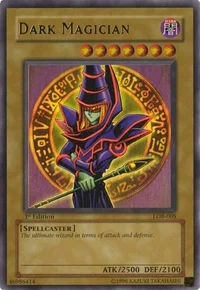 Dark Magician LOB Ultra Rare: 1st Ed PSA 10 = $10k–$15k, Unlimited PSA 10 = $500–$1,000 (roughly 15× gap)
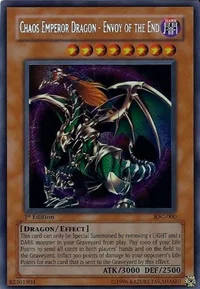 Chaos Emperor Dragon - Envoy of the End IOC Ultra Rare: 1st Ed PSA 10 = $6k+, Unlimited PSA 10 = $300–$500 (roughly 15× gap)
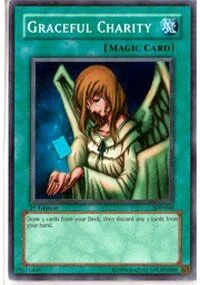 Graceful Charity PSV Ultra Rare: 1st Ed PSA 10 = $3k+, Unlimited PSA 10 = $150–$300 (roughly 12× gap)
The premium is largest for the most iconic cards in the smallest print runs.
The price gap in modern
For 2015+ sets, the premium is much smaller:
- Modern Secret Rares: 1st Ed typically trades at 2× Unlimited
- Modern Ultra Rares: 1st Ed typically trades at 1.5–2× Unlimited
- Modern Quarter Century Secret Rares: 1st Ed typically trades at 2–3× Unlimited (premium larger because the overall print run is smaller)
For modern cards, the 1st Edition premium is rarely large enough to be the primary purchase consideration. For vintage, it’s almost the entire purchase consideration.
Common mistakes
“This card is 1st Edition because the set code starts with SDK” (or similar). Set code indicates which set the card is from, not which print run. Many sets had both 1st Edition and Unlimited runs with the same set code.
“If it’s from a box I opened recently, it must be 1st Edition.” Only if the box itself is a 1st Edition box. Konami prints Unlimited boxes of vintage sets as reprints for the collector market; these boxes look similar to 1st Edition boxes but produce Unlimited cards.
“The rarity stamp is the 1st Edition stamp.” Rarity stamps (silver on the card name for Rare, gold for Ultra) are separate from the 1st Edition stamp. A card can be Ultra Rare and Unlimited, or Ultra Rare and 1st Edition. Check both markings independently.
“Graded cards don’t need stamp identification.” They do. The grading label identifies 1st Edition status separately from the rarity, and the grading service’s determination is the canonical identification. But you should still verify before you buy — grading errors happen.
When the distinction matters
For collectors of pre-2010 sets: always. The 1st Edition premium on vintage cards is too large to ignore. Every vintage purchase should confirm 1st Edition vs Unlimited before pricing.
For collectors of 2010–2015 sets: sometimes. Premium is smaller but still meaningful for flagship cards from popular archetypes.
For collectors of 2015+ sets: rarely. Focus on rarity tier first; 1st Edition vs Unlimited is a minor price factor.
For players who don’t care about collection value: never. Tournament play doesn’t distinguish 1st Edition from Unlimited.
How scanners help
Manual visual identification of the 1st Edition stamp is error-prone under low light, through sleeves, or on worn cards where the stamp has faded. YuScan’s scanner reads the set code and 1st Edition stamp automatically, reporting both as part of card identification. For vintage purchases above the $500 threshold, verification via scanner is a useful pre-purchase check — not a substitute for grading, but a sanity-check that the card is what the seller claims.
On YuScan
Every print of every card, indexed
YuScan's database tracks 1st Edition and Unlimited prints separately, with per-print pricing.
The short version
Check every vintage card for the 1st Edition stamp before you buy. Pay the 1st Edition premium only for cards where the premium is genuinely justified by demand (flagship cards from popular sets). For modern cards, the premium is small enough that 1st Edition vs Unlimited is a preference, not a financial decision.
Scan every Yu-Gi-Oh! card. Track the whole collection.
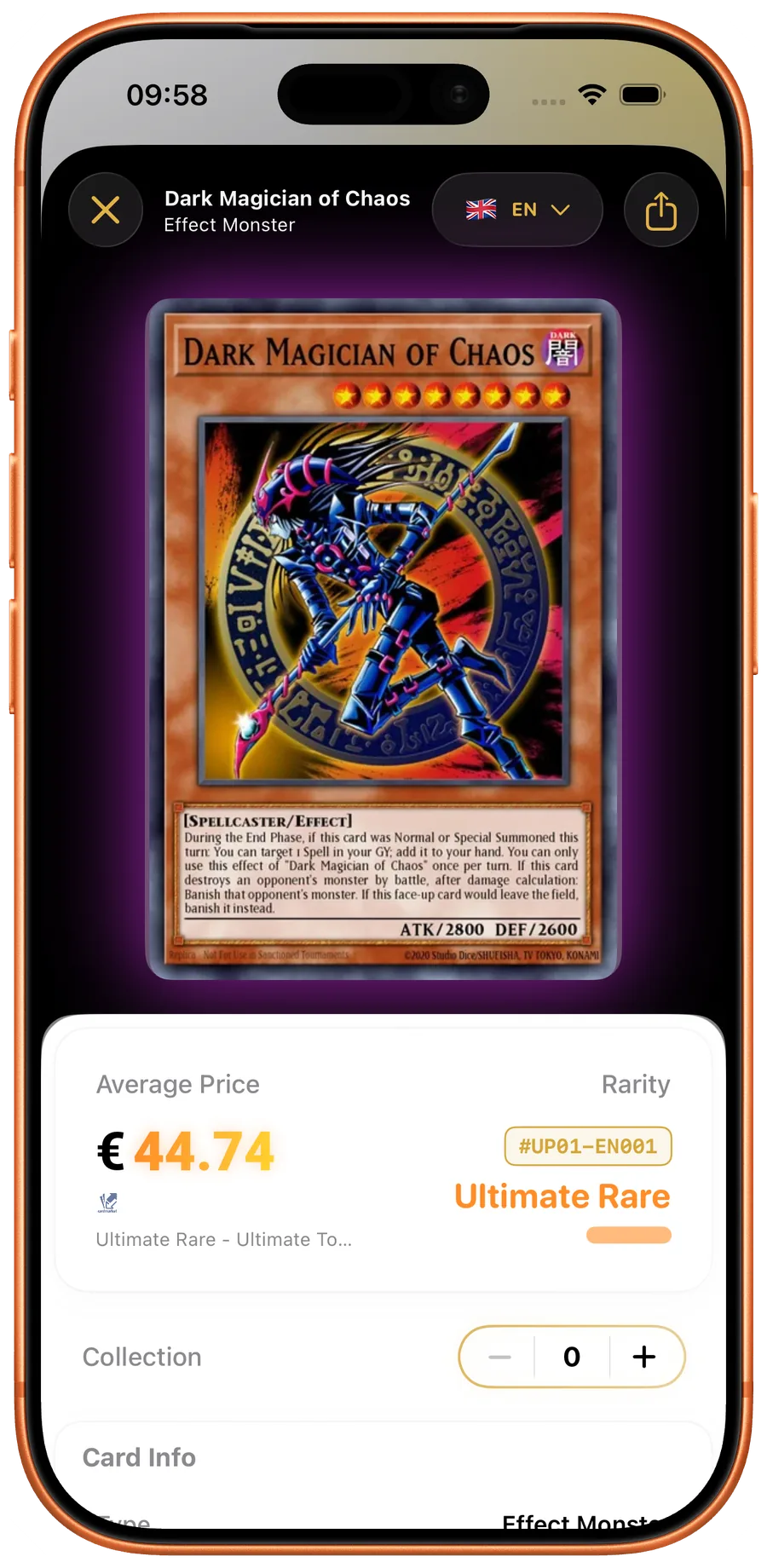
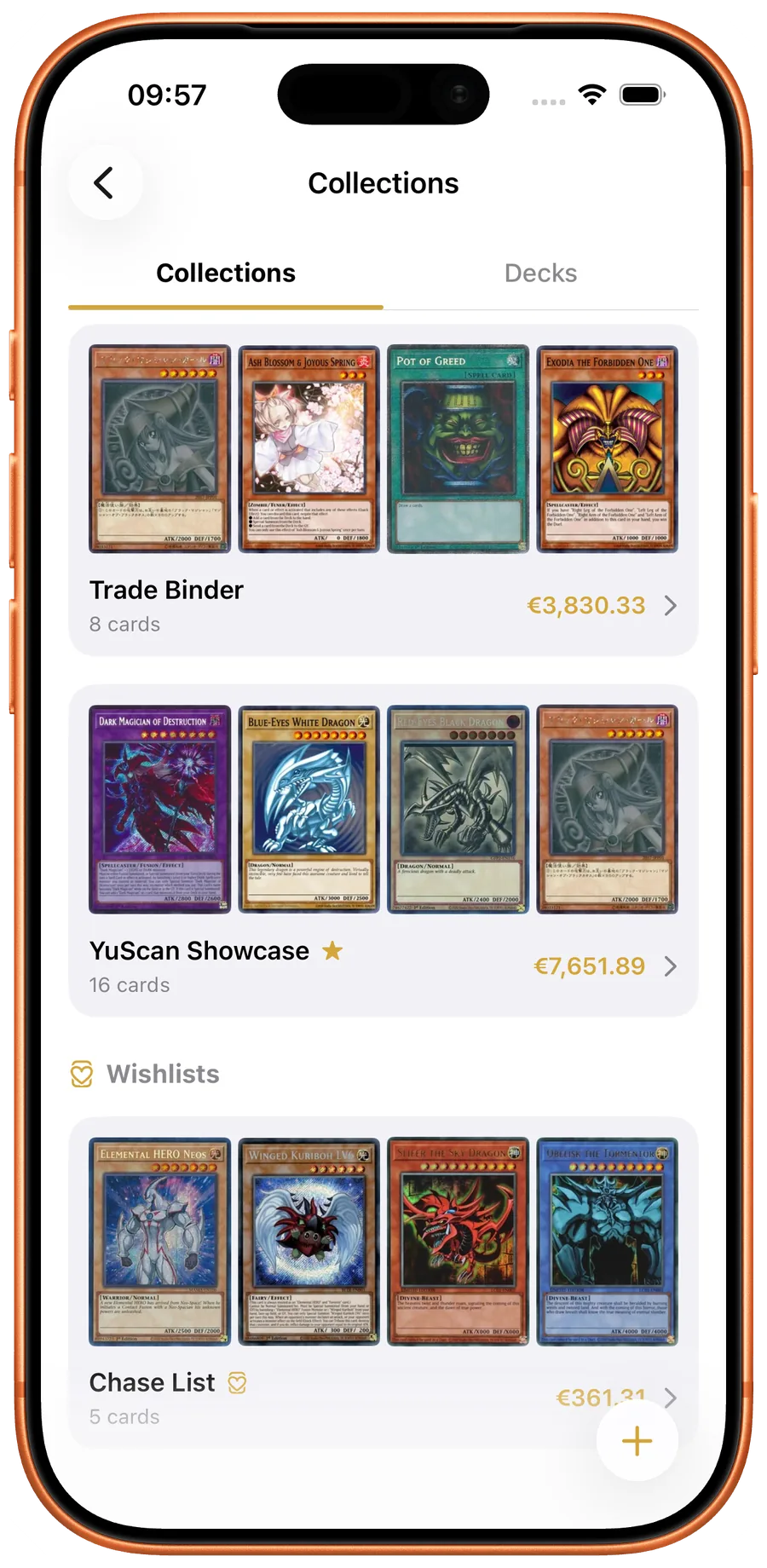
YuScan is the AI-powered Yu-Gi-Oh! card scanner, collection manager and price tracker for iOS. 13,000+ cards, every expansion since LOB, live prices from TCGPlayer, Cardmarket and eBay.
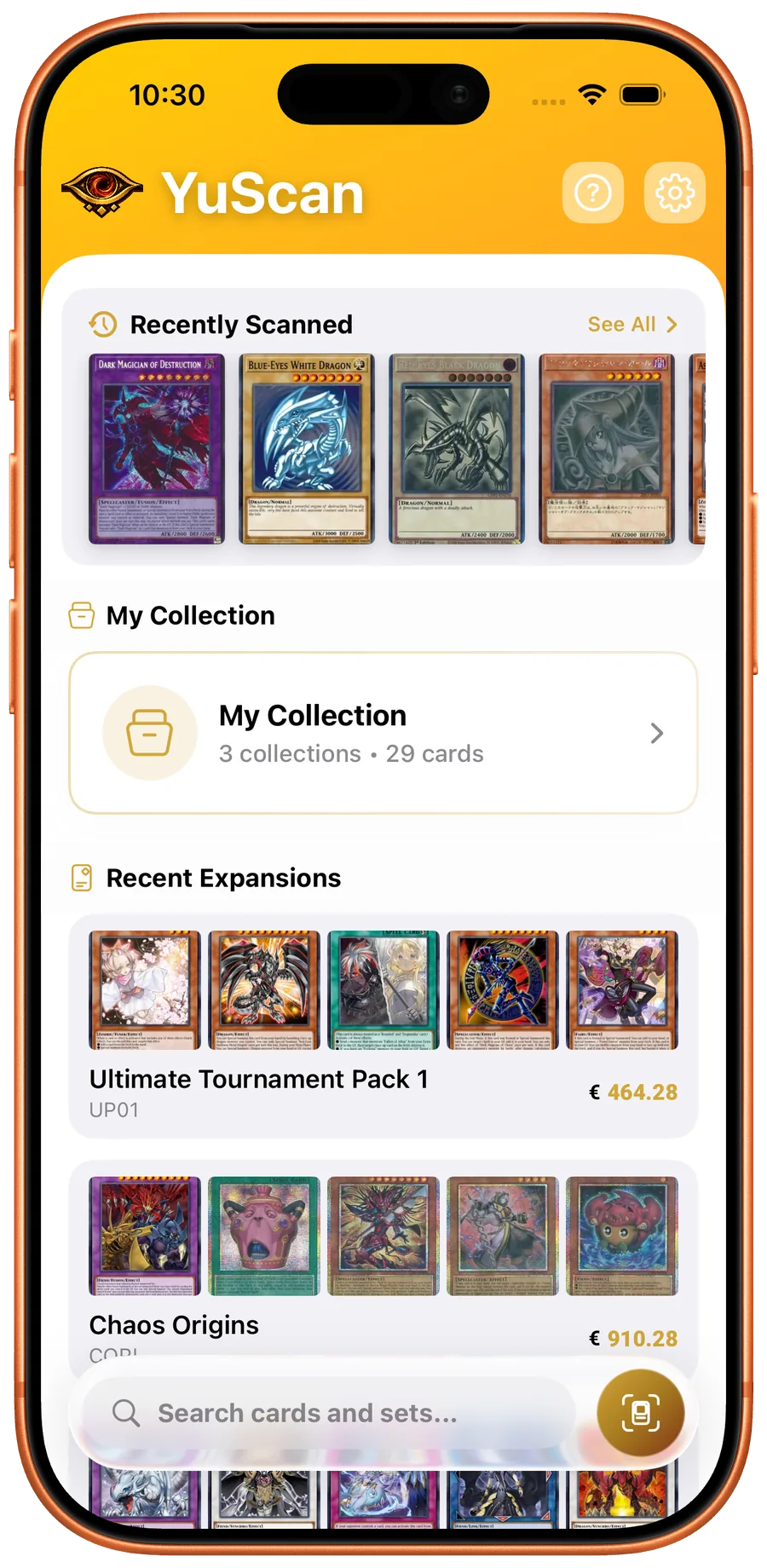
YuScan reads the 1st Edition stamp automatically and reports per-print pricing — so you always know which version of a card you actually own.