Yu-Gi-Oh! Misprints and Error Cards: What's Worth Money and What's Worth Bulk
A guide to Yu-Gi-Oh! misprints — miscut cards, off-center prints, wrong-rarity prints, and factory errors. Which categories actually carry collector premiums, and which are just damaged cards.
YuScan app · June 18, 2026
Konami prints hundreds of millions of Yu-Gi-Oh! cards per year and the print quality isn’t perfect. A small percentage of cards come out of the factory with production errors — miscut edges, off-center artwork, wrong-rarity foils, missing text elements. Some of these errors command premium prices from collectors; most of them don’t. The category “misprint” is frequently misused to sell damaged cards as if they have collector value.
This guide covers what actually commands collector premiums, what doesn’t, and how to evaluate a misprint claim before paying a premium.
Misprint categories worth money
Wrong-rarity errors. The highest-value misprint category. A card printed in a rarity that was never intended — for example, a Secret Rare holofoil pattern applied to a card that was supposed to be released as a Rare. These errors are documented, photographable, and authenticatable. Premium: 5–20× the normal-rarity price, sometimes more for iconic cards.
Double-rarity prints. A single card with two overlapping rarity treatments — for example, a Super Rare holofoil combined with an accidental Gold Rare gold foil layer. Extremely rare, typically a single-digit number of documented copies. High four-figure to five-figure prices on iconic cards.
Factory-stamped rarity upgrades. Rare factory errors where a 1st Edition stamp was accidentally applied to an Unlimited print, or where a rarity stamp was duplicated. Authenticatable via PSA, BGS, or CGC with documented error notation. Premium varies — 2–10× for common cards, higher for iconic ones.
Missing-element errors. Cards missing the set code, copyright line, or card name text. Genuinely rare because Konami’s quality control catches most of these. Premium depends on which element is missing — a missing set code on an iconic LOB-era card can command high four-figure prices.
Test prints and pre-release samples. Factory samples that leaked out of Konami’s production process. Extremely rare, usually only a handful of copies exist per card. Premium: 10–50× the normal print value, with authentication mandatory.
Misprint categories NOT worth money (usually)
Miscut cards. Cards where the cutting machinery trimmed the edges incorrectly — leaving extra white border on one side, or cutting into the artwork on another. These are damaged cards, not collector items. Common in mass production. Premium: usually 0, sometimes slight premium for extreme examples on iconic cards.
Off-center prints. Centering beyond Konami’s production tolerances. Treated by grading services as a quality issue (lower grade) rather than a misprint premium. A badly off-center PSA 10 doesn’t exist — PSA 10 requires acceptable centering.
Ink smears and surface defects. Printer errors during holofoil application, smudged ink, or patchy printing. Damaged cards. No premium.
Reverse-back errors. Cards with the back printed on the wrong side or backwards. Occasionally claimed as valuable by sellers; in practice, these are almost always counterfeits or mis-assembled from separate front and back layers. Authenticate before believing.
Creases, bends, corner damage. Not misprints — these are post-factory damage. Sellers sometimes claim them as “production defects” to justify higher prices. Don’t fall for this.
“Factory silver” claims. Some sellers claim that a card with a slightly different silver tone than typical is a “factory silver misprint.” The silver tone variation across Konami’s print history is genuine but not a misprint — it’s batch-to-batch silver foil variance, not an error.
How to authenticate a real misprint claim
Before paying a misprint premium above $100, verify:
1. The error is documented. Known misprints have community documentation (forum posts, YouTube videos, collector databases). If you can’t find external documentation of the exact error pattern on the card in question, the claim is questionable.
2. The error is consistent with a production process. Wrong-rarity errors happen when the holofoil layer is misapplied at the foiling stage. Factory stamps happen at the stamping stage. Missing elements happen at the printing plate stage. An error that doesn’t match any known production step is suspicious.
3. The card grades. PSA, BGS, and CGC grade misprints with error notation on the label. A PSA-graded “Wrong-Rarity Secret Rare” copy of a card with label notation is authenticated; an ungraded same claim is not.
4. The seller provides provenance. For high-value misprint purchases, ask when and where the card was acquired, whether it was pack-fresh or traded, and whether it has prior ownership history. Professional misprint sellers document provenance; scammers don’t.
Specific documented misprints worth knowing
LOB-era rarity errors. A small number of LOB cards exist with wrong rarity stamps — for example, a Rare printed with a Super Rare holofoil. PSA-graded examples of these trade in the $1,000–$5,000 range depending on card.
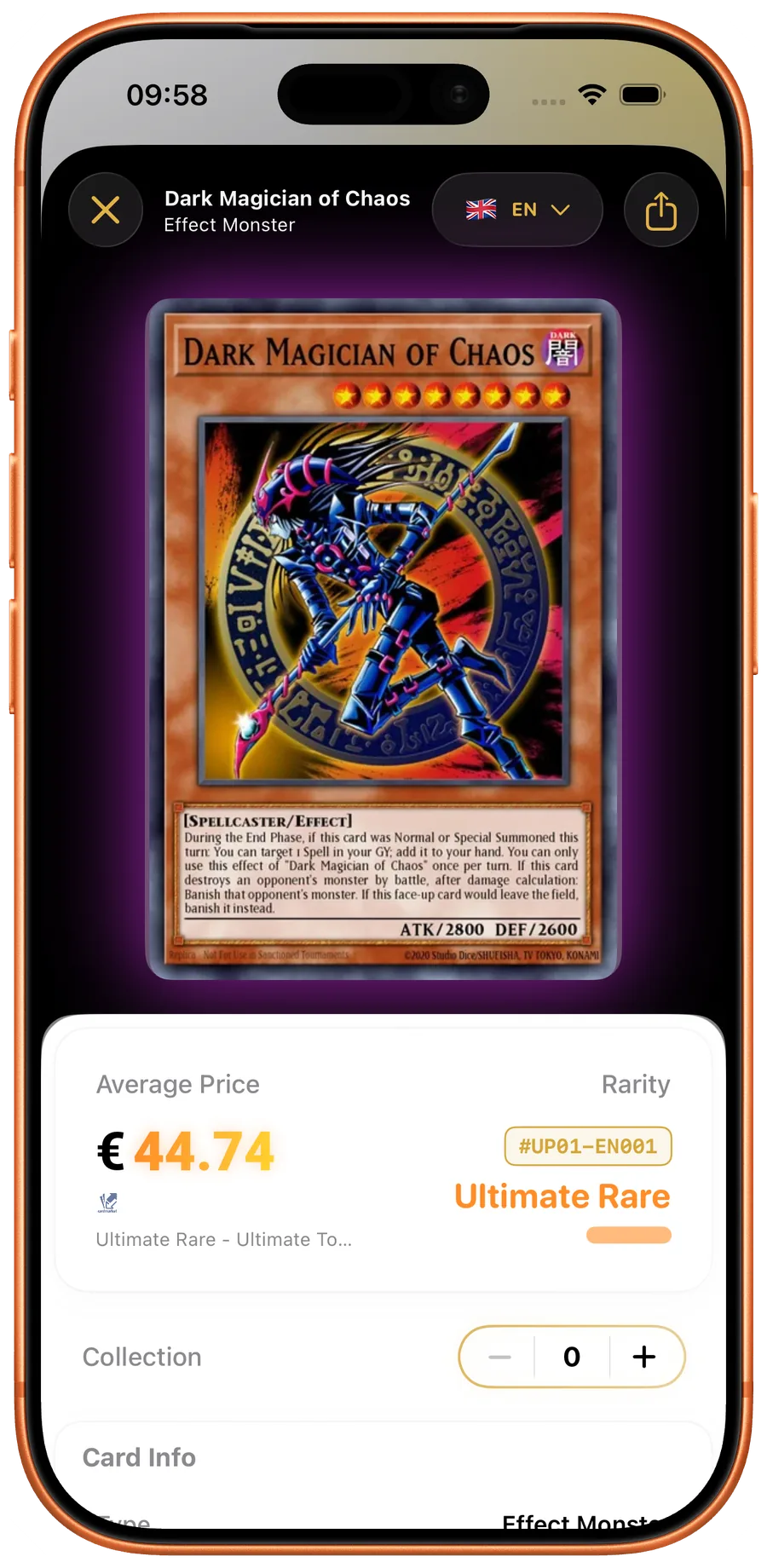
Dark Magician factory errors. Multiple documented factory errors on 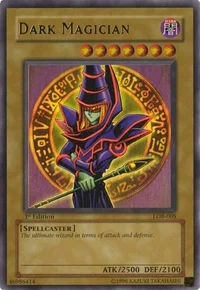 Dark Magician across different print runs — misapplied holofoils, missing text elements. Some trade above $500 for graded copies.
Egyptian God card tournament prints. The original released tournament versions of 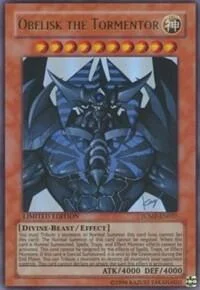 Obelisk the Tormentor (Obelisk),
 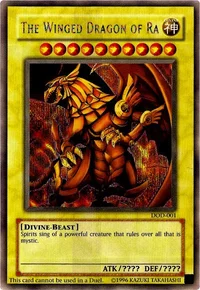 The Winged Dragon of Ra (Ra), and
 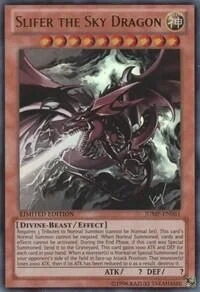 Slifer the Sky Dragon (Slifer) had specific factory characteristics that distinguish them from later reprints. PSA-graded originals trade in the $500–$3,000 range.
Wrong-back prints. Documented cases exist of Yu-Gi-Oh! cards with the back of a different TCG (Magic: The Gathering or Pokémon) — these are usually printing-press errors at facilities that handle multiple TCGs. Extremely rare, typically five-figure value when authenticated.
How to avoid misprint scams
Never buy a misprint listing that just says “rare misprint, see photos.” Real misprint sellers identify the specific error type and provide comparison photos with documented known examples.
Verify graded copies via slab number. PSA, BGS, and CGC all publish graded copy populations. Search the slab number on the grading service’s website to confirm authenticity.
Avoid buying ungraded misprints above $100. The combination of subjective error identification and variable pricing means ungraded misprints above $100 are high-risk purchases. Either buy graded or buy at bulk prices.
Watch for pattern claims. “This card has a unique foil pattern” is sometimes genuine, sometimes a scam. Foil variation across Konami’s production history is real but usually not a collector premium.
Where misprints come from
Misprints happen at five production stages:
1. Artwork preparation. Rare — artwork errors that make it to print.
2. Printing plate creation. Missing-element and text errors originate here.
3. Printing press operation. Ink errors, smudges, and color shifts originate here.
4. Foil application. Wrong-rarity, missing-holo, and double-holo errors originate here.
5. Cutting and packaging. Miscuts, off-center cuts, and wrong-stack packaging originate here.
Different error types require different production-step evidence. A “wrong-rarity” error has a specific visual signature distinct from an “accidentally-extra-holofoil” error. Misprint collectors learn these signatures over time.
Using a scanner for misprint validation
YuScan’s scanner identifies cards against Konami’s authentic print database. A card that doesn’t match any known authentic print is flagged — which catches mass-produced counterfeits (see our fake-spotting guide) but is also useful for identifying genuine misprints.
For a claimed misprint, scan with YuScan and check:
- Does the scanner correctly identify the card name?
- Does the scanner’s print-match confidence drop below typical (indicating the visual features deviate from documented prints)?
- Does the reported rarity match the visual rarity?
A real wrong-rarity misprint will scan as the card name but trigger rarity-mismatch flags. This is a useful initial screen but not a substitute for grading service authentication.
On YuScan
Check any card's documented print history
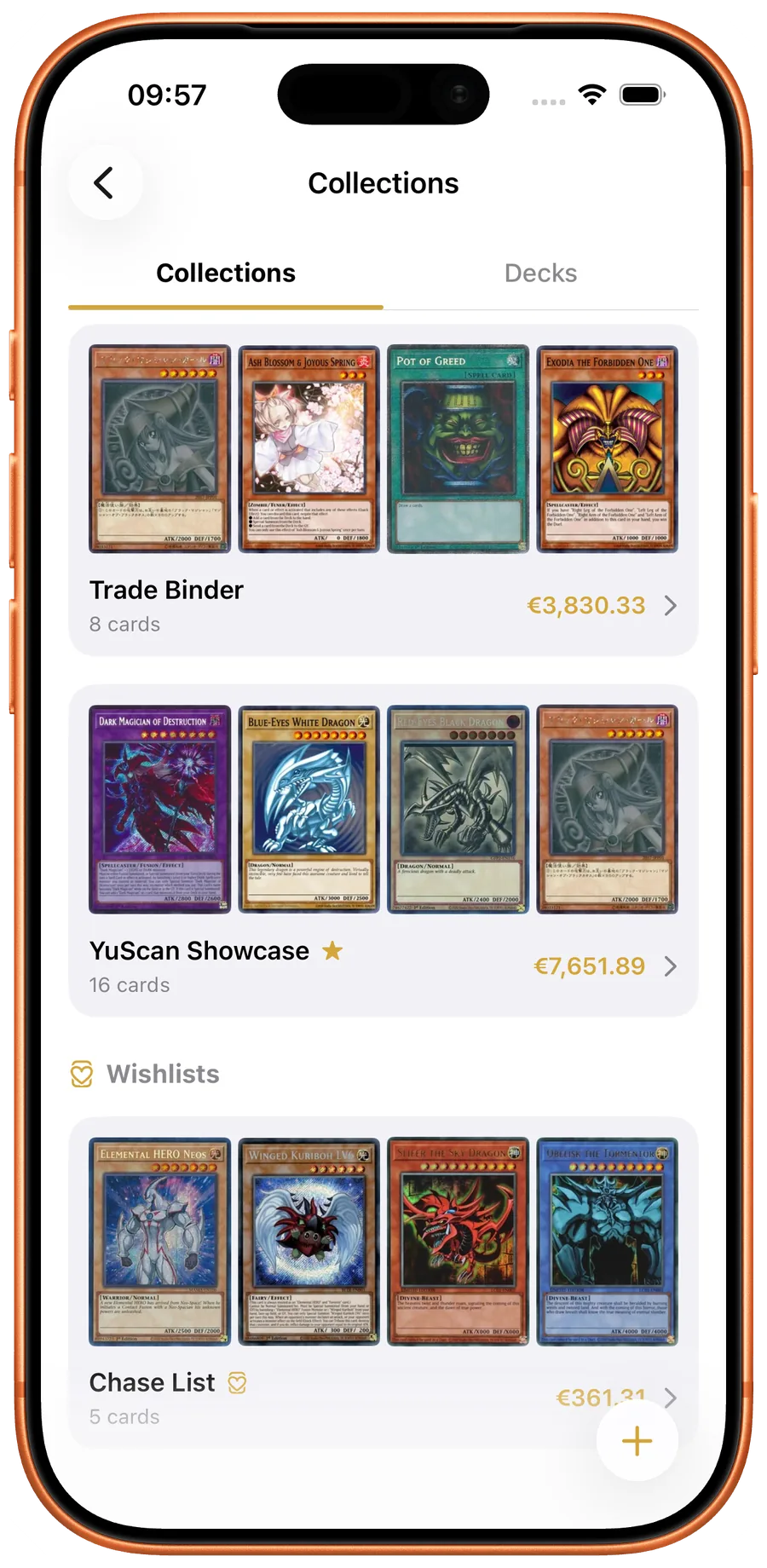
YuScan indexes every documented printing of every card. Scan a suspected misprint and compare against the full print-variant list.
The short version
Miscut, off-center, or ink-smudge cards are damaged cards, not valuable misprints. The valuable categories are wrong-rarity, double-rarity, factory-stamped, missing-element, and test-print errors — all of which should be authenticated via a grading service before paying any meaningful premium. Ungraded misprint claims above $100 are usually marketing, not reality.
Scan every Yu-Gi-Oh! card. Track the whole collection.
YuScan is the AI-powered Yu-Gi-Oh! card scanner, collection manager and price tracker for iOS. 13,000+ cards, every expansion since LOB, live prices from TCGPlayer, Cardmarket and eBay.
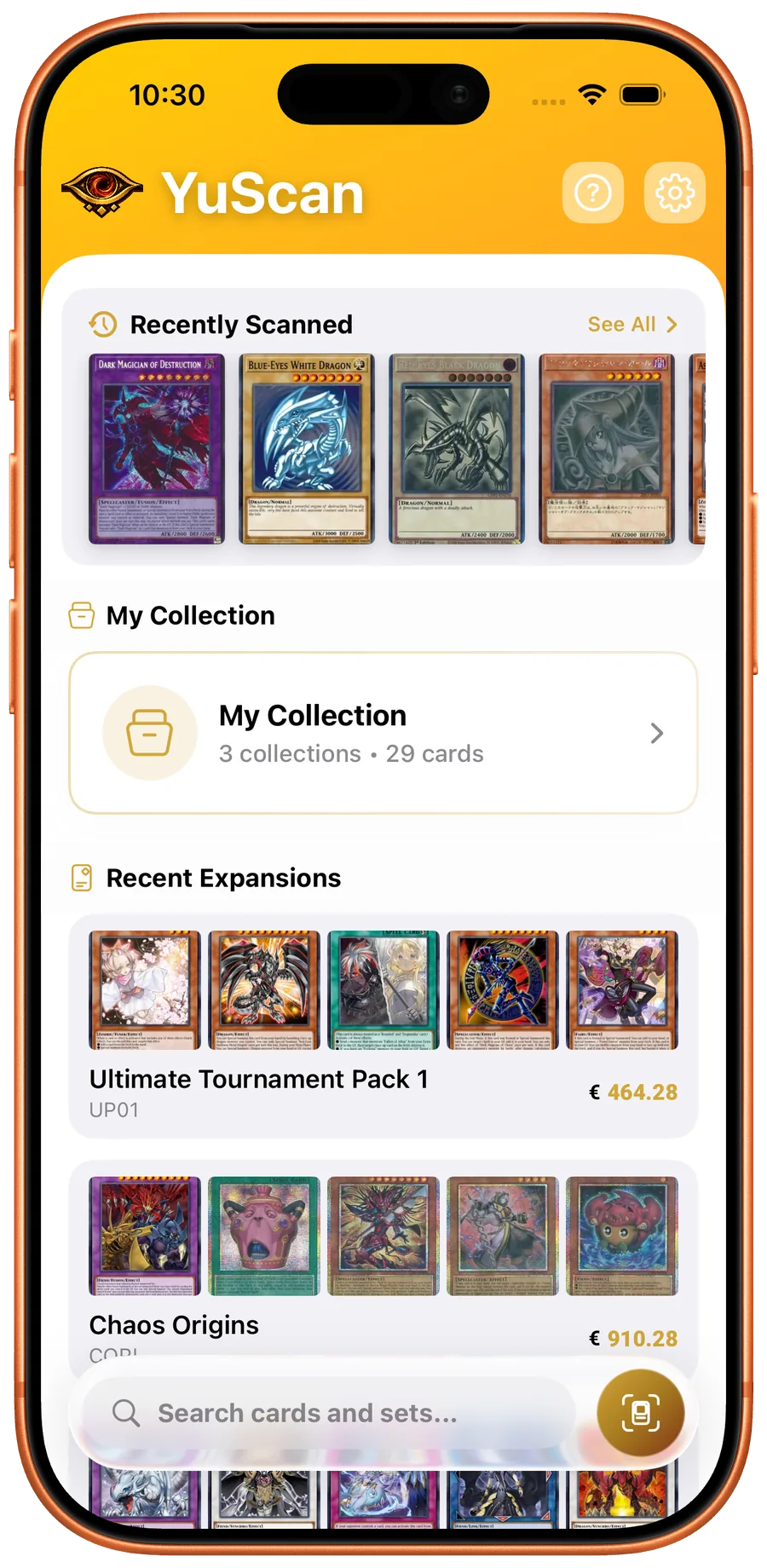
Scan any suspected misprint with YuScan — the app identifies the card against authentic Konami print data and flags prints that deviate from known variants. A useful first-pass filter before paying for formal authentication.