How to Spot Fake Yu-Gi-Oh! Cards (2026 Edition)
A practical guide to identifying counterfeit Yu-Gi-Oh! cards in 2026 — the five tells that work on modern fakes, what a scanner can and can't catch, and when to pay for authentication.
YuScan app · April 21, 2026 · Updated April 22, 2026
Counterfeit Yu-Gi-Oh! cards have gotten dramatically better in the last five years. Fakes from 2018 were detectable by holofoil pattern alone; fakes from 2024–2026 reproduce holofoils closely enough that pattern-matching alone is insufficient. At the grail tier (LOB 1st Edition Blue-Eyes, Chaos Emperor Dragon IOC, Shonen Jump prize cards), counterfeiters produce professional-grade reproductions that fool casual collectors and even some experienced ones.
This guide covers the five reliable tells that still work on modern counterfeit Yu-Gi-Oh! cards, what YuScan’s scanner can and can’t catch, and the clear line above which authentication stops being optional.
Tell #1: the light test
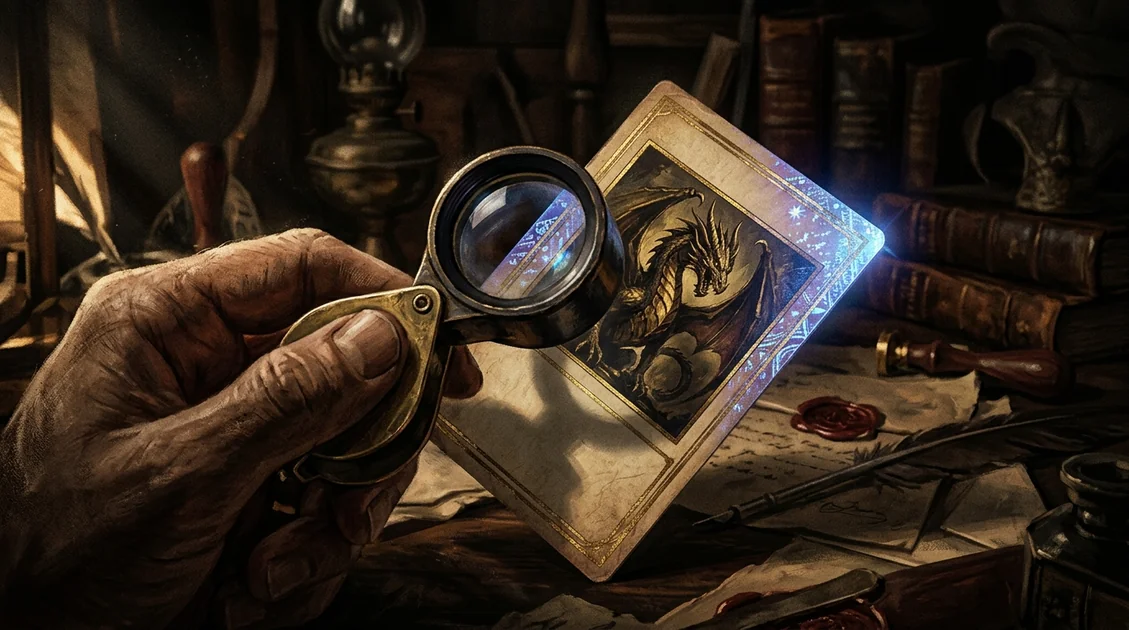
Hold the card up to a bright light source — a phone flashlight works — and look through the card. Real Yu-Gi-Oh! cards have a specific black layer sandwiched between the front and back papers, which appears as a dark silhouette through the card. Most counterfeits use single-layer paper or omit the black layer entirely, showing a yellow or white glow through the card.
This is the single most reliable tell for mass-produced counterfeits. It fails on high-end fakes that include a simulated black layer, but it catches roughly 90% of fakes in circulation.
Tell #2: card stock thickness and feel
Authentic Yu-Gi-Oh! cards have a consistent thickness of about 0.30mm (slightly thicker for 2002–2004 era cards). Counterfeits are commonly thinner or variable across a print run. The feel of authentic Konami card stock is semi-firm with slight flex — fakes often feel either too stiff (cheap plastic-heavy stock) or too flexible (paper-heavy stock).
If you’re evaluating a purchase, feel both a known-authentic card of the same era and the card in question. Thickness differences are tactile even when not visually obvious.
Tell #3: foil pattern under loupe inspection
Under 10x magnification, authentic holofoil (Super, Ultra, Secret, and higher rarities) shows a specific microscopic dot or line pattern determined by Konami’s printing process. Counterfeits reproduce the visible holofoil effect but usually miss the microscopic pattern — under magnification the foil looks smooth or has a different pattern than the era’s authentic print.
The patterns differ between eras: 2002–2005 Konami holofoils have a coarser dot pattern than modern; 2018+ holofoils have a finer, smoother pattern. Compare to a known-authentic card from the same era, not a modern reprint.
Tell #4: font rendering on card text
Konami’s text rendering is sharper than most counterfeit prints. Under magnification, authentic card text has crisp edges and consistent kerning (letter spacing). Counterfeit text often shows slight pixelation, blurred edges, or inconsistent spacing, especially in smaller text fields (card number, copyright line, effect text).
The copyright line at the bottom of the card is a frequent failure point for counterfeits — the copyright text is small and requires precise reproduction that many counterfeit print processes can’t match.
Tell #5: set-code print quality
Real Yu-Gi-Oh! cards have a crisp, embossed-looking set code (like LOB-001 or SDK-052) in the lower-right of the card face. The text is sharp, the alignment is consistent, and the serial number has an embossed or slightly raised look on high-rarity prints.
Counterfeits often reproduce the set code visually but miss the subtle embossing or the sharpness of Konami’s lettering. For reference prints like 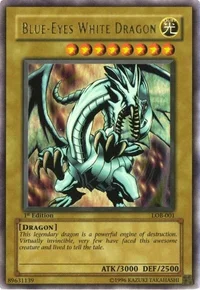 Blue-Eyes White Dragon (LOB-001 1st Edition) where counterfeits are most common, set-code scrutiny is essential.
What YuScan can and can’t catch
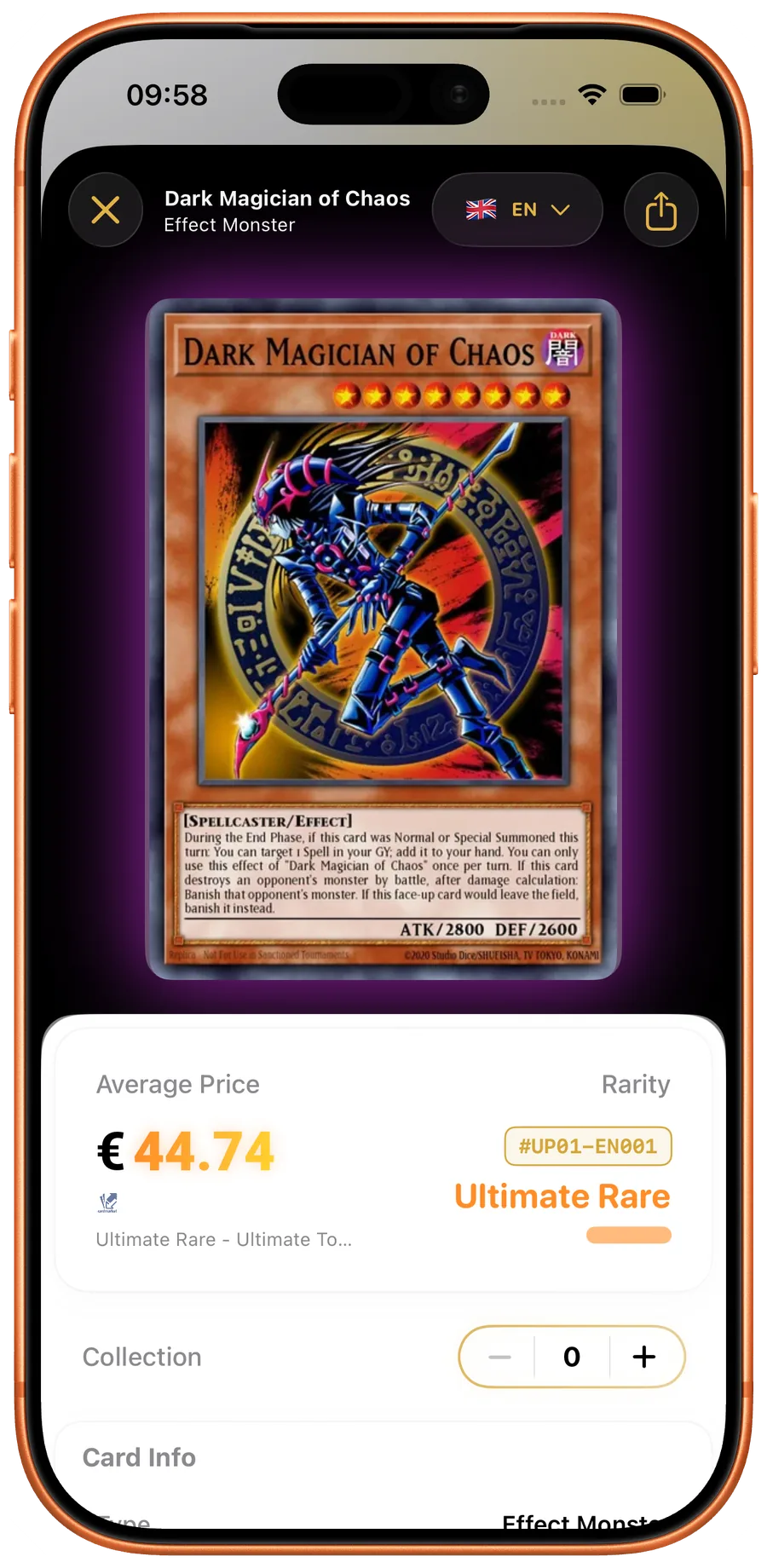
YuScan’s scanner is trained on authentic Konami prints. When you scan a card, the app identifies which print it should be — set code, rarity, edition — based on visual features. If the card you scan doesn’t match any known authentic print, the app flags it.
This works well for mass-produced counterfeits that deviate visibly from authentic prints. It fails on high-end fakes that reproduce authentic visual features closely enough to pass visual identification. For high-value cards, YuScan’s scanner is a useful first-pass filter but not a substitute for expert authentication.
The categories where the scanner catches fakes reliably:
- Wrong rarity (counterfeit Ultra Rare of a card that was never printed at Ultra)
- Wrong set code for the era (counterfeit LOB with a modern copyright line)
- Visible foil-pattern mismatches
- Alignment or centering issues outside Konami’s production tolerances
When to pay for authentication
For any card valued above $500, authentication is mandatory. The $30–$50 cost of a PSA or CGC grading submission is trivial against the risk of a bad purchase.
For cards valued between $100–$500, authentication is optional but recommended if you plan to resell. Ungraded raw cards trade at a discount; graded cards trade at market — the grading cost is usually recouped on sale.
For cards valued under $100, the five-tell method plus YuScan’s scanner is sufficient.
Where fakes come from
Most counterfeit Yu-Gi-Oh! cards in circulation in 2026 come from three sources:
Mass-produced Chinese-market fakes. High-volume, medium-quality reproductions sold as “proxies” for play purposes. Detectable via the five tells above. Most commonly target meta staples and popular collector cards.
Trade-show and convention “replicas.” Medium-quality fakes sold as obvious reproductions but often laundered into trade binders by bad-faith sellers. Similar quality to mass-produced Chinese fakes; same detection methods apply.
Grail-tier professional counterfeits. Small-volume, high-quality reproductions of specific high-value cards (Blue-Eyes White Dragon LOB 1st Edition, 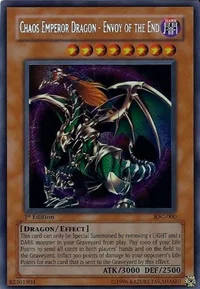 Chaos Emperor Dragon - Envoy of the End IOC 1st Edition, Shonen Jump prize cards). These require expert authentication — the five-tell method alone is insufficient at this tier.
Common mistakes
“If the price is too good to be true, it might still be real.” Almost never. A $500 card listed for $200 is not an undervalued find — it’s a sign something is wrong with the listing. Walk away from deep-discount grail listings.
“Trusting the seller reputation.” Seller reputation is useful but not sufficient at the grail tier. Even reputable sellers occasionally list fakes they acquired in trades without authentication. Authenticate every grail purchase regardless of seller.
“Assuming holofoil pattern alone is enough.” Modern counterfeits reproduce holofoil patterns closely. Use multi-tell verification, not single-tell shortcuts.
“Trusting ‘raw’ ungraded LOB 1st Editions at auction.” Most authentic LOB 1st Edition grails in high grade have already been submitted for grading. Raw ungraded LOB 1st Editions at auction are high-risk purchases — buy graded.
On YuScan
Every LOB card — the canonical checklist
Cross-reference against YuScan's verified LOB database when evaluating vintage Yu-Gi-Oh! authenticity.
The short version
For any card worth under $100: scan with YuScan, apply the five tells, buy with reasonable confidence.
For any card worth $100–$500: scan, apply the five tells, buy graded if possible.
For any card worth $500+: buy graded. Do not buy raw. The grading cost is insurance and the premium is worth it.
Scan every Yu-Gi-Oh! card. Track the whole collection.
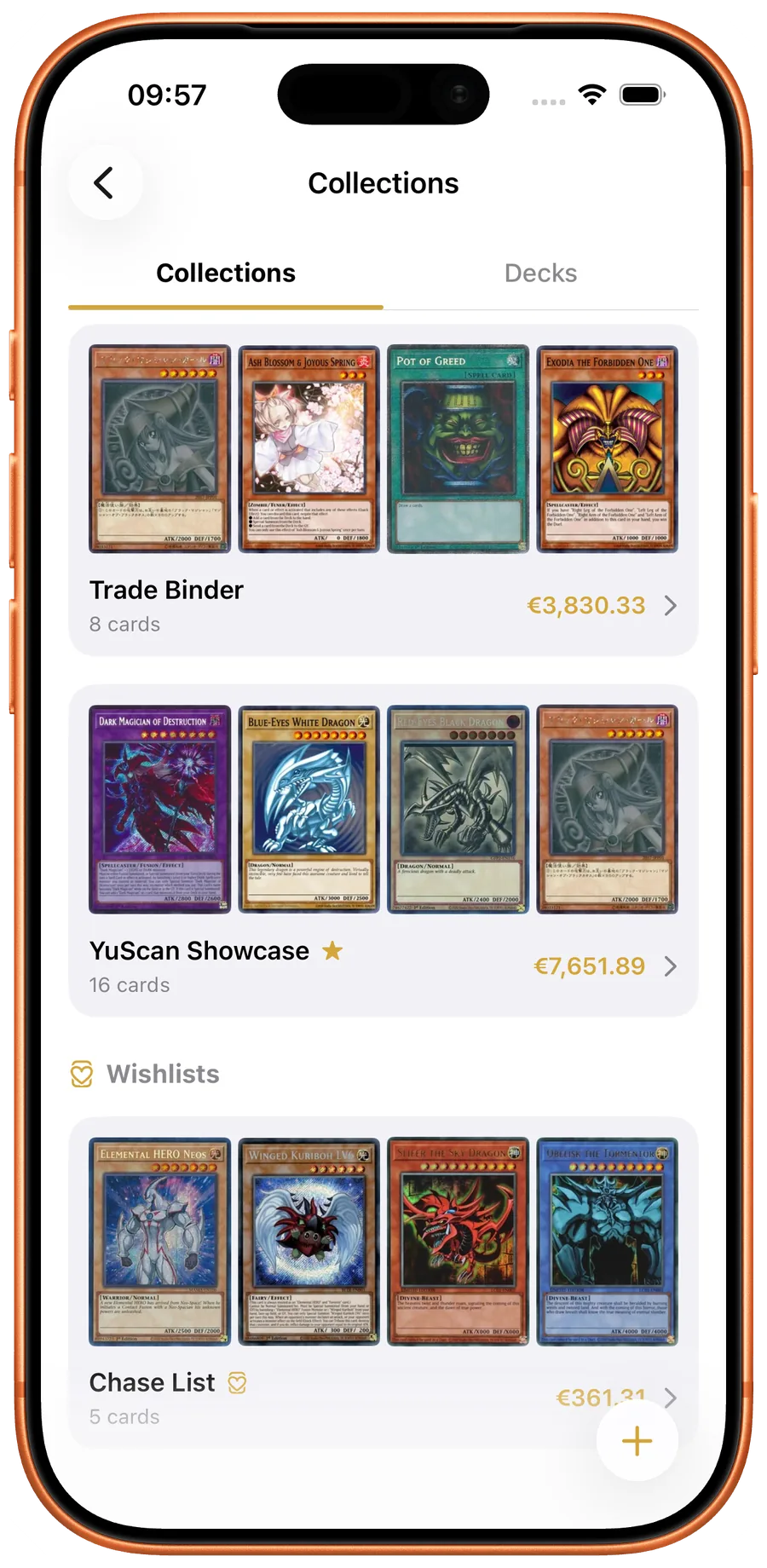
YuScan is the AI-powered Yu-Gi-Oh! card scanner, collection manager and price tracker for iOS. 13,000+ cards, every expansion since LOB, live prices from TCGPlayer, Cardmarket and eBay.
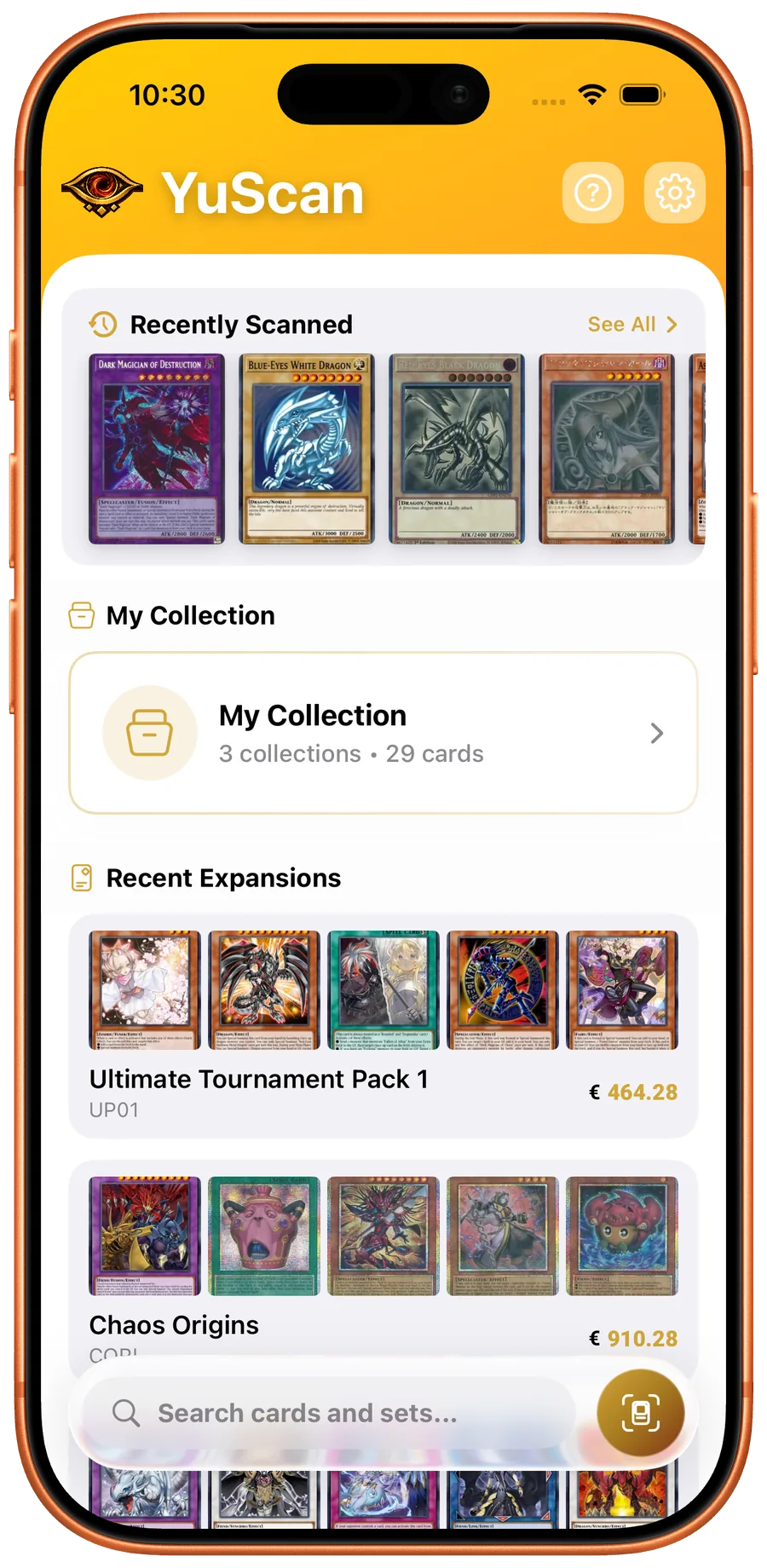
YuScan identifies every card against Konami’s authentic print database. It’s not a guarantee of authenticity — no scanner app is — but it’s a strong first-pass filter that catches the mass-produced fakes in circulation.