Collecting the Classics: The 10 Original Yu-Gi-Oh! Sets That Matter
LOB, MRD, PSV, LON, LOD and every early-era set still worth pursuing in 2026 — ranked by grail density, 1st Edition scarcity, and what a complete PSA 10 run will actually cost you.
YuScan app · May 20, 2026
The first six Yu-Gi-Oh! English sets — LOB, MRD, PSV, LON, LOD, and PGD — were printed between March 2002 and August 2003. The 1st Edition print runs on all six were small compared to later releases, the card stock and holofoil processes were different from modern prints, and the cards from that eighteen-month window now carry scarcity premiums that no later set has matched. This list ranks the ten original-era sets most worth collecting in 2026.
If you are new to vintage Yu-Gi-Oh! collecting: almost all the value in early-era cards lives in the 1st Edition stamp. An Unlimited print of the same card in the same rarity is typically worth 10–30% of the 1st Edition version. The stamp is small — lower-left on the card face — and easy to miss, which is part of why we built YuScan’s scanner to read set codes and stamps automatically.
The ranking
The Legend of Blue Eyes White Dragon (LOB)
The launch set — where every grail begins
LOB was the first English Yu-Gi-Oh! set, released March 2002, 126 cards. It contains 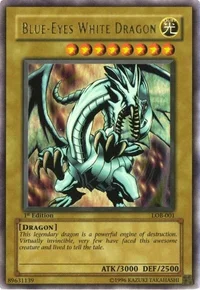 Blue-Eyes White Dragon,
 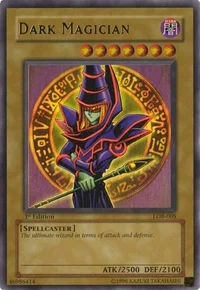 Dark Magician,
 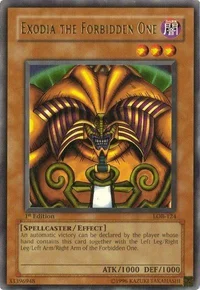 Exodia the Forbidden One,
 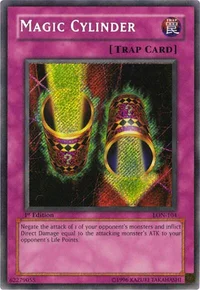 Magic Cylinder,
 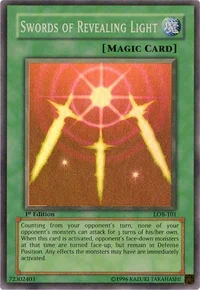 Swords of Revealing Light, and
 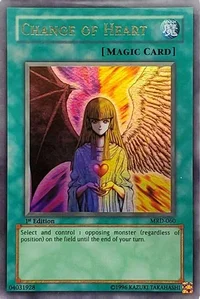 Change of Heart — more grail-tier cards per set than any later release by a wide margin. PSA 10 1st Edition flagship cards (Blue-Eyes, Dark Magician) routinely trade above $10,000, with Blue-Eyes itself clearing $80,000+ in 2024.
A full PSA 10 1st Edition LOB run is a six-figure collecting project and remains the most prestigious single-set goal in the hobby. The LOB set page has the complete checklist.
Metal Raiders (MRD)
The early-era staples set
MRD followed LOB in June 2002 with 144 cards. It contains 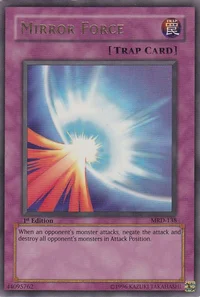 Mirror Force,
 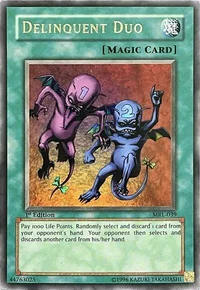 Delinquent Duo, and dozens of cards that defined the 2003–2005 competitive meta. The 1st Edition print run is estimated at roughly 60% of LOB’s, which is what keeps MRD 1st Edition chase cards in the mid-four-figure range in PSA 10.
MRD is the more-attainable LOB sibling: similar era, slightly larger print run, comparable card stock, and several iconic cards available for a fraction of the LOB-equivalent price.
Pharaoh's Servant (PSV)
Where Graceful Charity and trap hate lived
PSV (2002) contains 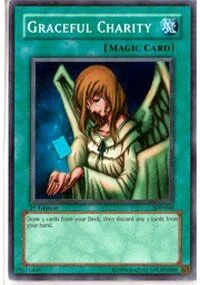 Graceful Charity and
 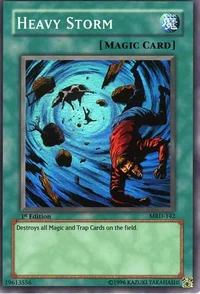 Heavy Storm, both 1st Edition Ultra Rares, both in the $2,000–$4,000 range for PSA 10. PSV is a smaller set than MRD with a correspondingly smaller print run. The 1st Edition Ultra Rares are the specific target for collectors — the commons and rares are affordable.
Labyrinth of Nightmare (LON)
The underrated middle-era set
LON shipped in March 2003. It’s the quietest of the early six sets — fewer iconic cards, smaller collector demand — which makes it the best value in the vintage era for completion-focused collectors. PSA 10 1st Edition LON flagship cards trade in the $500–$1,500 range. A full 1st Edition LON run is genuinely achievable in PSA 9+ for a dedicated collector under $10,000.
Legacy of Darkness (LOD)
The first set with a Japanese-reprint premium
LOD (2002, English release 2003) contains 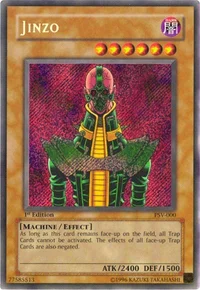 Jinzo and a handful of cards that entered the early competitive meta. It is the transition set between launch-era scarcity and the broader print runs of 2004+. PSA 10 1st Edition flagship cards sit in the $1,000–$3,000 range.
Pharaonic Guardian (PGD)
Mid-2003, last of the ultra-scarce 1st Editions
PGD was the final set before print runs expanded meaningfully for the Dark Crisis / Invasion of Chaos era. It contains some of the rarest 1st Edition Ultras in the entire vintage era on a per-copy basis — though most of them are not iconic enough to carry LOB-comparable prices. Collectors targeting specifically the “small print run” attribute rather than famous cards will find PGD the highest-value vintage set outside of LOB-MRD.
Invasion of Chaos (IOC)
Where banlist history begins
IOC (2004) contains 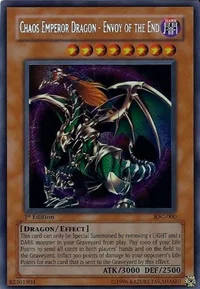 Chaos Emperor Dragon - Envoy of the End, one of the most famously-broken cards in Yu-Gi-Oh! history. Banned since 2005, never meaningfully reprinted in a way that resolves scarcity. IOC 1st Edition Ultra Rare Chaos Emperor Dragon in PSA 10 trades consistently above $6,000. The rest of the set is affordable; CED is the entire value story.
Ancient Sanctuary (AST)
The first meaningful alt-art set
AST (2004) is historically notable for introducing 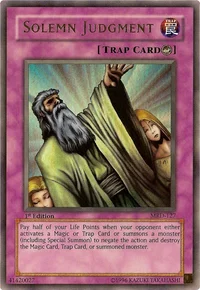 Solemn Judgment — a card that remains playable in 2026 at Limited and that has never been fully reprinted in the original AST rarity. 1st Edition Ultra Rare Solemn Judgment in PSA 10 trades in the $800–$1,500 range and is the collector target for the set.
Cybernetic Revolution (CRV)
The Cyber Dragon print that matters
CRV (2005) contains 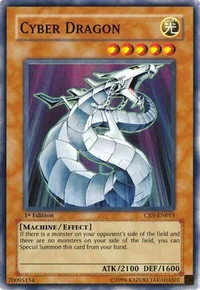 Cyber Dragon in its original 1st Edition Ultimate Rare printing. Cyber Dragon saw tournament play continuously from 2005 into 2012 and remains a collectible archetype. 1st Edition Ultimate Rare CRV Cyber Dragon in PSA 10 trades around $500–$1,200 — affordable vintage that still has competitive-era significance.
Strike of Neos (STON)
The Elemental HERO cornerstone
STON (2007) marks the transition from pure vintage to modern-era Yu-Gi-Oh!. It contains key Elemental HERO support that remained playable into the 2010s. 1st Edition chase cards are in the $300–$800 band for PSA 10 — the most affordable entry point on this list and the best choice for a collector who wants vintage-era card stock without LOB-era prices.
On YuScan
Every 2002 expansion, in order
Browse the original-era release calendar — LOB through PGD — with full card lists and per-print pricing on YuScan.
How to collect vintage Yu-Gi-Oh! in 2026
Pick a scope. Full 1st Edition LOB in PSA 10 is a multi-year, multi-hundred-thousand-dollar project. Full 1st Edition LON in PSA 9 is achievable in 12 months under $10,000. Decide which end you’re on before you start buying.
Grade before you pay four-figure prices. Raw early-era cards in apparently-mint condition fail PSA 10 grading more often than you expect. Centering, edge quality, and print defects from the 2002–2003 Konami production process are visible under loupe inspection. For any card above $500 intended as a collection piece, buy graded.
Understand 1st Edition vs Unlimited. Every set above had both a 1st Edition run and an Unlimited run (the Unlimited reprint followed 3–6 months after the initial 1st Edition release). Unlimited prints are functionally different cards in collector terms. Our 1st Edition vs Unlimited explainer covers identification in detail.
Use a scanner for set-code verification. The difference between an LOB 1st Edition and a later reprint is six characters of set code. Human eyes miss it constantly. YuScan reads set codes and edition stamps automatically — originally built for exactly this use case.
Scan the cards on this list. Watch the prices move.
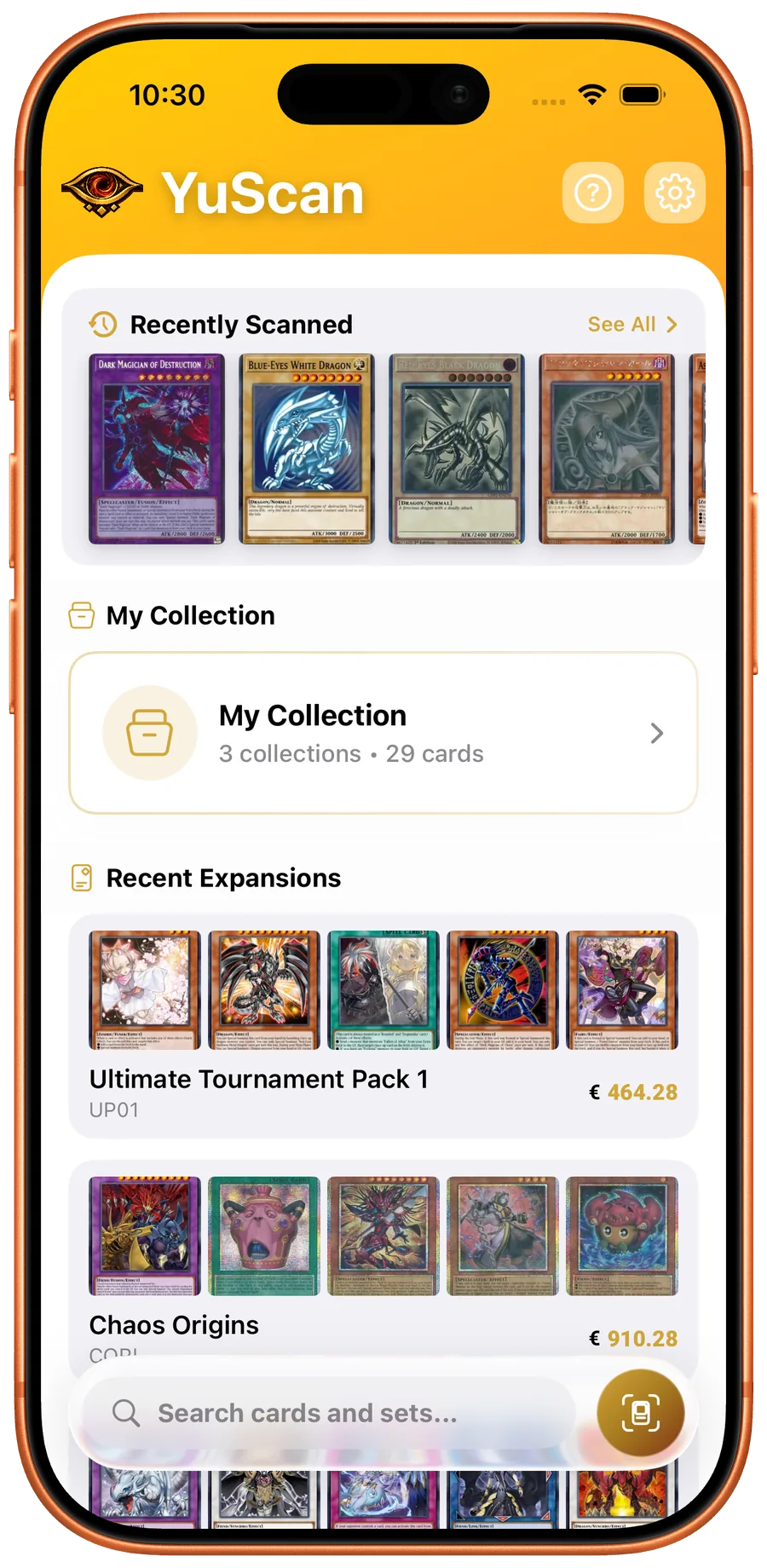
YuScan identifies any Yu-Gi-Oh! card in under a second and tracks live prices across TCGPlayer, Cardmarket and eBay per print run — so a 1st Edition and an Unlimited don't get averaged into a meaningless number.
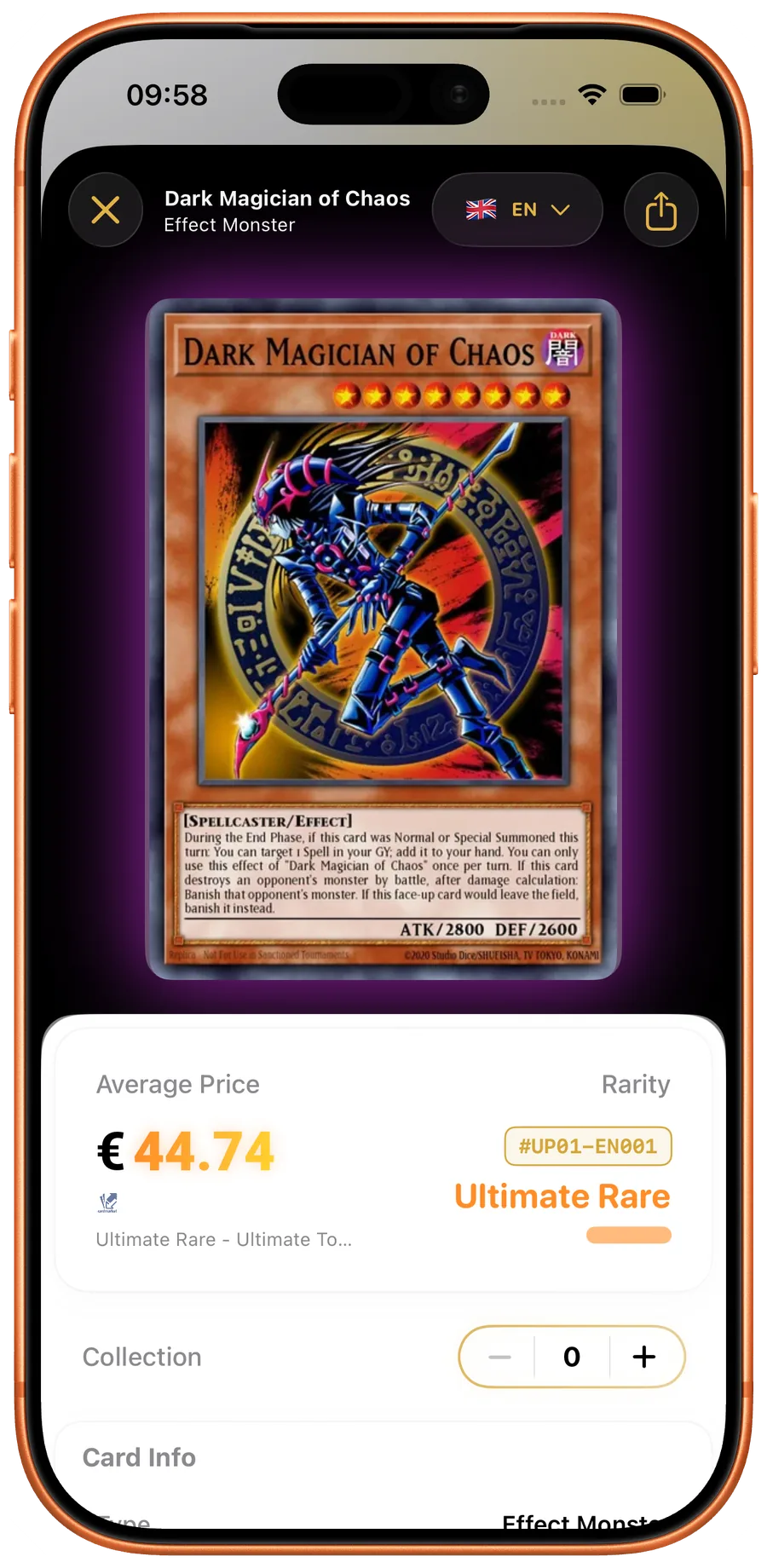
Browse every expansion since LOB on YuScan, track per-print pricing across TCGPlayer, Cardmarket, and eBay, and identify vintage cards with the on-device scanner.